Deals of the day
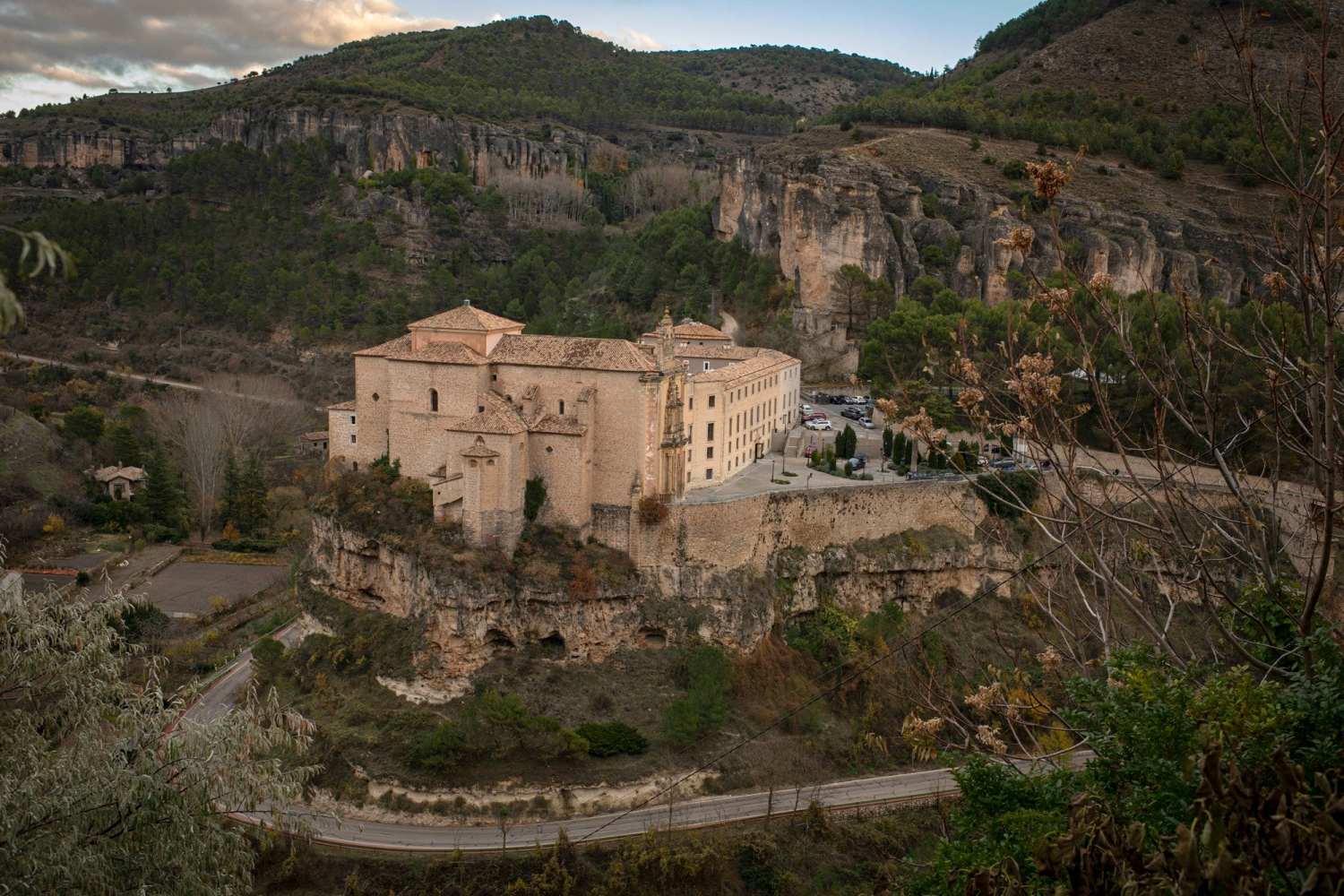
Parador de Cuenca
The Parador de Cuenca is a destination in itself. It’s located in a 16th century convent originally built for the Dominican order and it’s one of the most representative monuments of the city today. It’s located in one of the most special places in the city, next to the San Pablo bridge and opposite the Casas Colgadas or Hanging Houses. The convent of San Pablo has a beautiful glazed cloister with semi-circular arches and a…
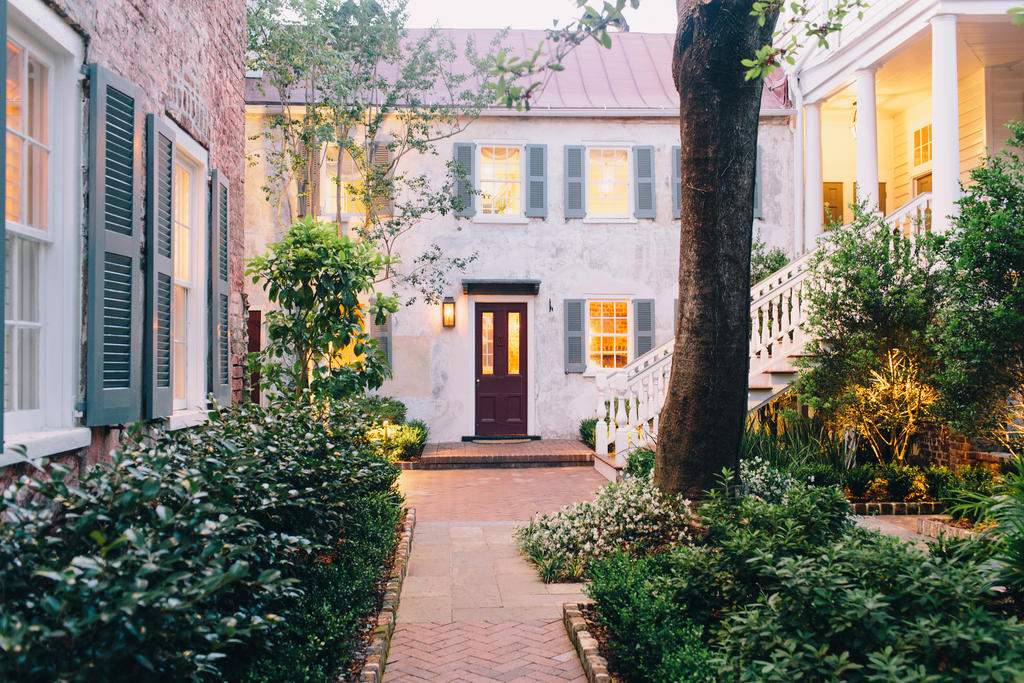
George Zero Street Charleston
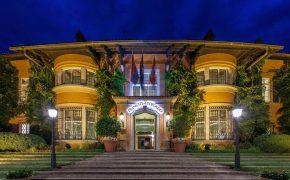
Named after our actual street address, Zero George is comprised of sixteen lush guest rooms and studios in three painstakingly restored historic residences and two brick carriage houses that surround our private garden courtyard. We’ve infused it all with a sense of intimacy and warm personality, honoring the buildings’ solid 1804 bones and graceful architecture with measured, timeless design. At Zero George, you’ll…
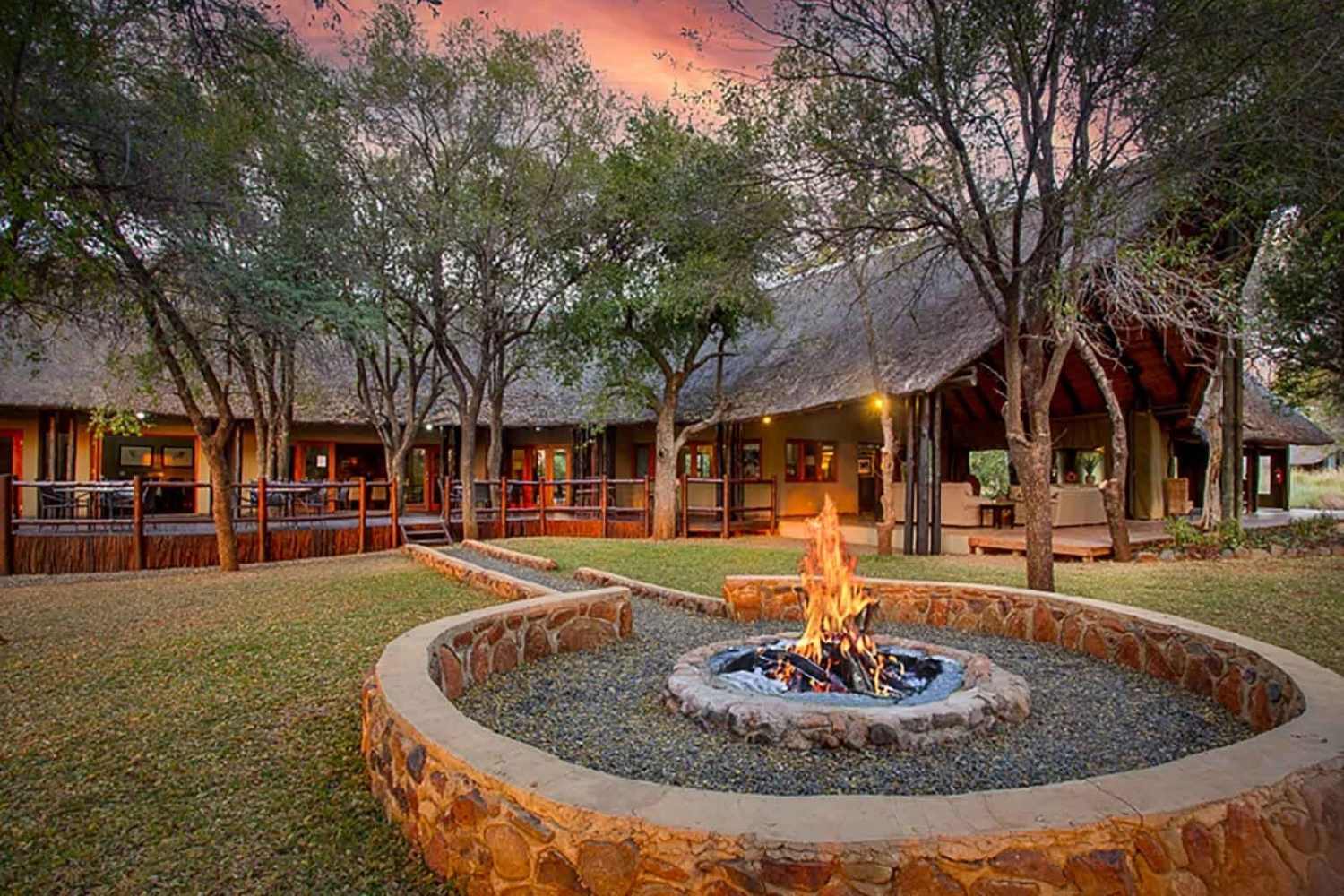
Black Rhino Game Lodge
Black Rhino Game Lodge is a luxury safari lodge located in the North West Province of South Africa, in the malaria-free Pilanesberg National Park. The lodge is situated in a prime location for game viewing, with access to over 55,000 hectares of wilderness. Black Rhino Game Lodge offers a variety of safari activities that allow guests to experience the beauty and wildlife of the African bushveld. The Pilanesberg National Park…
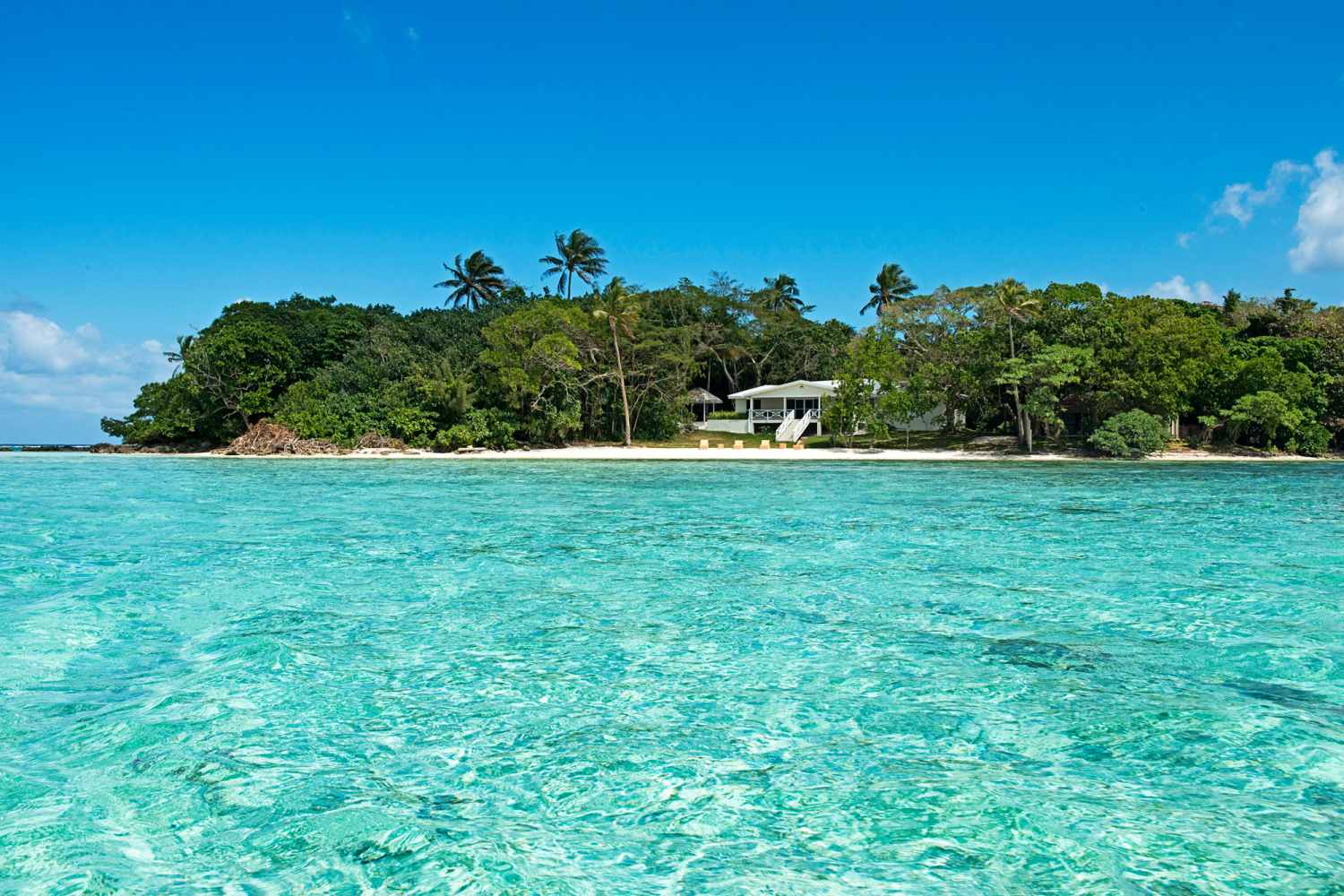
Erakor Island Resort & Spa Vanuatu
We look forward to sharing our culture, our customs and our beautiful smol aelan (small island) with you. Whether you are coming for a family holiday, reunion, tropical wedding, honeymoon, friends’ get-together or a relaxing break, we look forward to meeting you and sharing our culture and customs, along with plenty of Vanuatu smiles! There is so much to do and enjoy on this fabulous little island and when you…
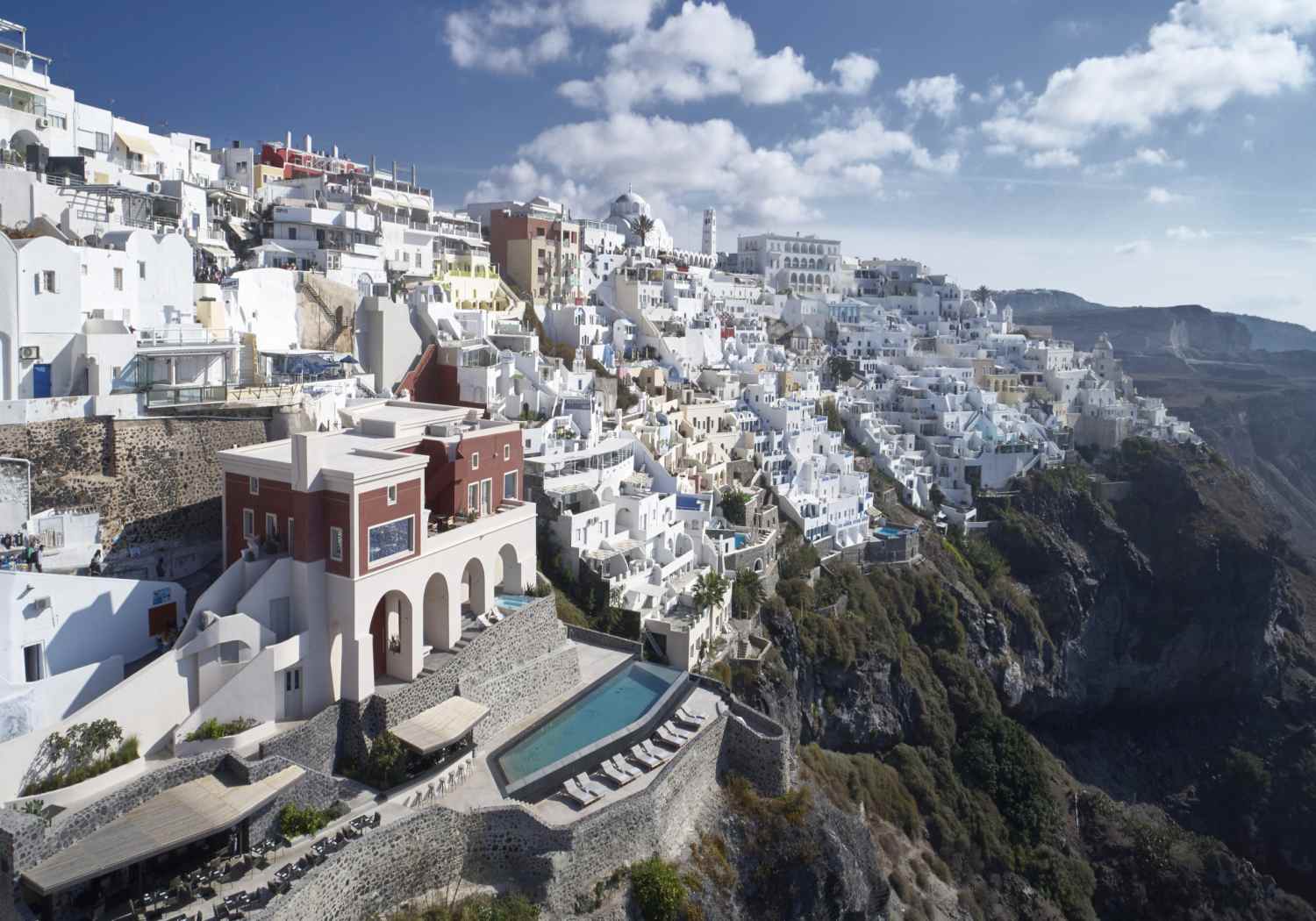
Villa Bordeaux Santorini
Inspired by the traditional architecture of the Cyclades, the exceptional Santorini Luxury Suites of Villa Bordeaux are part of an authentic neoclassical house. They have been restored so as to preserve the charm and character of a bygone era while at the same time offer all indulgences and comforts of modern life. Spacious, elegant and chic, all 4 luxury suites in Fira Santorini are fitted with fine furnishings and…
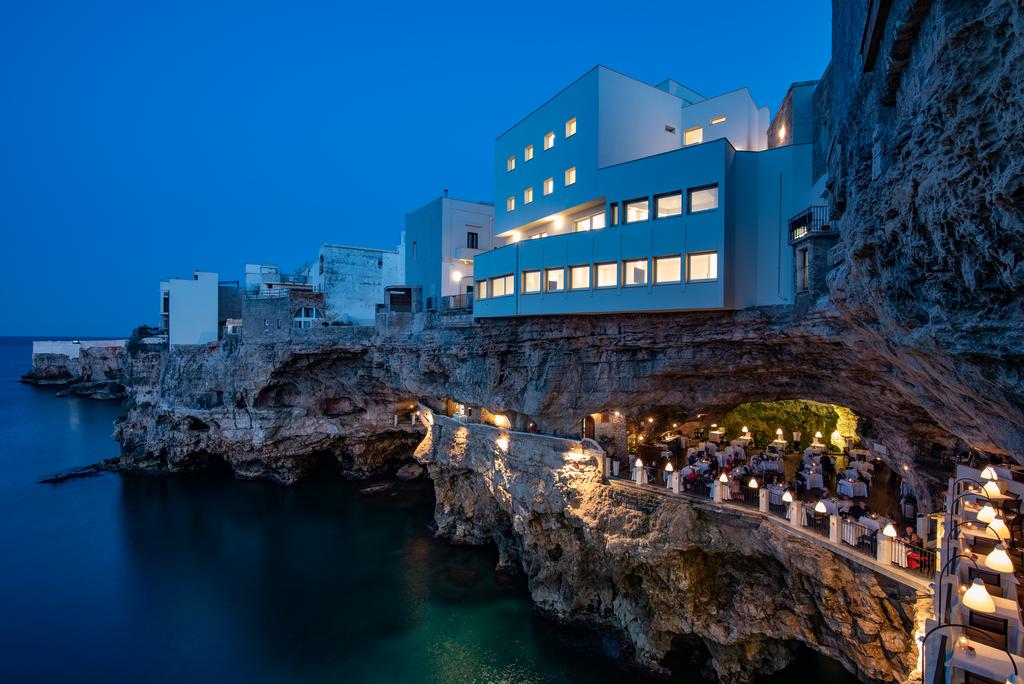
Hotel Grotta Palazzese Polignano a Mare
Naturalis Bio Resort is an exclusive Charming Residence, situated on a promontory with a view of the Salento countryside. Naturalis Bio Resort & Spa is the result of a fine and careful renovation of an ancient rural village surrounded by typical dry stone walls and protected by majestic old olive trees. A unique hotel facility, the most authentic rural tradition of Salento and our careful hospitality, perfectly come…
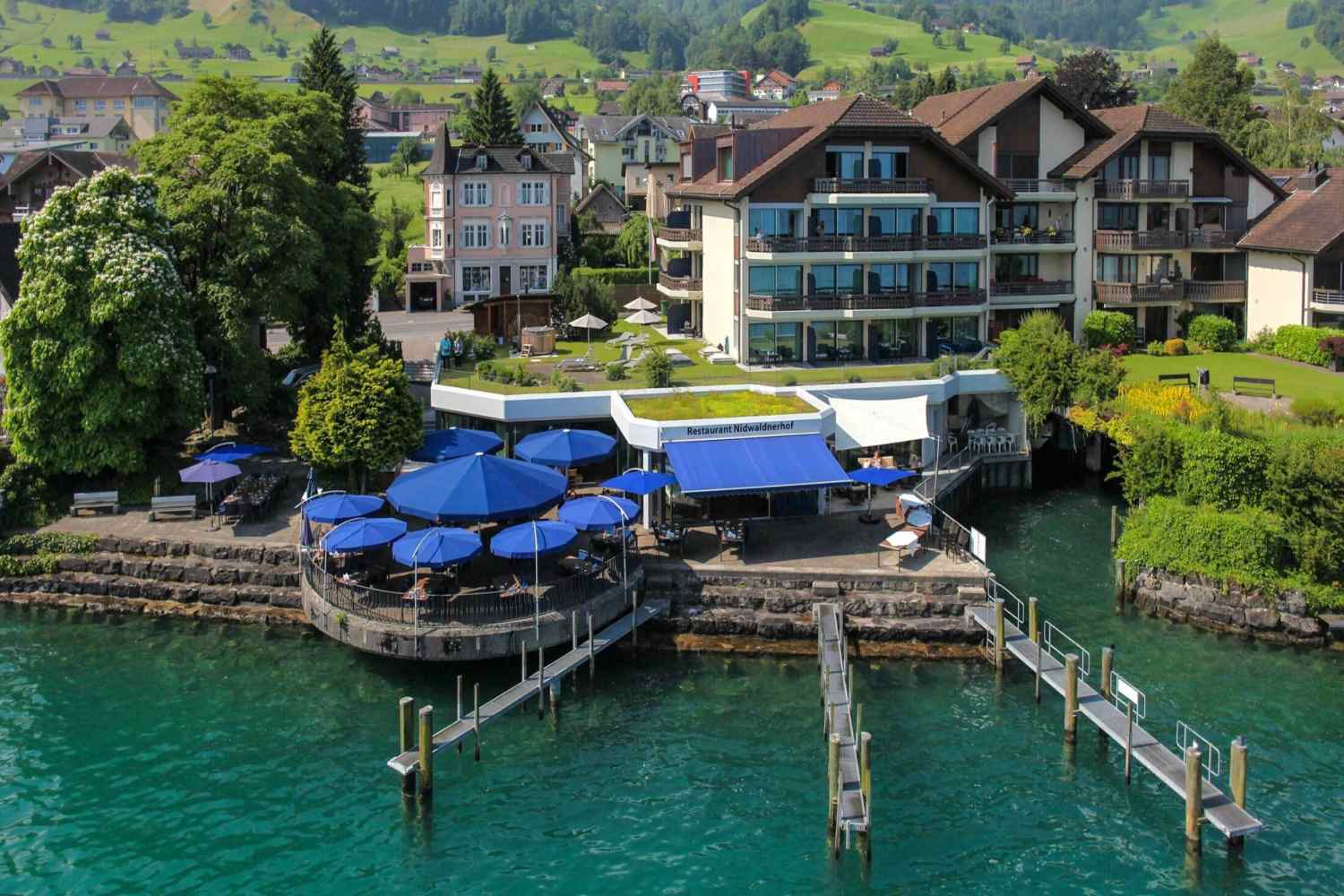
Hotel Nidwaldnerhof Beckenried
About 100 years ago the Nidwaldnerhof was known as Park-Hotel Nidwaldnerhof. “In a favoured, open location, with a large covered terrace, directly beside the lake. Many rooms with balconies. Music salon. Electric lighting. Shady park with 400 m of shoreline and magnificent all-round views. Choice cuisine…” according to the brochure available at the time. In 1979 the Park-Hotel Nidwaldnerhof was torn down and today’s…
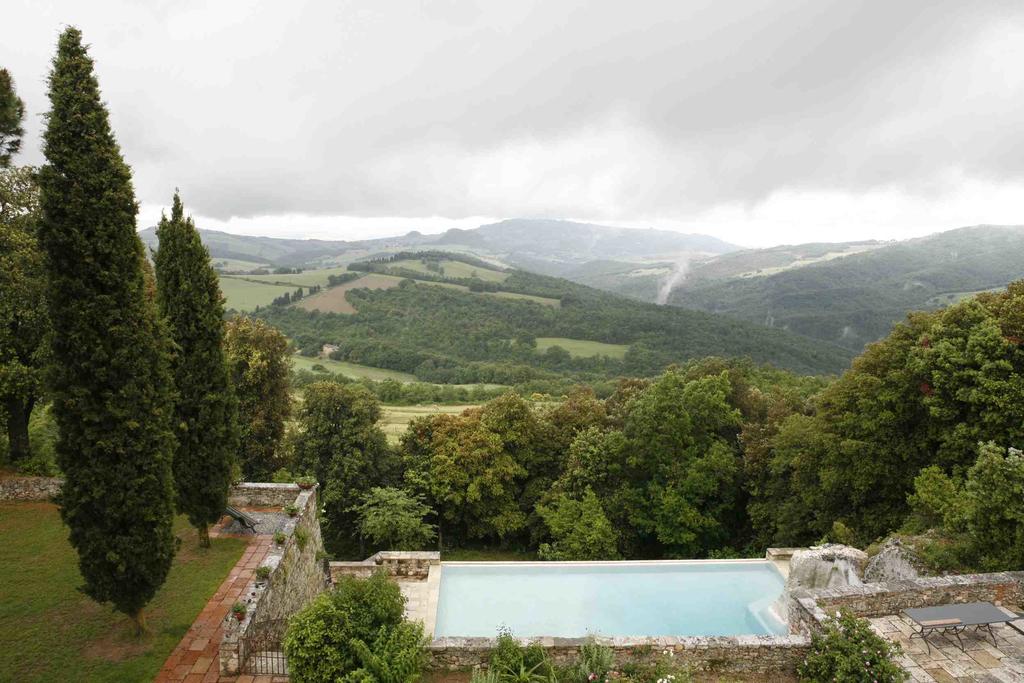
Borgo Pignano Volterra
Deep in the heart of historic Tuscany lies an enchanting haven of peace and tranquillity. At Borgo Pignano you will discover a beautifully restored country estate offering an exclusive combination of elegant accommodation, exceptional comfort and gracious hospitality. Borgo Pignano is an elegant country estate in the heart of the Tuscan countryside, just a short drive from the historic, hill towns of Volterra and…
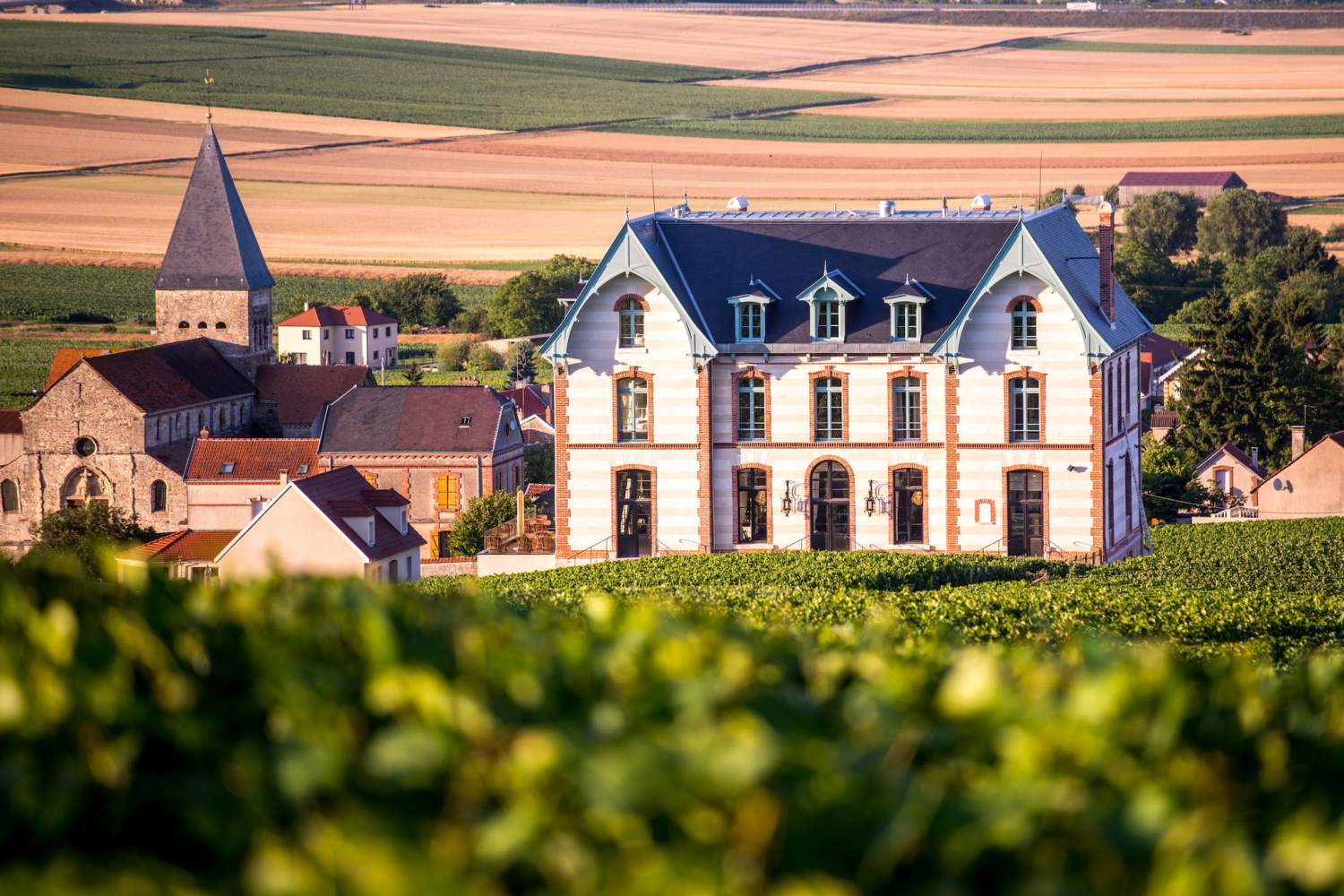
Chateau De Sacy Reims
The Chateau de Sacy, surrrounded by vineyards on the outskirts of Reims, dates back in its original state to the middle of the 19th century, but in its present form it’s been thoroughly transformed — the Château de Sacy is a fantasy more romantic than the real thing, a luxe and lavish 12-room hotel that incorporates a multitude of historical styles, and a bit of modernity as well. The spa includes barrel-style hot tubs with…
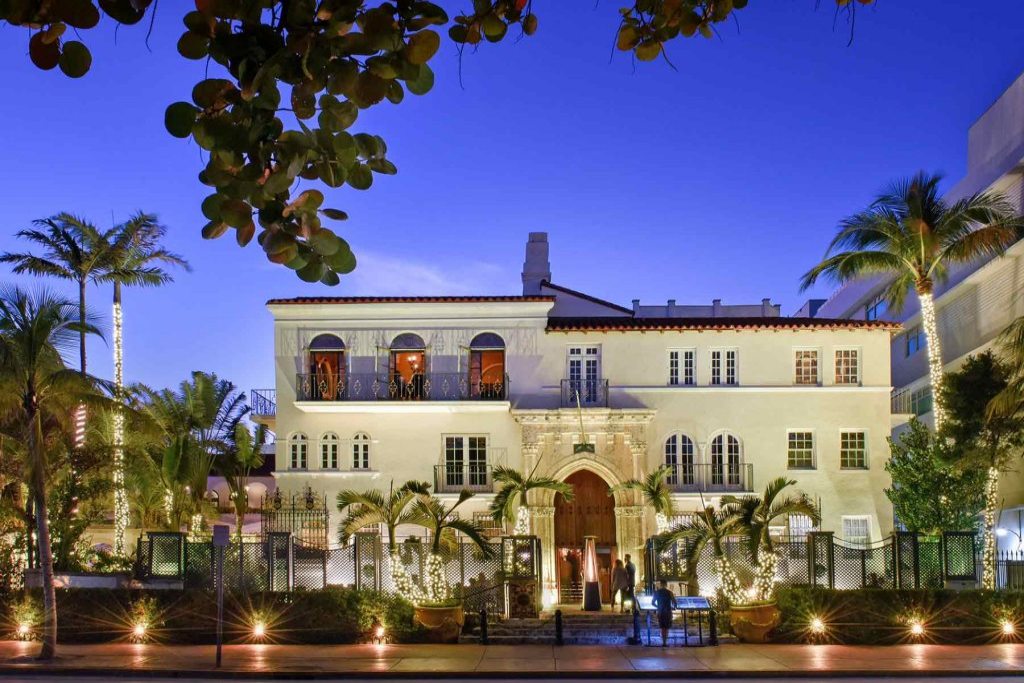
Casa Casuarina Miami
Casa Casuarina was built in 1930 by Alden Freeman. Alden Freeman’s father, Joel Freeman was Treasurer of The Standard Oil Trust (also known as Rockefeller’s Company) and left Alden a fabulous wealth when he passed away. That gave the young and wealthy Alden the opportunity to retire at the age of 27 from being an architect and travel all over the world. Alden was also a descendent of the Mayflower on his mother’s side…
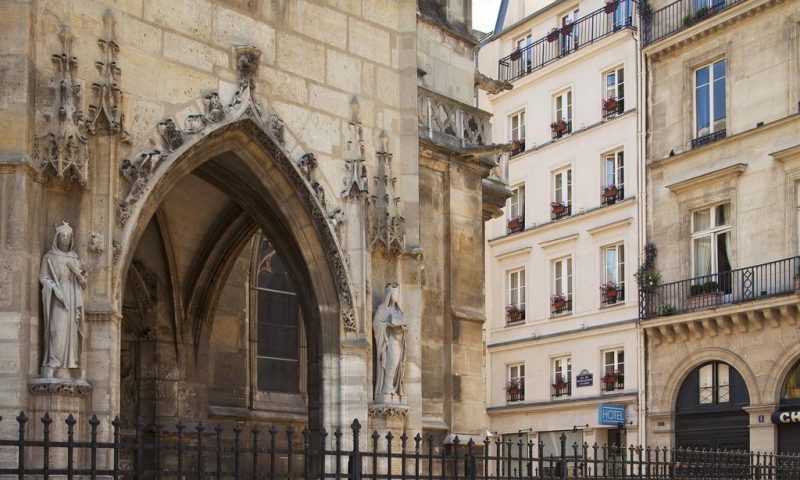
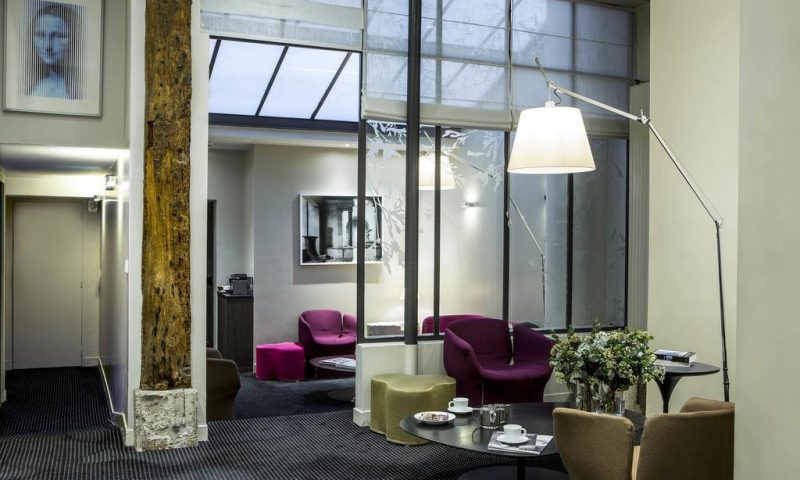
Hôtel de la Place du Louvre stands in a 17th century building in Paris’ 1st arrondissement, the beating heart of the capital’s glorious past.
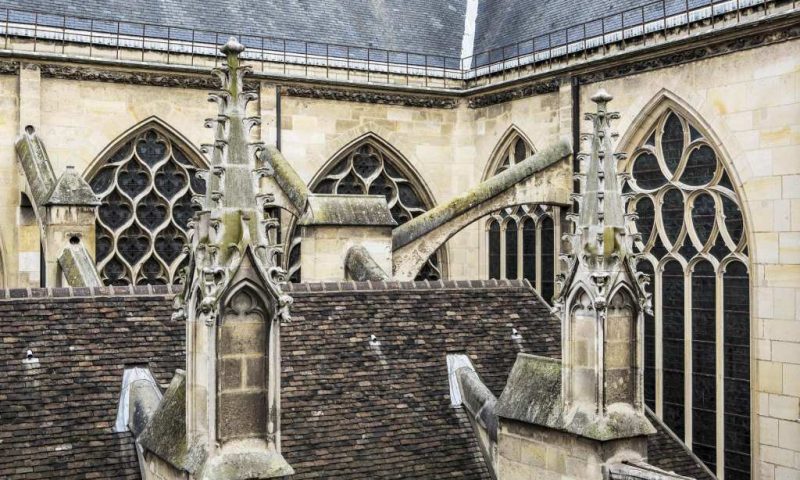
To your right is Saint Germain l’Auxerrois Church, whose construction began in the 12th century and is famous for its bell, organs and many cheeky gargoyles which seem to flirt with the hotel. Legend has it that the hotel’s vaulted cellars were once connected to the church’s cellars.
To your left, feast your eyes on another slice of Parisian history. Perrault’s Colonnade, built between 1667 and 1770 after an architecture competition, is deemed a masterpiece of French classicism.
During the 19th century the street was the meeting point for bohemians and intellectuals such as Chateaubriand, Balzac, Victor Hugo and Casimir Perrier who got together at Café Momus from 1841.
Duplex Louvre Room
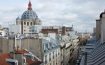
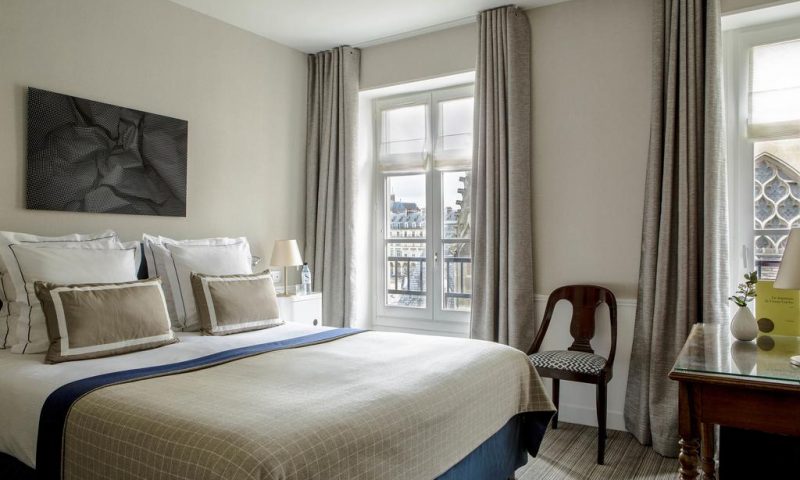
The Louvre’s awe-inspiring Colonnade stands to your left whist Saint-Germain-l’Auxerrois Church’s gargoyles appear in front of you: you’re looking out of the window of a Duplex Room at Hôtel de la Place du Louvre.
These comfortable 20 m2 rooms have a unique layout: the bedroom is in the lower half of the duplex whilst stairs take you up to the charming bathroom in the upper half. The TRECA double bed, duvet and 4 microfibre pillows ensure you have a good night’s sleep.
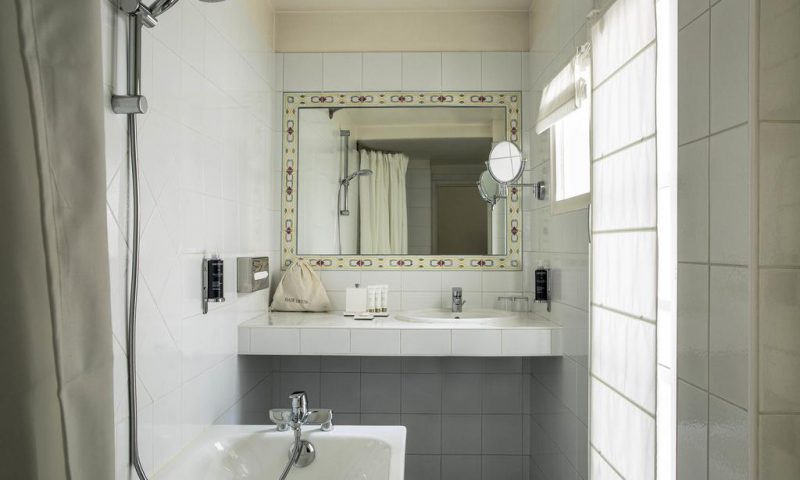
A welcome tray with a selection of Mariages tea and a Nespresso machine means you can make yourself a hot drink and soak up the view, day or night. The bathroom has a bath tub, SOTHYS toiletries and a hairdryer.
Breakfast
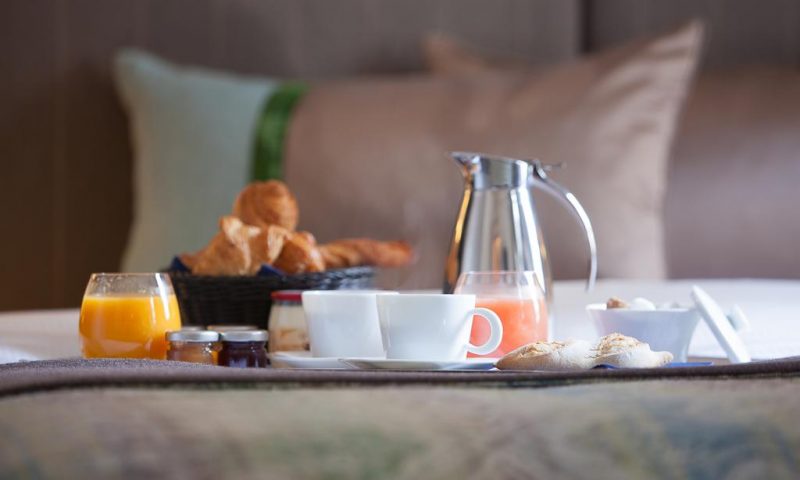
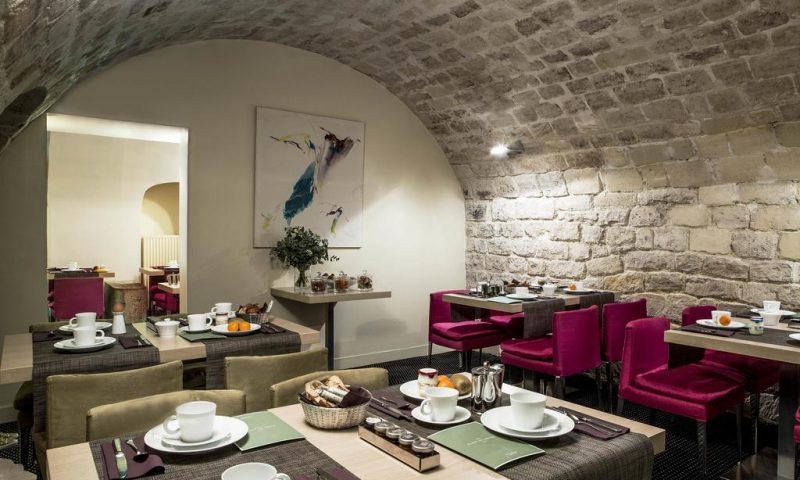
We are proud of the selection of products provided for breakfast at our 3* hotel. Every morning in the beautiful vaulted breakfast room you’ll find the best French produce served at the buffet: fresh fruit juice, Alain Milliat jam, pastries, mature cheese platter and organic produce all served in fine China radiating the Esprit de France.
Portable Wi-Fi hotspot rental
Hôtel de la Place du Louvre rents out mini portable Wi-Fi hotspots. The service is ideal for our foreign clients who want to stay connected whilst they travel and avoid the cost of connecting from abroad.
The Wi-Fi hotspots fit in your pocket and only weigh 130g. It’s your perfect travel companion as you explore the 1st arrondissement and the rest of Paris.
Fortnightly newsletter Esprit de France
Art and culture are very dear to the Esprit de France hotels. Every fortnight, Esprit de France brings you its top tips and recommendations from all that Paris has to offer in this exclusive cultural newsletter that you will be given on arrival.
You’ll find advice to experience Paris like a local, unmissable events and hidden gems in the capital and 1st arrondissement.
The Esprit de France Pass
In Paris, the Esprit de France hotels have remarkable locations on both the right and left bank. During your stay, every one of our hotels will be happy to welcome you and offer you the following services:
Concierge Service • Free Coffee • Phone Charger • Luggage Storage • Free WiFi • Lounge Area • Umbrella Loan • Business Corner • Paris Museum Pass Purchase • Toilet • Map of Paris
Art at the hotel
Follow the guide among the collection of contemporary photographs at Hôtel de la Place du Louvre. Since their foundation in the 1980s, Esprit de France hotels have been closely bound to the heritage and art underlying their identity.
In 2015, Hôtel de la Place du Louvre unveiled a collection of contemporary photographs by living artists which will grow with time.
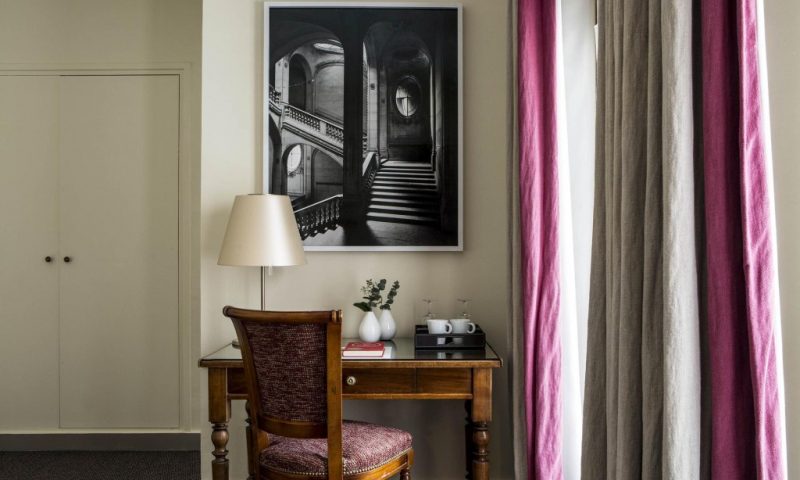
Esther Stocker’s “Degrees of Freedom”, Laurent Millet’s photographs from his “Les Monolithes” and “Les Zozios” series and Jean-Christophe Ballot’s work on the Louvre: three contemporary artists now appear in this collection of a dozen pieces that hang on the walls in the lounge and rooms.
The work of these three unique artists has the power to whisk you away to another ever-palpable world be it poetic, graphic or architectural, and enjoy an authentic statement piece in the intimacy of your own room.
From the Louvre to Beaubourg, Your neighborhood at the heart of Paris
3* Hôtel de la Place du Louvre is right next to the Louvre et Musée des Arts Décoratifs. Its prime location makes it the perfect base to visit or revisit the Pompidou Centre in Beaubourg, stroll through the Marais neighbourhood and Châtelet – Les Halles with a stop at Place des Vosges.
Hôtel de la Place du Louvre is also in the ideal setting to wander along the banks of the Seine which have recently been pedestrianised.
The Louvre
Famous for being the world’s biggest museum in terms of surface area at over 200,000m², the Louvre is also the world’s most visited museumm with over 9 million visitors a year.
Its rich collection of artworks begins in Antiquity and ends in 1848 with 8 different departments such as Islamic Art, Roman Antiquities and Ancient Egypt whose collection was entrusted to Champollion, the first person to decipher hieroglyphics and whose work was recognised by the Egyptian king giving the Luxor Obelisk to France in 1831.
The museum is so large that it would be hard to see it all in one day. To avoid long queues, it’s best to visit the museum at night which also gives you marvellous views of the illuminated buildings and Pei’s glass Pyramid at nightfall.
The museum’s must-see pieces include the world’s most visited artwork which King Louis XVIII’s bought: the Mona Lisa by Leonardo da Vinci who’s famous for her mysterious smile.
Another well-known and undoubtedly impressive piece is the 5m high Ancient Greek sculpture grecque antique de Winged Victory of Samothrace. Last but not least, the finely carved Venus de Milo attracts the crowds.
The Carroussel
The Caroussel du Louvre stands on Rue de Rivoli beneath the Carroussel park. It’s a vast space near Hôtel de la Place du Louvre and the Louvre Museum.
It is home to:
- Entry to the Louvre Musuem and one of the Louvre School’s lecture theatres.
- A shopping centre open on Sundays with big brands.
- A food court with a wide range of international restaurants.
- Exhibition spaces. It is managed by Viparis.
- An archaeological space with the Paris city walls.
Place des Vosges
The site was originally intended to be a major fabric manufacuring area with housing for staff working at the future factories. Instead, investors built stunning homes attracting the nobility to this new fashionable area. This is where King Henri IV decided to have a royal palace built in 1605, the oldest in Paris after Place Dauphine.
The king’s pavilion to the south stands out for its extra height and stands opposite the queen’s pavilion, surrounded by mansions. In 1615, Henri IV’s successor, King Louis XIII’s marriage to Anne of Austria was celebrated on the square.
The name of the square refers to the region in North East France as it was the first to pay the taxes established by the government at the time.
Not far from Hôtel de la Place du Louvre, the site is instantly recognisable with its red brick walls and central garden, Square Louis XIII lined with trees and featuring four fountains designed by Jean-Pierre Cortot. The square has been listed as a Monument Historique since 1954.
You can walk around the whole square beneath the arcades and gaze at their boutiques and art galleries before heading to the apartment where Victor Hugo once lived.
Victor Hugo’s house
6 Place des Vosges is the address where the famous French author Victor Hugo lived between 1832 and 1848. This is where he wrote Les Chants du crépuscule and Ruy Blas before being exiled to Jersey and Guernesey.
The site is now a Paris museum that’s free to enter (apart from temporary exhibitions). A tour here gives you the chance to experience the author’s personal life and its fascinating displays unveil Victor Hugo’s poetic world.
The Musée Picasso
The world’s biggest collection of work by Picasso is housed in Hôtel Salé, one of the most iconic mansions in the Marais.
The “Dation Picasso” was established in 1974 a year after Picasso’s death. This system of acquiring artworks enables the state to collect several pieces by the artist and keep them on an exhibition site.
The chosen site was Hôtel Salé (in memory of the owner who collected taxes on salt, “gabelle”), a building owned by the city of Paris, listed as a Monument Historique and located near Hôtel de la Place du Louvre. It’s one of the most remarkable mansions in the Marais.
The selection of this site was primarily related to heritage. Like the construction of the Pompidou Centre, Picasso’s work should be displayed in a place that’s as contemporary as it is historical.
The building was restored by the architect Simounet from 1979 after being awarded the project to install the Musée National Picasso in the mansion. The architectural feat of showcasing both the mansion and the artist is plain to see. The museum opened in 1985.
The museum’s renovation and collections
After running for 25 years, the Musée Picasso underwent a major renovation project to overhaul the museum in its entirety. The museum reopened in 2014 with a new visitor experience and is now a veritable social hub because of its variety of services.
The site’s renovation has doubled the size of the exhibition spaces so visitors can admire hundreds of pieces on a chronological and themed journey. The Musée National Picasso collection is truly fantastic and its wealth of different pieces means visitors can explore both Picasso’s artistic pathway and his creative process.
The Musee Carnavalet
The idea to create a museum devoted to the history of Paris and its inhabitants first came in the Second Empire. Hotel Carnavalet was chosen to house it. It opened in 1880 making it the oldest municipal museum in Paris.
It’s one of the most famous mansions from the Renaissance with sculptures incorporated into the walls by the famous 16th century architect Jean Goujon, the man behind the design on the Fontaine des Innocents.
The building was expanded in the 17th century during work by the architect François Mansart with the neighbouring Le Peletier de Saint-Fargeau mansion annex. Hôtel Carnavalet is also famous for being where the Marquise de Sévigné lived.
The museum is home to two other sites: the Archaeological Crypt beneath Notre Dame’s forecourt which shows how the city has evolved since Antiquity and the Catacombs of Paris, the Parisian ossuary with over 10,000m² of underground tunnels.
The collections
With almost 600,000 pieces in over 100 rooms, Musée Carnavalet, near Hôtel de la Place du Louvre, is home to the biggest ensemble of collections from the City of Paris: archaeological relics, old shots of Paris, models of ancient monuments, emblems, historical or anecdotal scenes, portraits of famous Parisians, souvenirs of famous people or accounts of everday life, historical sequence about the French Revolution.
A series of remarkable settings provide a glimpse of 17th-20th century Parisian homes including the stunning “art deco” ballroom at Hôtel de Wendel painted by José Maria Sert. These displays act as a frame in which to display the collections.
One or two annual temporary exhibitions are held at Musée Carnavalet in keeping the museum’s permanent collection to delve deeper into a specific topic, historical dates or famous authors.
“Free exhibition packs” are provided to enable visitors to explore the Carnavlet’s graphic collections (drawings, stamps, photographs and posters) that aren’t usually on display.
The Town Hall
This neo-Renaissance style building on Place de l’Hôtel de Ville is home to the Paris mayor’s offices. Regular guided tours are provided by the Protocol department and available to book on the Paris Town Hall’s official website.
Visitors on a guided tour have the honour of being able to visit the Ballroom that’s reminiscent of the Hall of Mirrors in Versailles and the Provost Hall.
The Town Hall plays host to several free exhibitions all year round. Various events are also sometimes staged on the Town Hall’s forecourt, formerly Place de la Grève de Paris.
The surroundings
Near Hôtel de la Place du Louvre and opposite the Town Hall, Le BHV Marais is a major department store on the right bank nestled on Rue de Rivoli. Its initials stand for Bazar de l’Hôtel de Ville (Town Hall Bazaar) and, as the name suggests, it has all sorts of departments from DIY, womenswear, menswear and home accessories to toys and cookery.
Also close to the Town Hall is Saint-Jacques Tower and its neighbouring square, one of the first public parks in Paris.
The tower was built in the 16th century and is the bell tower from a church which was destroyed during the Revolution and called Saint Jacques de la Boucherie (“boucherie” meaning “butchery”) as the area around it belonged to the butchers’ corporation at the time.
A statue of Saint Jacques stands at the top as the tower is on the Santiago de Compostela pilgrimage route. Tours by “Des Mots et des Arts” provide a historical insight into the landmark and magnificent views over Paris from the top of the tower.
You’ll learn that, legend has it, the tower was saved from ruin during the Revolution by Blaise Pascal who used it for his experiments on gravity. A statue of the philosopher still stands at the base of the tower in tribute to the story.
The Marais
The Marais is a historical neighbourhood in the heart of the French capital on the right bank. “Marais” means “marsh” and before becoming the Parisian trendy area it is today, it was a marshland before the 9th century.
A shopping and foodie hotspot
The Marais is well-known and popular for its shopping with countless design and fashion boutiques. Must-visit streets include Rue des Francs-Bourgeois, du Temple, Vieille du Temple and Rue des Archives.
The cute shops around the Saint Paul metro station provide a more personal shopping experience. Most shops are open on Sunday which helps bring the area to life at the weekend. Le BHV / Marais is a Parisian department store on the cutting-edge of fashion that stands opposite the Town Hall.
As for food, the neighbourhood is bursting with international restaurants. You’ll find Jewish specialities in the Jewish area and on Rue des Rosiers. Le Marché des Enfants Rouges, the oldest market in Paris, has lots of food stalls.
Iconic architecture and landmarks
The history of the Marais makes it an area that’s rife with landmarks, squares, quirky streets and museums next to Hôtel de la Place du Louvre. Its standout architectural sights include the Neo-Renaissance Town Hall oppsite Le BHV.
Place des Vosges, the oldest royal square in Paris, is also a sight for sore eyes with its red bricks. Nicolas Flamel’s house on 51 Rue de Montmorency is the oldest building in the city dating back to 1407.
As for museums, the area is home to the Musée Picasso on Rue de Thorigny, Musée de Carnavalet, devoted to Paris’ history, on Rue de Sévigné and, last but not least, the Musée des Arts et Métiers in a former church on Rue Réaumur.
The Pompidou Centre
Known both as the Pompidou Centre and Beaubourg Centre, the national Georges-Pompidou art and culture centre is home to the biggest modern and contemporary art collection in Europe.
A major cultural institution
The national Georges-Pompidou art and culture centre came from President Pompidou’s idea to design an original space devoted to modern and contemporary creativity where theatre stands alongside music, graphic arts, cinema, audiovisual research and literature.
The then controversial architecture was designed by Renzo Piano and Richard Rogers. The site’s ambition to bring different artistic fields together in one place is reflected by the building itself which encourages communication between the different spaces and opens onto the exterior to make it a real social hub.
The external escalators that look like huge pipes provide views of Paris’ rooftops and monuments. The 6th and final floor has panoramic views of the capital which you can take a trip up to or book a table at Le Georges restaurant on the same floor.
It’s the second biggest collection of modern and contemporary art in the world after Moma and the biggest in Europe. The museum’s permanent collection has work by 20th and 21st century artists.
The 5th floor has collections from modern artists (1905-1960): Picasso, Man Ray, Matisse, Dali, Braque, Kandinski, Mondrian, Marx Ernst and more. The 4th floor has contemporary art from the 60s to the present day: Pop Art, Nouveau Realism, Minimalisme and more.
The cultural centre also has temporary exhibitions, a large public library and a research centre for acoustics and music.
A lively forecourt at the foot of the Pompidou Cenntre and the Fontaine Stravinski
The social hub that is the Pompidou Centre radiates outside onto the large square nicknamed “la piazza” where performances are regularly staged. The Fontaine Stravinsky near Hôtel de la Place du Louvre and the Pompidou Centre is also worth a trip.
The public fountain was designed in 1983 by Jean Tinguely and Niki de Saint Phalle. Its 16 colourful sculptures represent work by Russian composer Igor Stravinsky. The figures are brought to life by electric motors to create movement and sound.
Châtelet – Les Halles
Nestled in the very heart of Paris, Châtelet – Les Halles is a lively part of the capital with its former wholesale market that’s made way for “La Canopée”.
Châtelet
Place du Châtelet is a central Parisian square with Saint – Jacques Tower to the east and Pont au Change Bridge to the north. The so-called “Du Palmier” fountain in the middle of the square celebrates Napoleon I’s victories.
At the time, the square was home to the Le Grand Châtelet fortress. It is now a major performance venue with two theatres on either side of the square. At n°1, the Théâtre Impérial du Châtelet, now known as Théâtre du Châtelet, stages an eclectic schedule of comedy, ballet, film and musical performances.
The theatre was built by Gabriel Davioud upon Baron Haussmann’s request. Opposite at n°2 stands the Théâtre de la Ville, by the same architect, which hosts contemporary dance and music shows.
Les Halles neighbourhood
In the 19th century, Napoleon III asked the architect Victor Baltard to build 12 halls out of iron, cast iron and glass to house Les Halles which had been a huge market selling fresh produce in the heart of Paris since the 12th century.
In 1960, Les Halles were knocked down to build Le Forum des Halles, a large shopping centre and access to the Châtelet-Les Halles underground station, the biggest in the world. In 2016, Le Forum des Halles was given a makeover with the La Canopée project.
After 5 years of work, the second biggest shopping centre in France opened its roof with 18,000 scales. Behind “La Canopée”, the Nelson Mandela garden, in tribute to the great man’s death in 2013, has 4 hectares of greenery in central Paris and showcases Saint Eustache Church, one of the capital’s most beautiful churches with its Renaissance decor and Gothic structure.
Also near “La Canopée”, Square des Innocents and its fountian are where the Parisians like to get together. Rue des Lombards in the same area and near Hôtel de la Place du Louvre is a lively street. It’s famous for its many jazz clubs.
Musée des Arts Décoratifs
Hôtel de la Place du Louvre lies right next to the Musée des Arts Décoratifs on Rue de Rivoli, one of France’s top Fine Arts museums.
Les Beaux-Arts is a major cultural institution with three iconic sites in Paris: the Rivoli site with the Musée des Arts Décoratifs, the Monceau site with the Camondo mansion and the Camondo School at the Raspail site.
Decorative Arts
Decorative arts were once intrinsic to everyday decoration and considered to be “minor art forms” whilst fine arts (painting, sculpture, architecture) were seen as “major art forms”.
The Central Union of Decorative Arts gradually brought Beautiful and Useful together and restored “fine arts applied to industry” to their former glory.
Founded in 1864 and renamed Les Arts Décoratifs in 2004, this centre strives for the recognition of decorative arts, for decorative craftsmen and labourers to achieve a better status, the integration of living art in musuems and the promotion of design.
A key result of bringing the Beautiful and Useful together is the opening of the Musée des Arts Décoratifs in 1905 on Rue de Rivoli in the Louvre palace. The museum still has one of the world’s biggest collections of decorative arts.
The institution’s main sites
One of the major Decorative Arts site is the Rivoli museum near Hôtel de la Place du Louvre which has a museum and library of decorative arts.
The collections at the Musée des Arts Décoratifs present a selection of items with over 6000 pieces giving an all-encompassing view of decorative arts from the Middle Ages to the present day.
The museum has five chronological departments, seven themed departments, restored period rooms and a research gallery. The library has collections of printed books and exhibition catalogues.
It’s open to the general public and attracts students, art history researchers and all artistic professions. Monceau is the Decorative Arts’ second site. It’s a beautiful mansion owned by Count Moïse de Camondo (1860-1935) on the edge of Monceau Park.
Last but not least, the Raspail site houses the Camondo School, a private interior design and design college. Its students include famous architects and designers such as Philippe Starck and Jean-Michel Wilmotte.