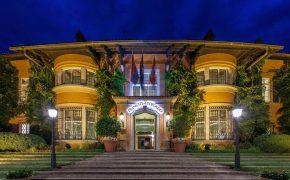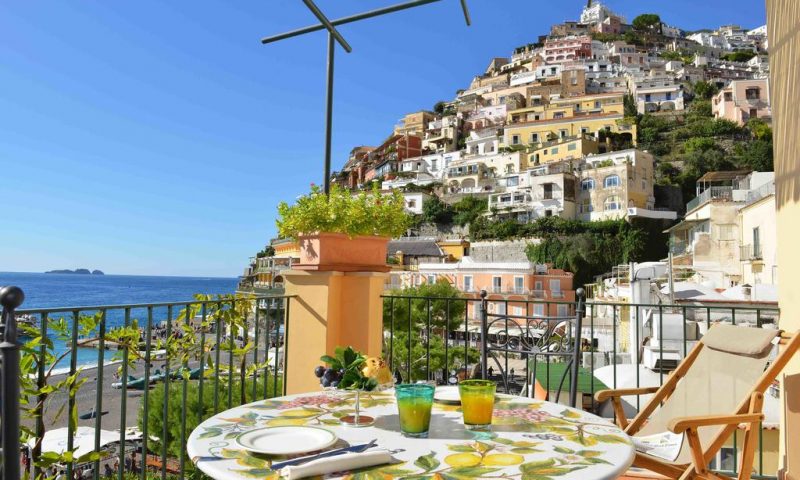
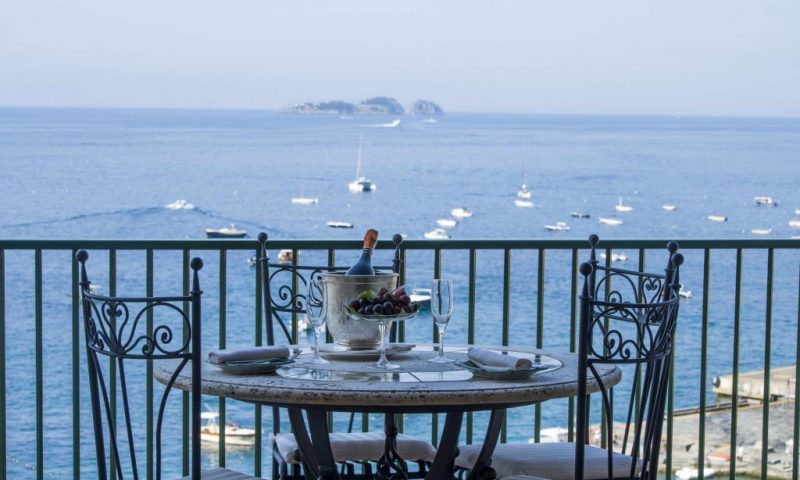
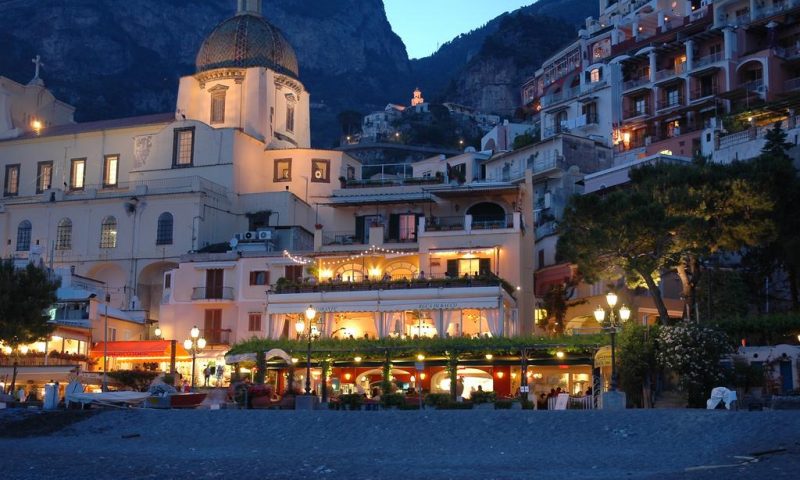
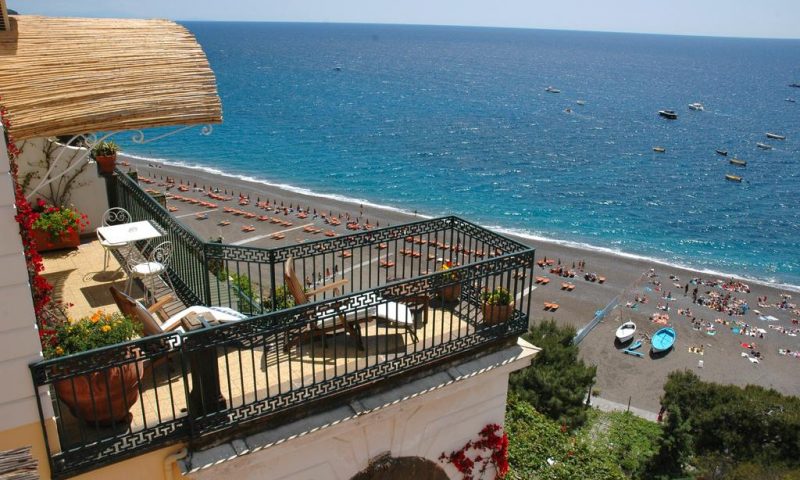
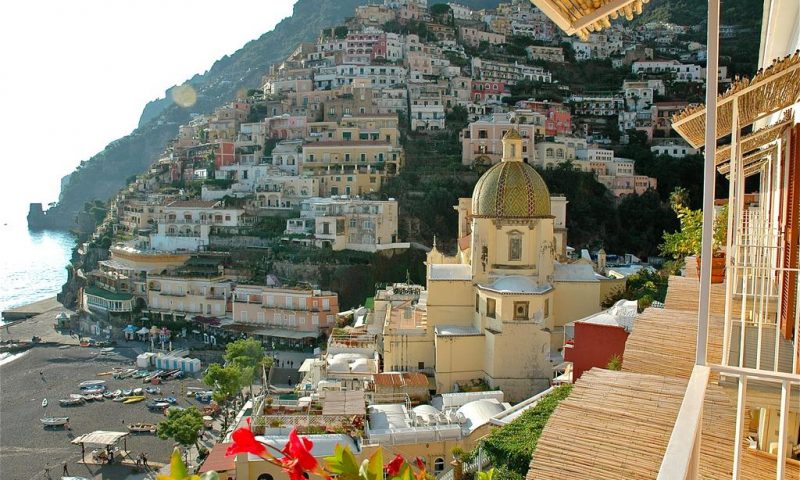
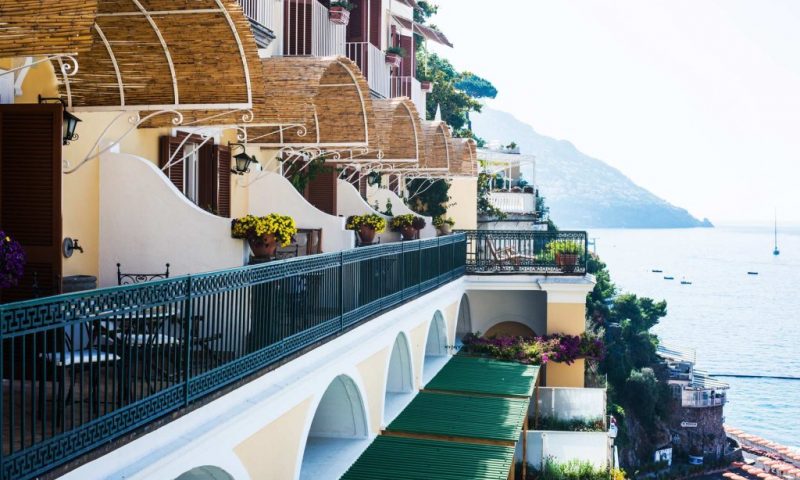
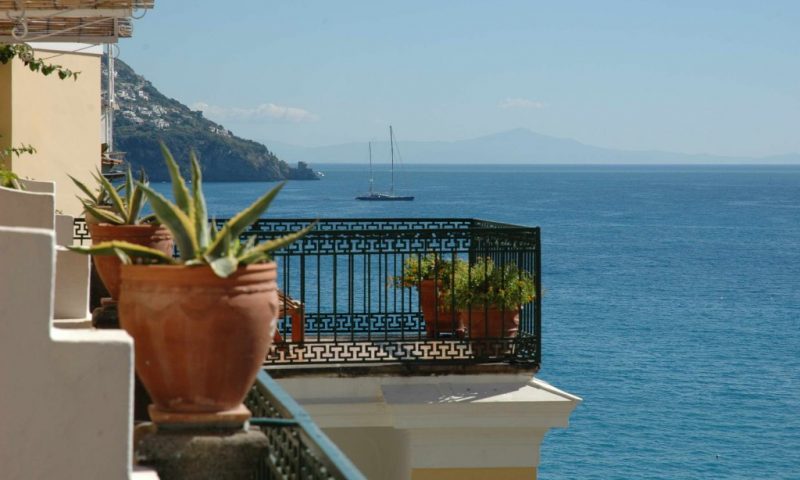
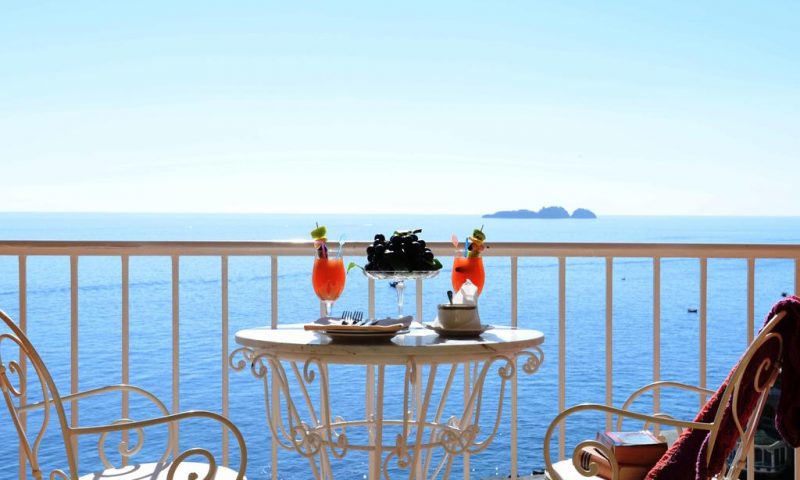
Situated on the Spiaggia Grande (Big Beach) in Positano, with the magnificent dome of the Chiesa Madre as a backdrop and beautiful sea views, the Buca di Bacco Hotel is in the perfect position for an idyllic stay in Positano. Once inside, you will relax and enjoy the staff of hotel which aims to offer guests a memorable stay.
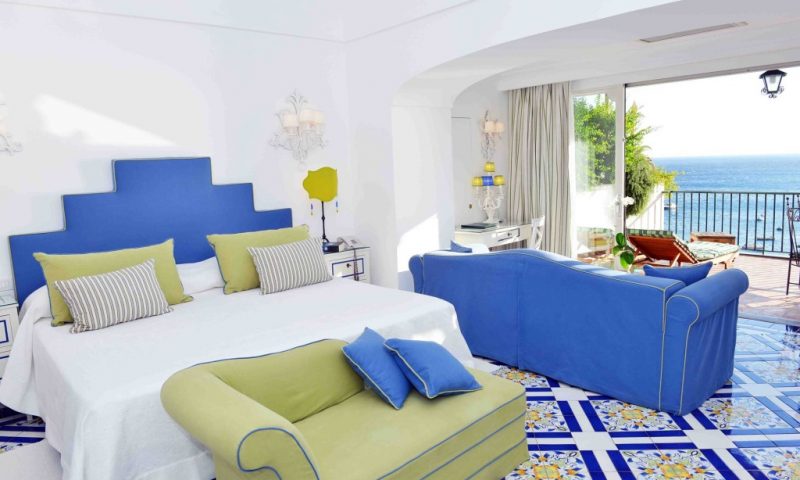
Most of the rooms have sea view. Each one is individual and is beautifully furnished and decorated with classic Vietri hand-painted floor tiles, paintings and marble finished bathrooms. All rooms have Sky television with over 250 music, sports, children’s programmes, news and movie channels, a telephone, safe box and air conditioning.
Located in the heart of Positano, right in the middle of the long beach, the hotel is removed from the local traffic while still being easily accessible, only a short walk away from the car parks and road.
The main transportation hubs for the Amalfi Coast are Naples, Sorrento and Salerno. The principal forms of public transport serving the Amalfi Coast are Sita coaches and, in the summer, the ferries and hydrofoils run by the Metrò del Mare navigational company.
THE HISTORY
The hotel is situated at the heart of Positano, on the “Marina Grande” beach, on the site where there once, 2000 years ago, stood a grand Roman Villa.
The name “Buca di Bacco” has a fascinating origin steeped in tradition: born from the imagination of a group of artists who first discovered Positano as a holiday location. They created a romantic rendez-vous spot for luxurious candle lit dinners out of a wine cellar.
It was Gilbert Clavel together with the artist Lubbers and journalist Italo Tavolato who invented the “Buca di Bacco” where “Buca”, literally meaning ‘hole’ in Italian, referred to the cellar and “Bacco” refers to the Greek mythological God of wine.
In the 1950s, the epic “Dolce Vita” years, Positano went from being a quiet getaway to the chosen destination of the international jet set.
The big change became obvious when important personalities from the world of entertainment such as Vittorio de Sica, Richard Burton and Liz Taylor, Franco Zeffirelli, Sir Laurence Olivier, Alberto Sordi amongst others, made Positano into a rival hotspot to contend with places such as Portofino and St Tropez.
The hotel looks very different today to how it looked post-war both in services offered and size, to cater for modern holidaymakers.
THE RESTAURANT
The Buca di Bacco Hotel, with its renowned restaurant, became the destination of choice for tourists visiting the Amalfi coast in the early ’50 during la Dolce Vita period.
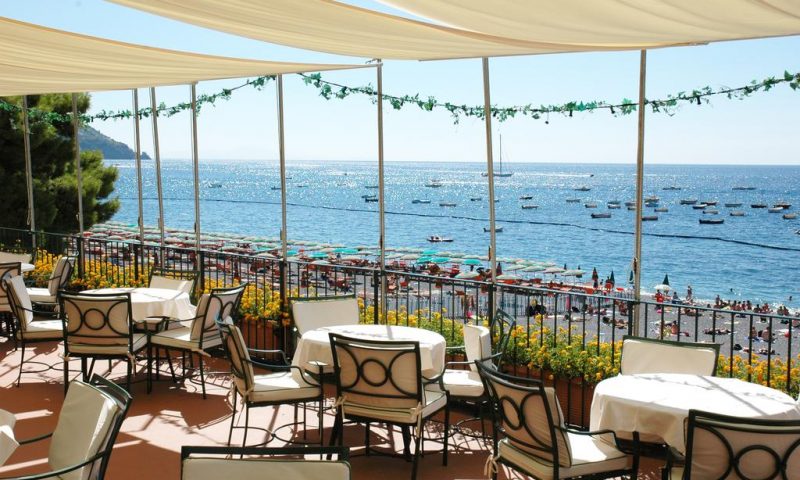
Here you will taste genuine and simple foods that will remind you of the flavours and vivacity of our land without forgetting its charming simplicity. The hall with the veranda overlooking the beach allows you to admire the sea view with the picturesque views of Positano by night.
COOKING CLASSES
Among our services, the Buca di Bacco offers the opportunity for guests to learn about our regional cooking style. Participants no younger than 15 years old.
Classes start at 3:30pm and last about two hours, finishing at 5:00pm with a tasting of the dishes prepared (appetizer, first course and second course), cooking classes are held in the open kitchen of the Ristorante Buca di Bacco.
Number of participants: minimum 2 people. Tasting: at the end of the class, participants taste the fruits of their labour and receive a souvenir gift of the culinary experience.
AMALFI – THE ARSENALS
Amalfi, the Ancient Maritime Republic of the IXth century, was equipped with a merchant and a war fleet, both well-advanced for the time. The watercrafts were safe and fast. The people of Amalfi used to build their own ships in Amalfi. They built the war ships at “Porta Marinara” – which still exists today – and the merchant ships at the stretch of sand.
THE DOME
The Dome was erected in the IXth century, but its current appearance is the result of multiple remakes. In the inside, together with its original structure, the baroque shape dates back to the 1700s.
At the beginning of the XIIIth century, Cardinal Pietro Capuano commissioned the crypt, where – still today – you may find the holy relics of the Apostle S. Andrews – patron Saint of Amalfi.
THE HEAVEN CLOISTER
The Heaven Cloister dates back to 1266 and was built thanks to archbishop Filippo Augustariccio who intended erecting a cimitery for the illustrious citizens of Amalfi. It is currently a well-kept flower garden, surrounded by Arabic columns.
PAPER MUSEM
Amalfi has very old traditions in the production of paper. The techniques had been imported from the Arab world and eventually improved in Amalfi. Today it is possible to assist at the production of hand made paper and see the old watermills at work with the help of the Canneto torrent
RAVELLO
Founded in the 6th century, Ravello is situated in one of the broadest views of the coast. Its historical origins are not certain; it was probably founded by a Roman colony in the 6th century.
Trade flourished between the 10th and 13th centuries after becoming the seat of diocese and thanks to the flourishing maritime trade, and the production of cotton and wool.
Surrounded by its architectural beauty and enchanting landscape, Ravello is regarded as the most precious gem of the Amalfi coast, and is reached through one of the most beautiful scenic roads.
For this reason, it has been a favourite destination for travellers, intellectuals, artists, musicians, such as Boccaccio, Wagner and many others. The village still treasures its medieval aspect: the windy streets, houses, churches with beautiful mosaics testify the Roman, Byzantine and Southern Arab influence.
VILLA RUFOLO
It dates back to the 13th and 14th centuries. The building, three floors decorated in Arabic style, housed important people such as Pope Adrian IV and King Robert of Anjou.
The building includes a large hall, “dining room” with short and massive columns; on the left of the building there is a 30metre high arched tower, on the right, however, there is a cloister enclosed by arches and adorned with Arabic elements. In the beautiful exotic garden of Villa Rufolo, Wagner found the ideal setting as the garden of Klingsor in the second act of Parsifal.
VILLA CIMBRONE
It could be defined as the dreamy creation of an English lord. It was a large piece of land owned by the noble Acconciagioco family, on which stood a vast rustic farmhouse.
The luxurious garden of the villa, with its scattered statues, temples, inscriptions, fountains, natural caves, culminates with the spectacular panorama of the Infinite, from which the view extends and expands to capture the breathtaking view that Gore Vidal called “the most beautiful in the world”.
RAVELLO FESTIVAL
Ravello and its villas are the setting for this music festival, full of classical music and jazz concerts. The inspiration, from which Wagner found here for his masterpiece Parsifal, has meant that this great artist is often celebrated during the concert season and has made Ravello famous worldwide as the “city of music”.
NAPLES
Naples is built on the slopes of Mount Vesuvius and extends all the way to the Campi Flegrei. The artistic value of Naples is unquestioned and many are the destinations during a tour around the city. Below you may find a few:
- Piazza Plebiscito: and the Church St. Francis of Paula. The Church was built in 1816 and was inspired by the magnificence of Roman Pantheon;
- City Hall Square (Piazza del Municipio): it is a wide rectangular square which ows its name from the city hall hosted within the borbonic building of St. James. (1819/25);
- Il grande Duomo di San Gennaro (or Dome of the Virgin Mary). It is among the biggest basilicas of Naples. It has the most ancient baptistery of the western world (Baptistery of St. John in Fonte, IVth century A.D.);
- Castel Nuovo or Maschio Angioino dates back in 1279 and it is one of the most famous Neapolitan monuments. It was the stronghold of the Angoin and Aragonese dynasties during the Middle Ages all the way to the Borbonic dynasty;
- San Carlo Theatre (1737);
- The Royal Palace of Capodimonte built between 1738 and 1760;
- The Spanish Quarter, bore around 1530 when the Spanish domination began and Naples underwent several transformations, such as the building of churches, buildings and streets;
- St. Michael at Port’Alba;
- Umberto I Gallery;
- Carafa di Maddaloni Palace (1580);
- The Chirch of the Holy Spirit (1562);
- St. Claire’s Convent (1310);
In Naples you may find several interesting Museums such as The National Archeological Museum, the Museum and The National Gallery if Capodimonte and the Royal Palace Museum.
UNDERGROUND NAPLES
The secrets, the stories and legends of Naples still echo in its cavities. It is from the time of the Ancient Greeks that Naples is digged to the bone for the construction of ancient water channels and for digging out tufa, a rock of volcanic origin out of which most of the Neapolitan historical buildings were made.
This continuous digging operation has provoked wide cavities in the subsoil which in time have been used as shelters during World War I and II, but also as secret gathering rooms or as the charnel house of the Cimitery of the Fontanelle. The guided tours start from Piazza S. Gaetano in the centre of Naples and from Vico S. Anna di Palazzo at the Spanish Quarters.
CAPRI
The blue Island is the natural extension of the Sorrento peninsula. It offers culture, the beau monde and several itineraries to explore.
THE NATURAL ARCH
It is one of the most panoramic itineraries of the Island, which develops in front of the magnificent view of the Faraglioni. The first stop is at the Matromania Grotto (or Matermania Grotto). A natural cavity with natural vaults strengthened during the Roman period with walls and mosaic decorations in plaster.
The tour continues above the Fico steps and by the coast adjacent the Faraglini, which impetuously stand out from the sea. Finally you reach the panoramic view point of Tragara and Via Camerelle that leads back to the popular Piazzetta. Duration of the walk: 2 hours. Sneakers are suggested.
VILLA JOVIS
Villa Jovis is the first of 12 Roman Villas, built in the Ist century AD and discovered during the reign of Carlo di Borbone. The Villa initially was a fort: it had tanks for the collection of rain water used both as drinking water and as thermal water stock. The view goes from the Gulf of Naples, to the island of Ischia, all the way to Punta Campanella. Duration:45 minutes.
GARDENS OF AUGUSTUS
The Gardens of Augustus rise near Via Krupp, a few steps away from the Piazzetta. They were conceived by the steal industrialist A.F. Krupp. Via Krupp (which is currently closed), was built in 1902 and its characteristic zig-zags lead to Marina Piccola. A few minutes away rises the Carthusian Monastery of San Giacomo. Duration: 15 minutes.
MONASTERY OF ST JAMES
First founded in 1371, it is said to be constructed on the ruins of roman buildings and on the sixth Villa of Tiberius. Today the Church of St. James hosts the ruins of some frescos that date back in the end of the 600s and roman statues found in 1964 at the bottom of the Blue Grotto.
DISCOVER CAPRI ISLAND
No tour of Capri can be considered complete without spending a couple of hours gazing at the colours of the sea from the bays and inlets that coast the island. The only ways to plough the waters around Capri are by taking a guided tour or renting a boat with a sailor.
A tour around the Island takes about 2 hours and 30 minutes including a swimming stop, while other options comprise a full day excursion.
THE BLUE GROTTO
It is a sea cavity erosion about 60 meters long and about 25 meters wide. To get inside you must rent one of the rowboats moored outside the grotto; after paying for the ticket, you must lay on the boat to get inside, as the entrance is quite narrow (if there is slight sea the service will be suspended).
Actually there is a second larger entrance, but it is completely submerged. There are more chances to find fewer visitors early in the morning. Light conditions allow to always visit the Grotto, but there are optimal conditions to gaze at a particular shade of blue, that is thanks to the transparency of the water and the clear sky.
MONTE SOLARO – CETRELLA – CHAIR LIFT
It is the highest spot on the Island (589 m. above sea level). One may reach it both on foot (taking the little road from Viale Axel Munthe), or by taking the chair lift a few steps away Piazza Vittoria.
VILLA SAN MICHELE
Villa San Michele is located on the north-eastern side of Anacapri, at 327 m. above sea level, where in ancient times a Roman Villa used to stand. Its ruins have been kept by the architect Axel Munthe and can be seen from the garden. Inside the Villa you may find Roman, Etruscan and Egyptian ruins.
PAESTUM
Located on thevalley of Sele, Paestum is a very important archaeological site. It was founded during the VIIth century B.C. and dedicated to Neptune, the God of Water and Sea. By visiting Paestum one may view:
THE TEMPLE OF NEPTUNE
The Temple of Neptune has been considered to be slightly subsequent the Temple if Zeus, built between 471 and 456 B.C., while most recent studies date it during the evolutionary period of the western Greek templar architecture.
THE BASILICA
Located in the most southern part of town, it is the first temple built in Paestum.
THE TEMPLE OF CERES
Located at the upper line of the southern part of the city, the temple has been named after Ceres, but was actually dedicated to Athena, as gathered by the several images of the goddess found in the temple, represented in an armour.
THE SACRED PATH AND THE NEIGHBOURHOODS
Leaving behind the back facade of the temples and walking towards west, you may find the foundations of the long wall that used to circle the sanctuary and access the Sacred Path or Via Sacra. Walking in the direction of the Forum there are the ancient roman neighbourhoods on the left side.
POMPEII
- First itinerary, about 2 hours long, it touches the main locations of the city life: The Anphitheatre, the Big and Small Theatres, the Thermal Baths of the Forum, the public offices, the Basilica, The Temples of Isis, Jupiter, Apollo and the sanctuary of the Lari Pubblici, the Macellum, the Lupanare and some private houses, such as the house of the faun, and the house of the ancient hunting.
- A second – more complete – ititnerary about 4 hours long – can be taken starting from the Anfiteatro Square. The tour provides visits at the Necropolis, the fugitives garden, the garden of Hercules, the Anphitheatre, the Big and Small theatre, the Stabian Thermal Baths, the Eumachia building, the Public Offices, and the various Temples of Jupiter, Isis, and Vespasian.
- The third and most complete itinerary (about 6 hours long) touches all the above mentioned locations and in addition: The Triangular Forum, the Doric Temple, the Temple of Fortuna Augusta, the House of the Dioscuris, the House of Meleagrus, the house of the ship Europa, the House of Achilles Loreius, the house of the small fountain, the House of Sallustius, the bakery, the Lupanar, concluding with the majestic Villa of the Misteeries, which name comes from a fresco found in the Villa that represents women while attending a pagan service, in fact, mysterious.
Among the most remarkable houses, we highlight the House of the Faun, the biggest and majestic house in Pompeii, the House of the Amorini Dorati and the House of the Vetti. The Lupanar, the Bakery, the Macellum, the Thermal Baths and the Gym are other sites that make one think of Pompeii as a rich city, with a florid economy and a pleasant lifestyle.
MOUNT VESUVIUS
In the area of Mount Vesuvius the naturalistic itinerary of the enchanting National Park and its 10.000 square meters is naturally one of the richest parks for history and culture.
It offers several trails that satisfy the most different targets depending on duration, difficulty, age and interest. The park is supplied with road signals that allow to easily walk its paths. A total of 15 itineraries, 9 of which secured and set up.
HERCULANEUM
The name “Herculaneum” comes from the legend that Hercules would have founded the city after falling in love with the beauty of the places. The eruption of 79 B.C. covered the city with lava and mud which created a pack that was eventually covered with resin.
The excavations began in the 1700s unearthed Roman dwellings such as the Villa dei Papiri, which was first opened to the public in 2003, about 250 years after its discovery. The Villa owes its name to the collection of over 1000 papyrus papers retrieved and know treasured in the Archaeological Museum of Naples.
Rooms: 46
Price: from 449 EUR per night
——————————————————————————
Write us to receive our best offer for the
HOTEL BUCA DI BACCO POSITANO
——————————————————————————
Source: www.bucadibacco.it
Deals of the day
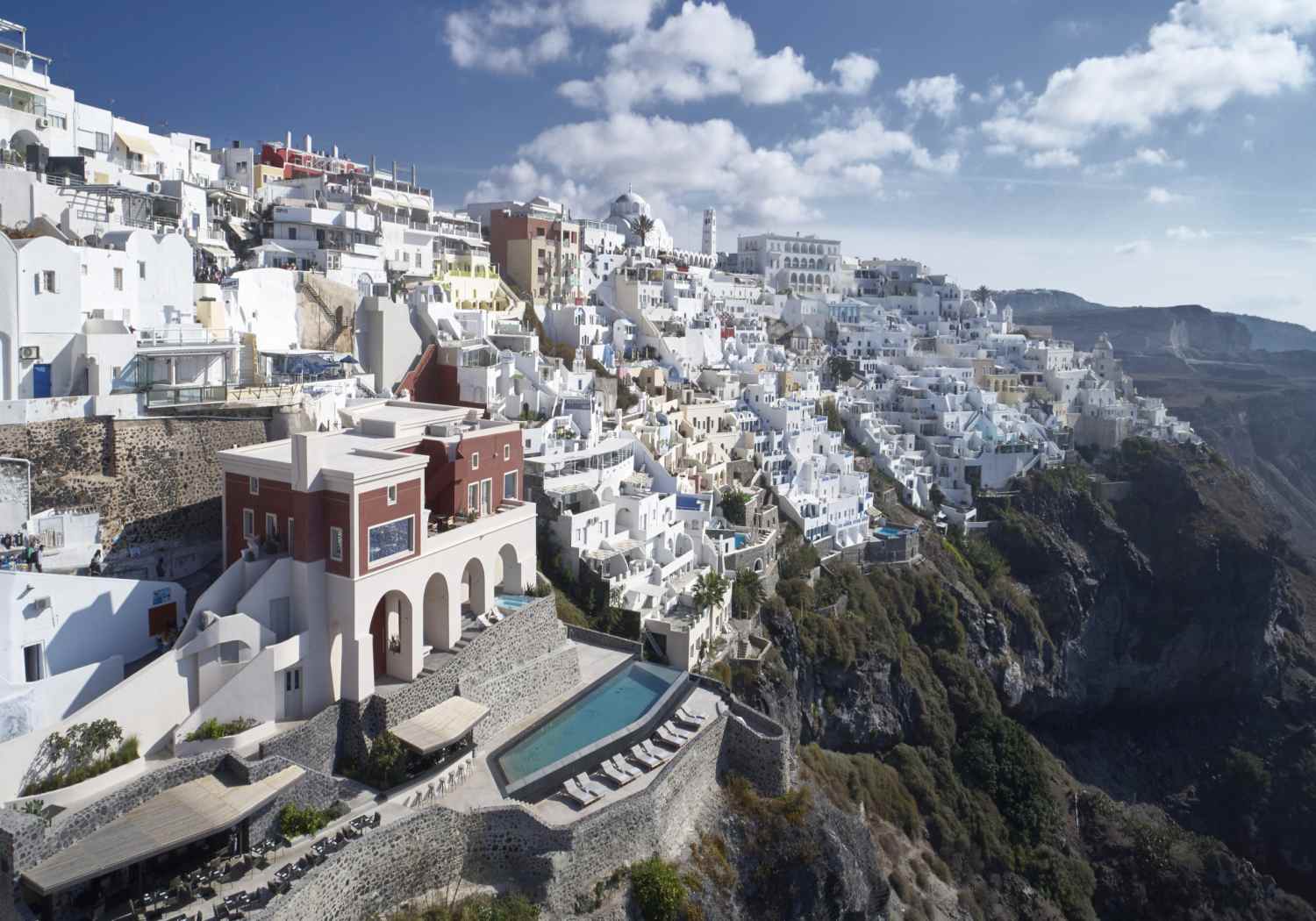
Villa Bordeaux Santorini
Inspired by the traditional architecture of the Cyclades, the exceptional Santorini Luxury Suites of Villa Bordeaux are part of an authentic neoclassical house. They have been restored so as to preserve the charm and character of a bygone era while at the same time offer all indulgences and comforts of modern life. Spacious, elegant and chic, all 4 luxury suites in Fira Santorini are fitted with fine furnishings and…
Parador de Cuenca
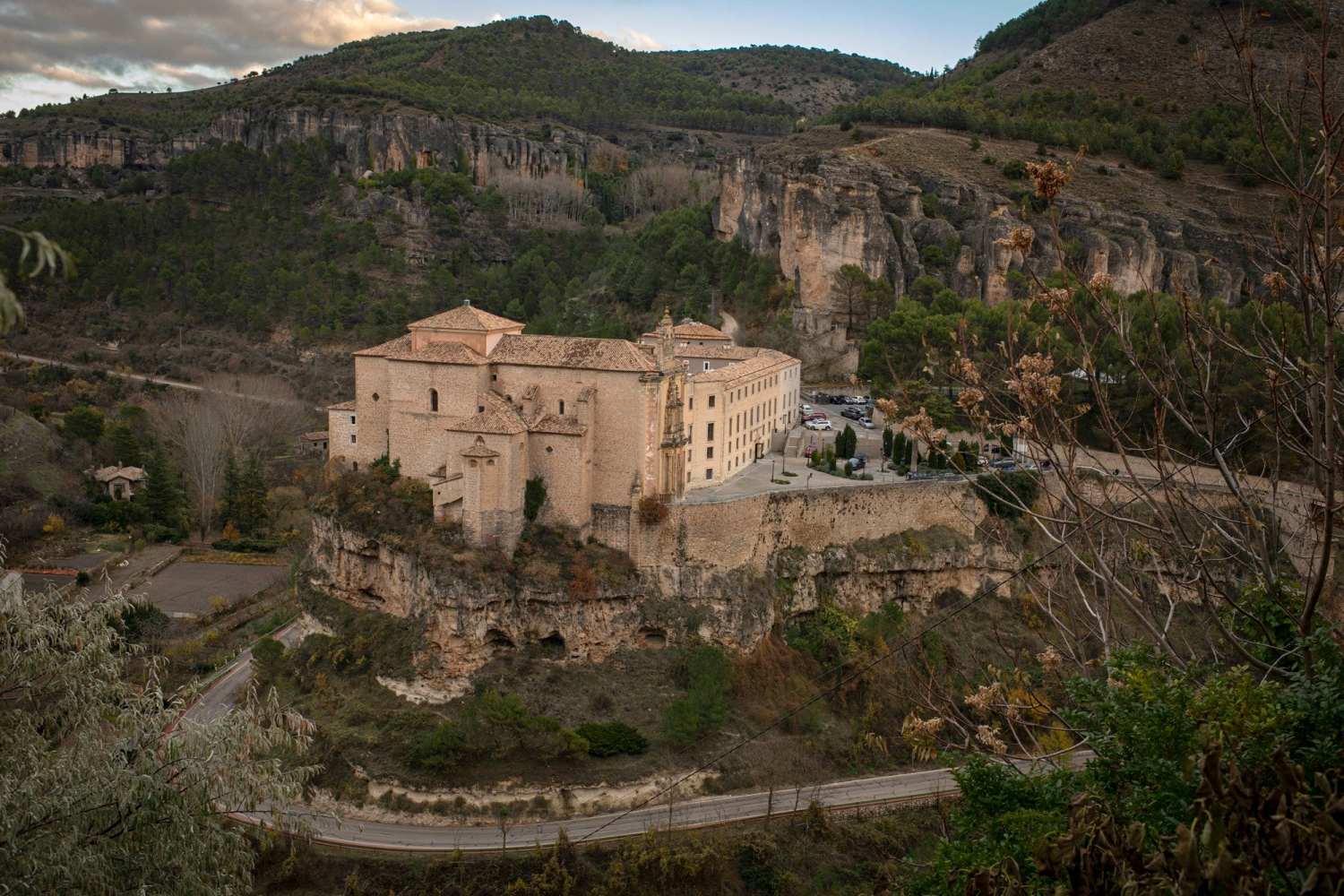
The Parador de Cuenca is a destination in itself. It’s located in a 16th century convent originally built for the Dominican order and it’s one of the most representative monuments of the city today. It’s located in one of the most special places in the city, next to the San Pablo bridge and opposite the Casas Colgadas or Hanging Houses. The convent of San Pablo has a beautiful glazed cloister with semi-circular arches and a…
Hotel Nidwaldnerhof Beckenried
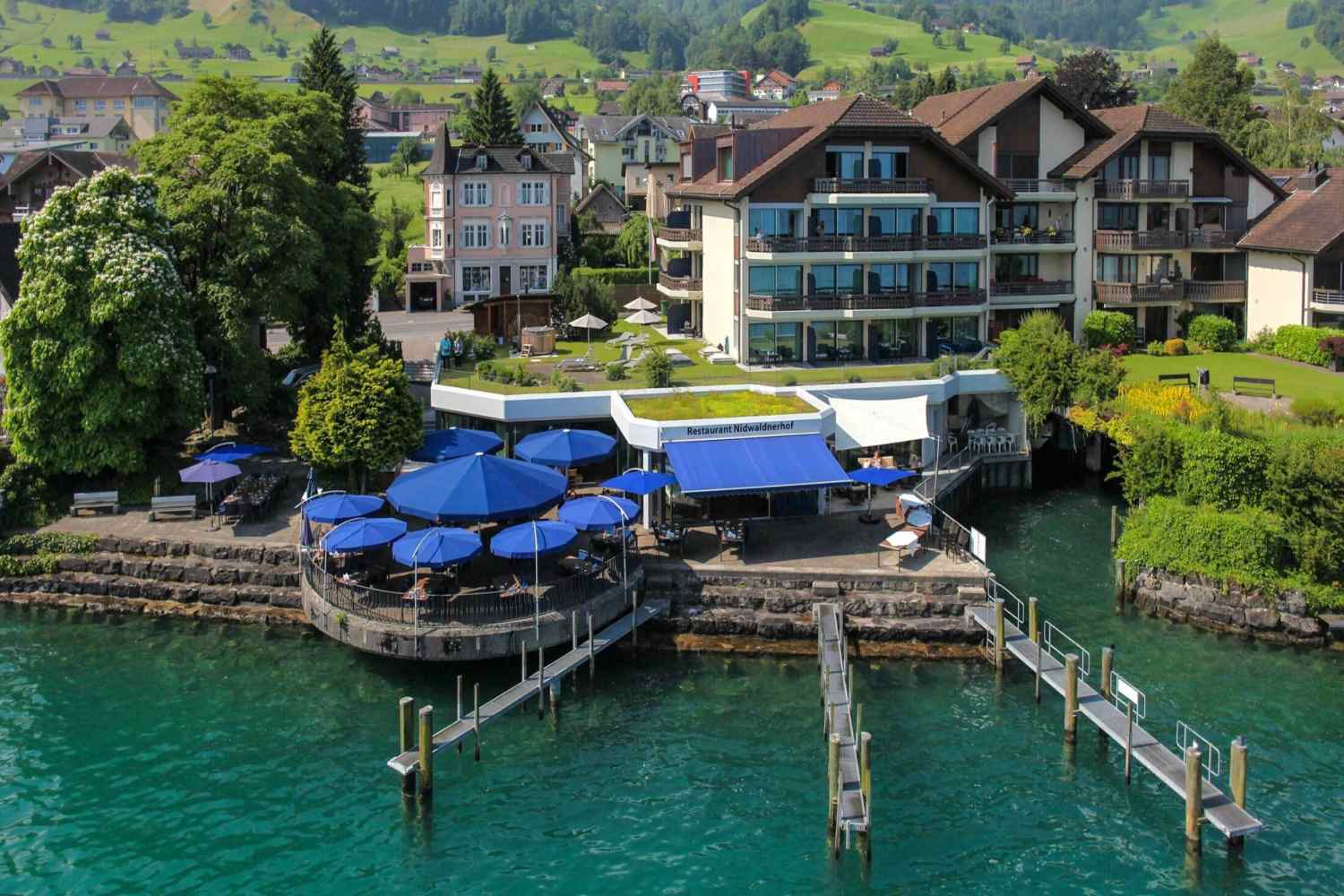
About 100 years ago the Nidwaldnerhof was known as Park-Hotel Nidwaldnerhof. “In a favoured, open location, with a large covered terrace, directly beside the lake. Many rooms with balconies. Music salon. Electric lighting. Shady park with 400 m of shoreline and magnificent all-round views. Choice cuisine…” according to the brochure available at the time. In 1979 the Park-Hotel Nidwaldnerhof was torn down and today’s…
Borgo Pignano Volterra
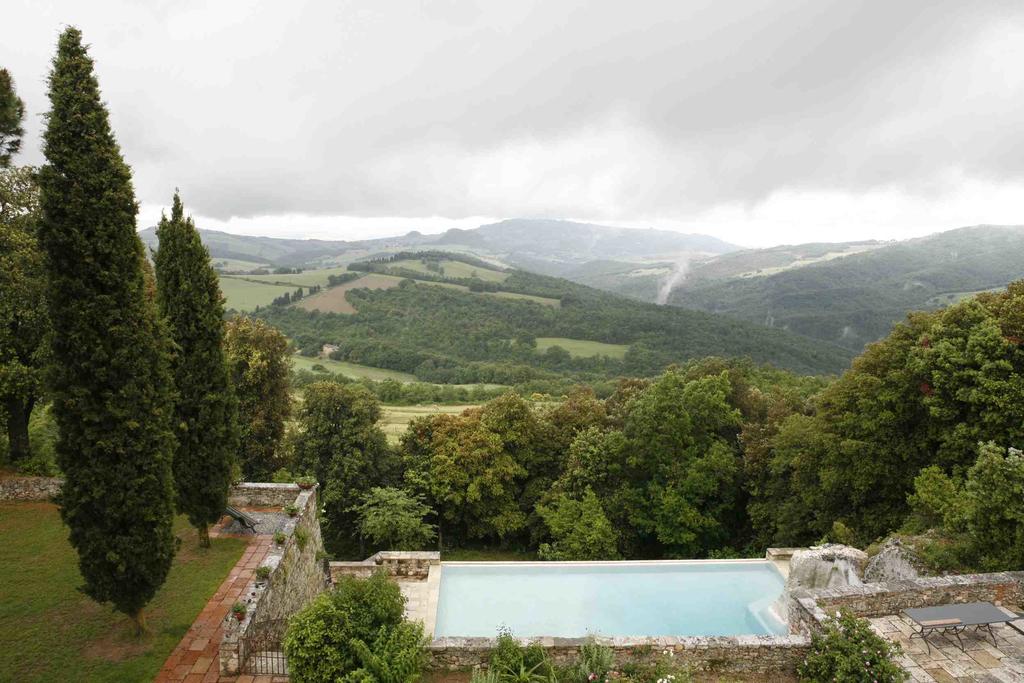
Deep in the heart of historic Tuscany lies an enchanting haven of peace and tranquillity. At Borgo Pignano you will discover a beautifully restored country estate offering an exclusive combination of elegant accommodation, exceptional comfort and gracious hospitality. Borgo Pignano is an elegant country estate in the heart of the Tuscan countryside, just a short drive from the historic, hill towns of Volterra and…
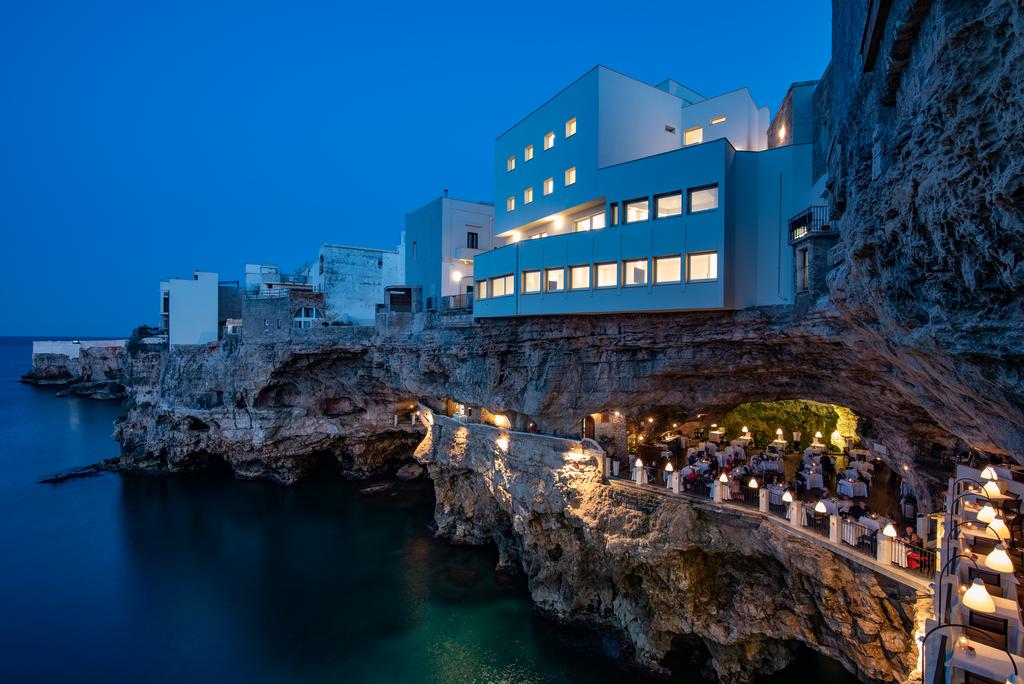
Hotel Grotta Palazzese Polignano a Mare
Naturalis Bio Resort is an exclusive Charming Residence, situated on a promontory with a view of the Salento countryside. Naturalis Bio Resort & Spa is the result of a fine and careful renovation of an ancient rural village surrounded by typical dry stone walls and protected by majestic old olive trees. A unique hotel facility, the most authentic rural tradition of Salento and our careful hospitality, perfectly come…
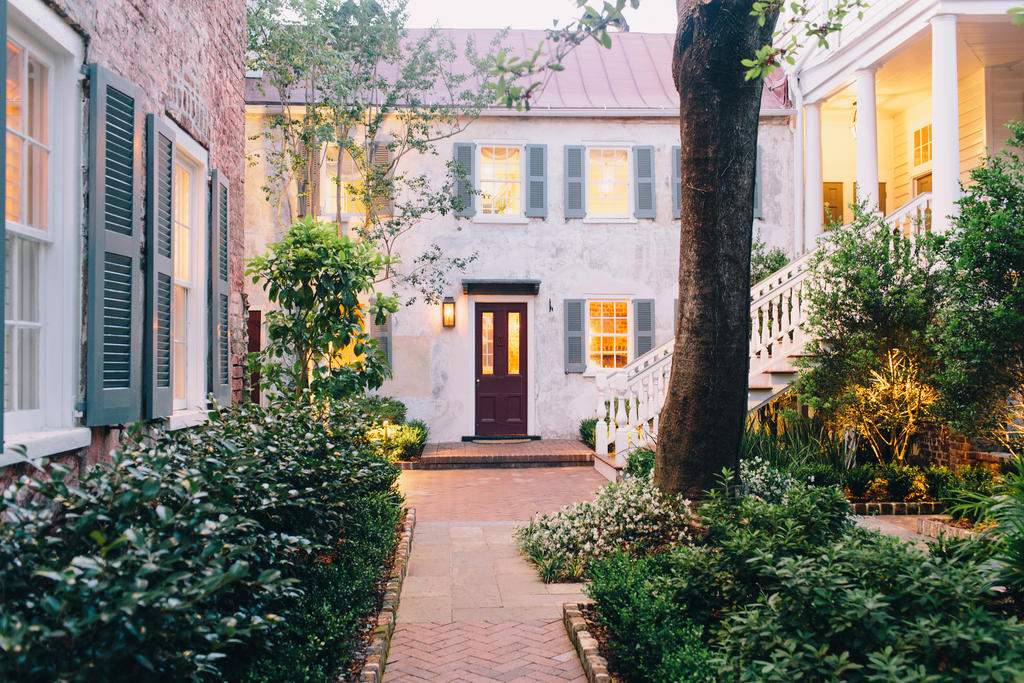
George Zero Street Charleston
Named after our actual street address, Zero George is comprised of sixteen lush guest rooms and studios in three painstakingly restored historic residences and two brick carriage houses that surround our private garden courtyard. We’ve infused it all with a sense of intimacy and warm personality, honoring the buildings’ solid 1804 bones and graceful architecture with measured, timeless design. At Zero George, you’ll…
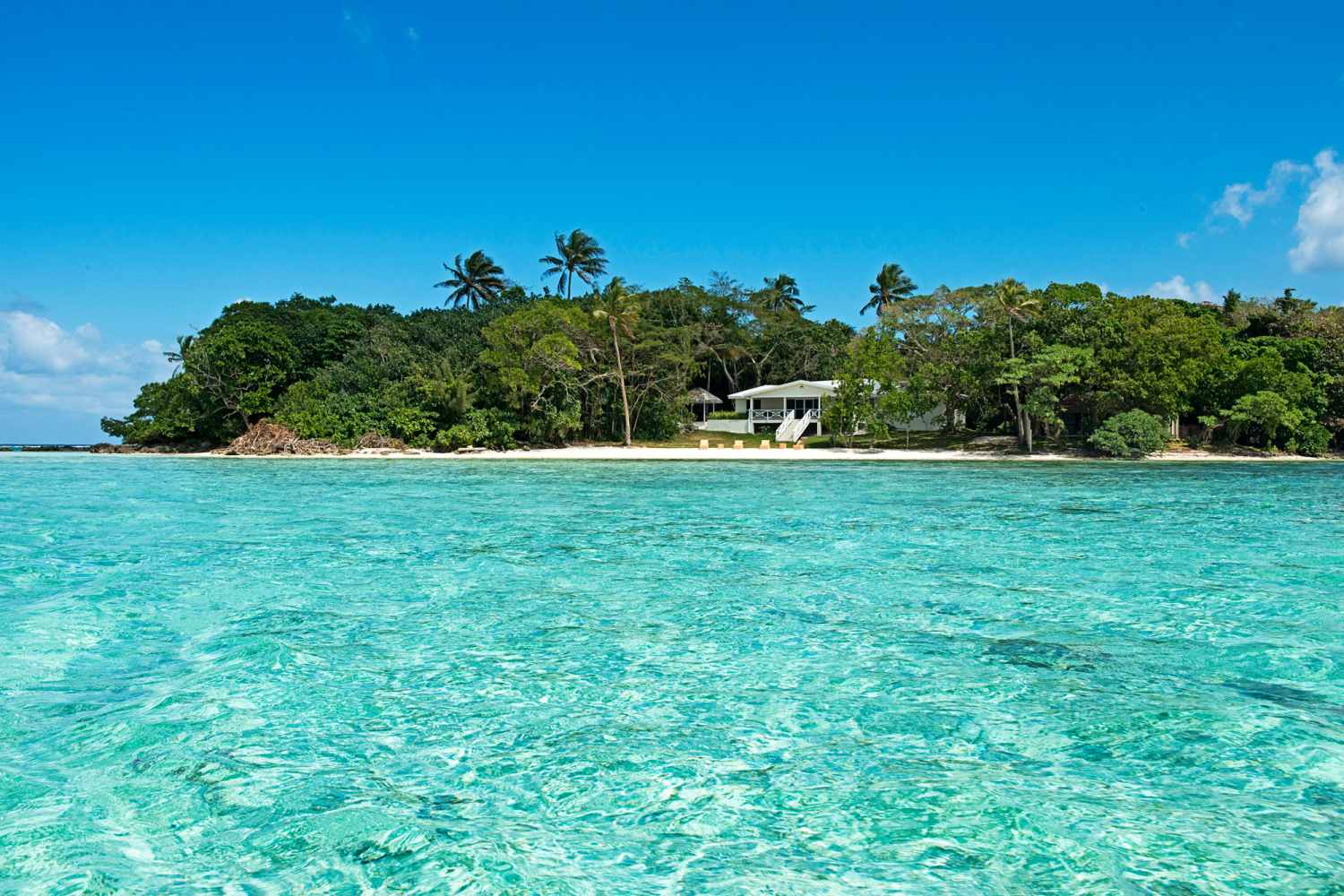
Erakor Island Resort & Spa Vanuatu
We look forward to sharing our culture, our customs and our beautiful smol aelan (small island) with you. Whether you are coming for a family holiday, reunion, tropical wedding, honeymoon, friends’ get-together or a relaxing break, we look forward to meeting you and sharing our culture and customs, along with plenty of Vanuatu smiles! There is so much to do and enjoy on this fabulous little island and when you…
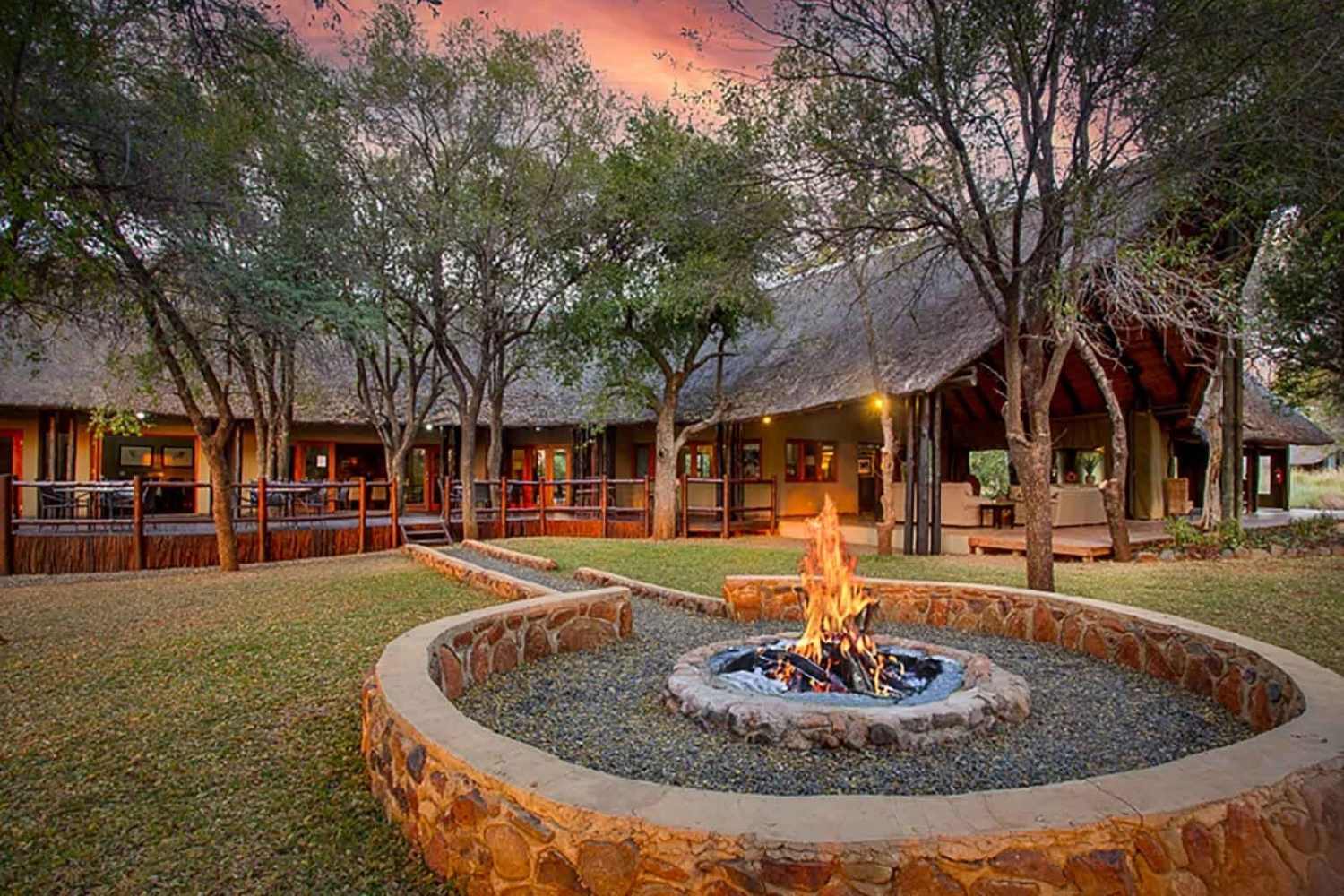
Black Rhino Game Lodge
Black Rhino Game Lodge is a luxury safari lodge located in the North West Province of South Africa, in the malaria-free Pilanesberg National Park. The lodge is situated in a prime location for game viewing, with access to over 55,000 hectares of wilderness. Black Rhino Game Lodge offers a variety of safari activities that allow guests to experience the beauty and wildlife of the African bushveld. The Pilanesberg National Park…
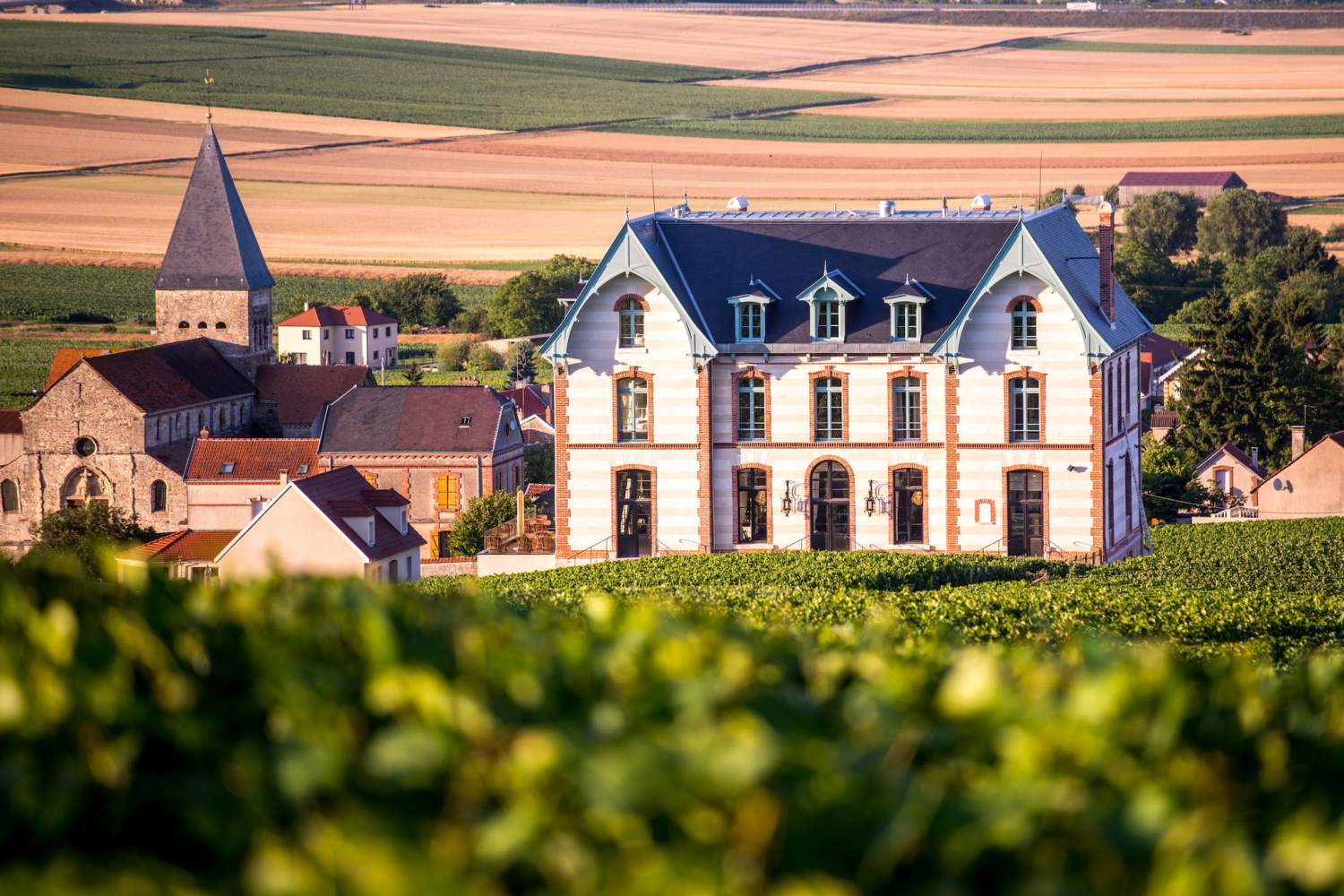
Chateau De Sacy Reims
The Chateau de Sacy, surrrounded by vineyards on the outskirts of Reims, dates back in its original state to the middle of the 19th century, but in its present form it’s been thoroughly transformed — the Château de Sacy is a fantasy more romantic than the real thing, a luxe and lavish 12-room hotel that incorporates a multitude of historical styles, and a bit of modernity as well. The spa includes barrel-style hot tubs with…
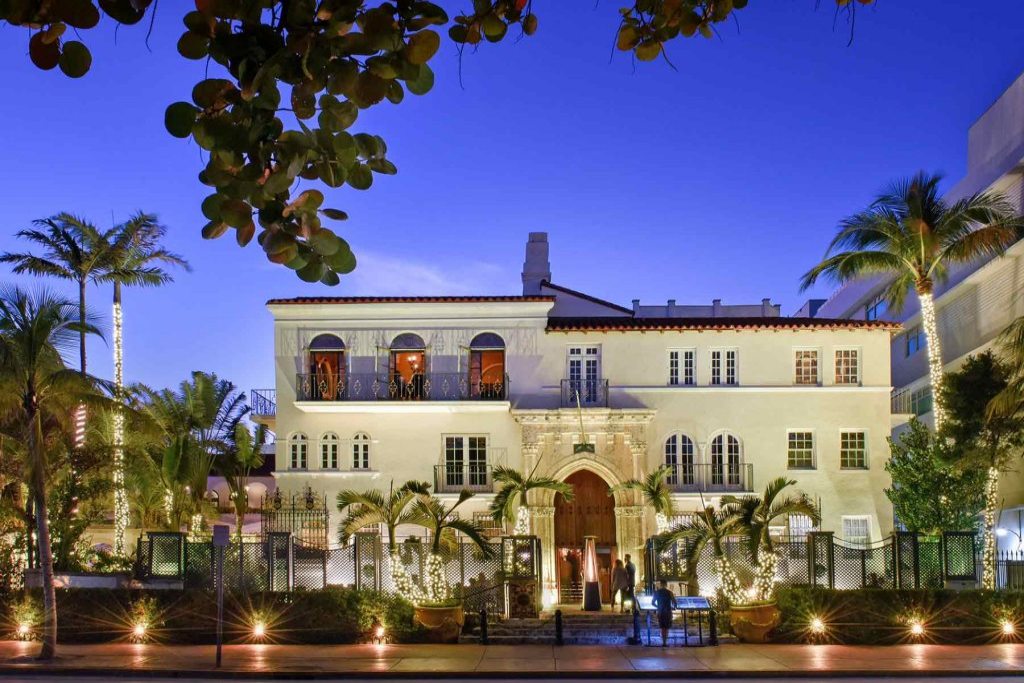
Casa Casuarina Miami
Casa Casuarina was built in 1930 by Alden Freeman. Alden Freeman’s father, Joel Freeman was Treasurer of The Standard Oil Trust (also known as Rockefeller’s Company) and left Alden a fabulous wealth when he passed away. That gave the young and wealthy Alden the opportunity to retire at the age of 27 from being an architect and travel all over the world. Alden was also a descendent of the Mayflower on his mother’s side…