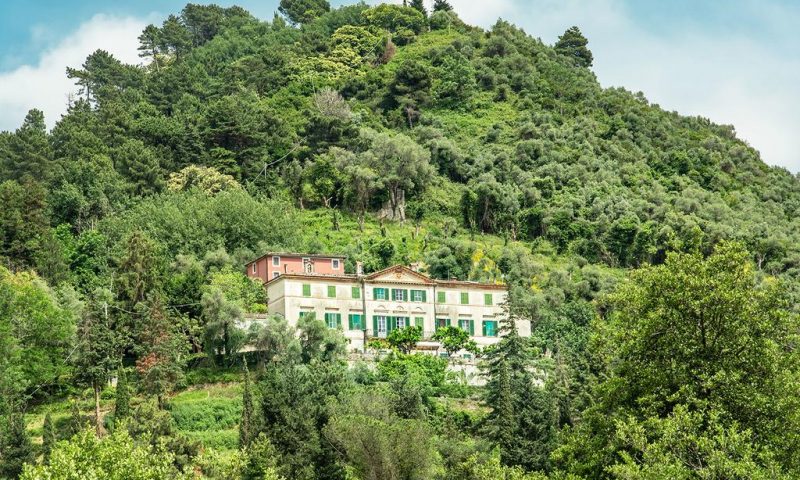
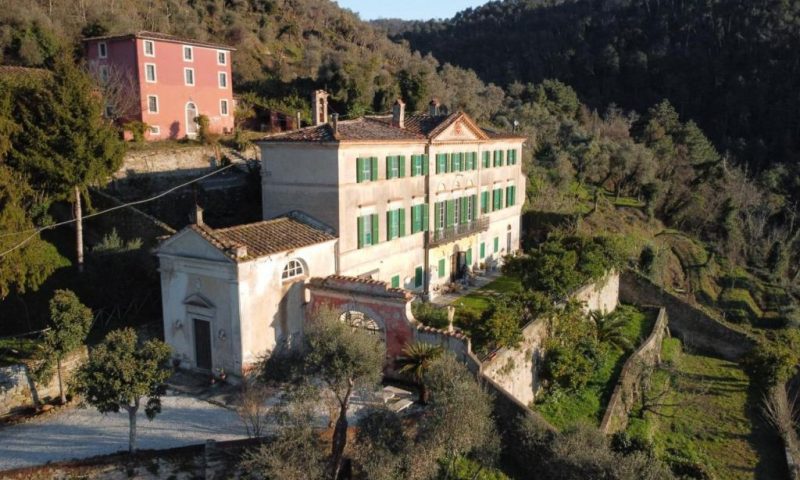
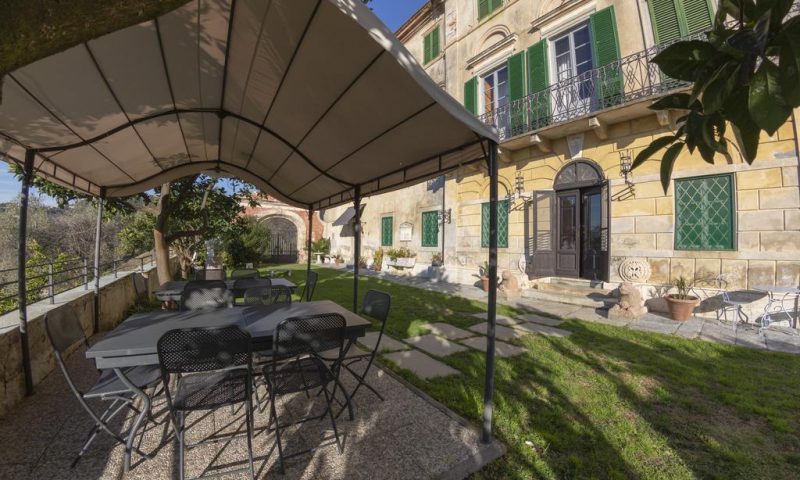
The renovation of the historyc Villa Cavallini represents the outcome of an intense research and study by Dr. Giorgio Santoro Cayro, known as Giorgino, beloved cousin of the current owners Alessandro and Isabella Cavallini.
The essential document to trace the origins of the villa is represented by a marble slab fixed on the external wall of the villa, near the main entrance and engraved with the verses of a poem in Latin.
The translated poem reads as follows: “This house, noteworthy for its position not for its grandeur, which promises peace to the boring gentleman, the world also invites you as a foreign guest to the vast expanse of sea and sky.
Here loneliness without boredom, rest not without occupation the scrub of olive and lemon trees that you can see is of uniform color in the leaves and in the fruit ensures the perennial spring and autumn of a small hanging garden and does not lack in the extraordinary fertility campaign and the stone itself is rich in silver.
Do not believe it, however, the place of joy, it is the child of pain. The fragrant offshoot irrigated by tears grew earlier than from the source. Maria Francesca Mansi, soon torn away from the harsh fate followed by the end of her children and pains.
She herself had chosen this place for her entertainment. Carlo Orsucci erected this monument of love and sadness in the year of regained health I694. I wish a happier elixium to the soul of the much desired bride and to posterity a better fate”.
ENJOY YOUR STAY
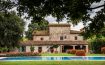
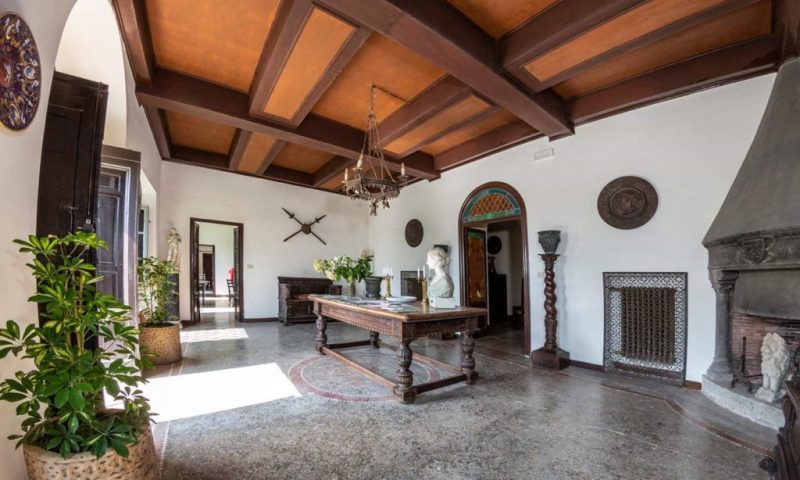
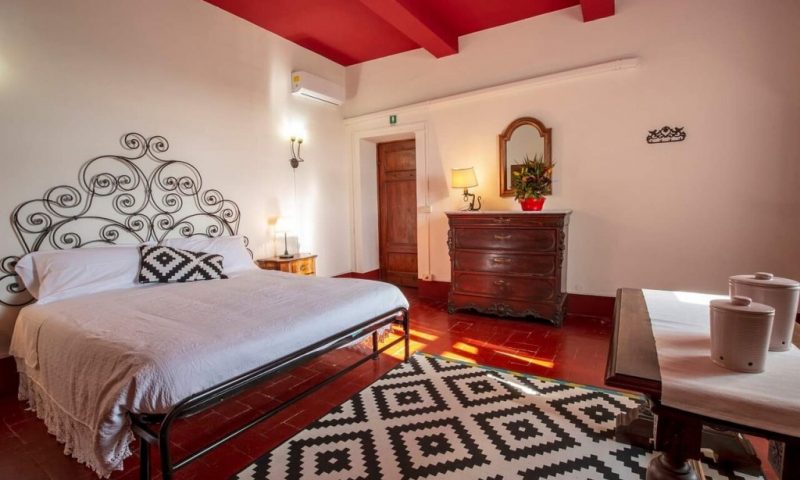
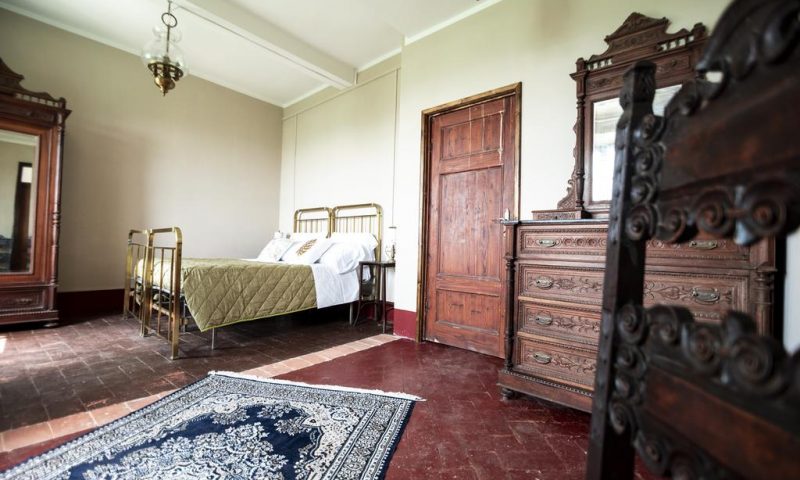
- Historical 17th century Villa, recently renovated and refurnished with all the best comforts.
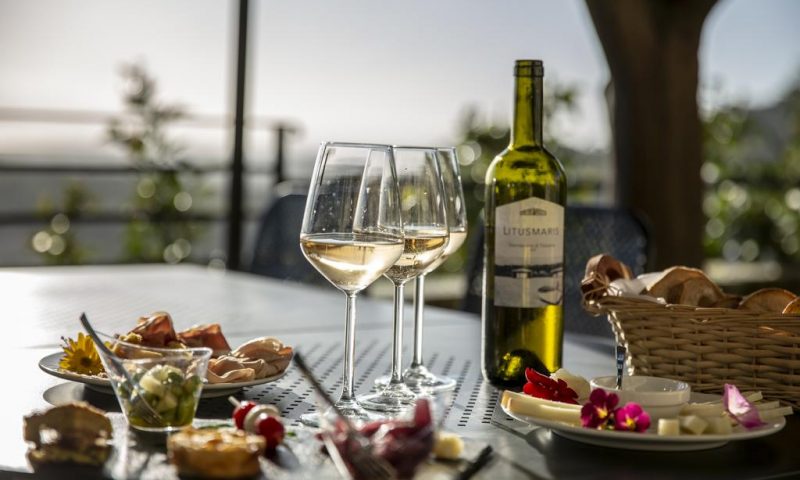
- Farm with locally fresh and genuine products!
- Only five km far from the famous Lido di Camaiore, Viareggio and Forte Dei Marmi’s beaches.
- Surrounded by the amazing Tuscan hills, great place for hiking and mountain-biking.
AUTHENTIC
Since 1938 the Cavallini’s family manages the lands and winery. The farm, originally manged by Eng. Virginio Cavallini and later his wife Maria Piqué Cavallini, produceding EVO Oil, Wine and many Vegetables.
LOCAL
Over time, the Cavallini family’s farm has received important awards and prizes for the increase in production and for the enhancement of agricultural entrepreneurship in the territory of Camaiore.
Today the niece of Maria Piqué Cavallini, Isabella Cavallini takes care of the management of the company with the intention of bringing the estate back to the successes of the past.
The extensive land planted with olive trees – about three hectares on the steep hill ‘Monte Mansi’ structured in terraces supported by rocks and dry stone walls (some dating back to the 19th century) – will give its first harvest in the autumn – winter 2019.
CONSCIOUS
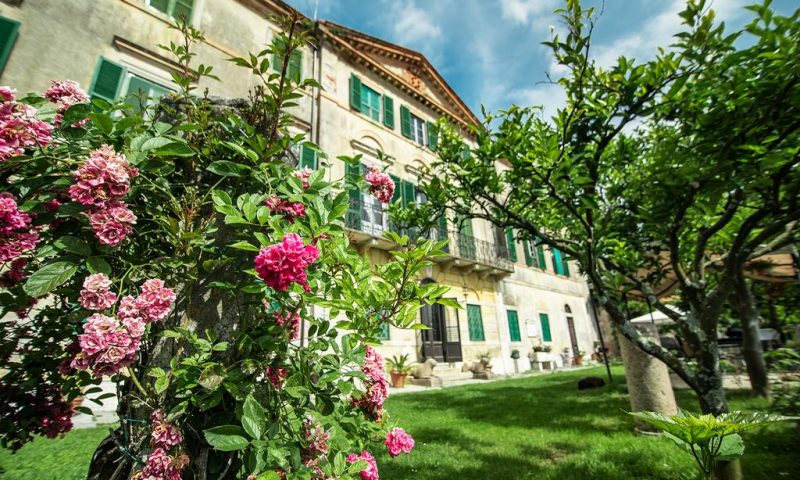
The orchard adjacent to the recently recovered villa produces oranges, lemons and grapefruits. Terraces have also been set up for the cultivation of peaches, cherries, apples, figs, pears, feijoa, apricots and plums that will have a full production within two years.
A first harvest of small fruits, blackberries and raspberries, as well as other vegetables is planned for 2020.
FUN AT THE SEASIDE
Villa Cavallini, an exclusive place surrounded by nature, is located along the Francigena’s way, five kilometers from the famous beaches of Lido di Camaiore, Viareggio, Marina di Pietransanta and Forte Dei Marmi. Fifteen kilometers from the of Lecciona’s free beaches area of the San Rossore and Migliarino’s nature reserve.
TRAILS & CYCLING
The Camaiore’s surrounding area is known for the famous Trails with over 15 different routes around the city, a very cool destination also for the Cycling trails, Mountain-Bike and Downhill routes. Not far from the villa, in the Casoli and Metato’s area, there are a Walls for free Climbing.
RELAX IN VILLA
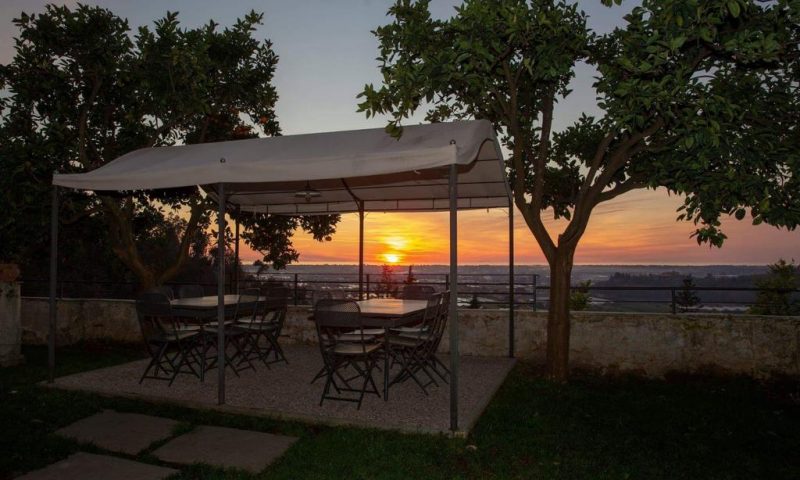
Enjoy your holiday at Villa Cavallini! Following the slow rhythm of nature, chillout and relaxing immersed in the nature of the Tuscan’s hills. Spending your day outdoors, having fun with your friends or relaxing to see the amazing panorama.
THE HISTORY
The reconstruction of the history of Villa Cavallini represents the result of an intense research and study by dr. Giorgio Santoro Cayro, known as Giorgino, beloved cousin of the current owners Alessandro and Isabella Cavallini.
The essential document to trace the dawn of the villa is represented by a marble slab fixed on the external wall of the villa, near the main entrance and engraved with the verses of a Latin poem.
The translated poem reads as follows: “This house, noteworthy for its location not for its size, which promises peace to the lord who is bored, the world also invites you as a foreign guest to the vast expanse of sea and sky.
Here solitude without tedium, rest not without occupation the scrub of olive trees and lemons that you can see is of uniform color in the leaves and in the fruit ensures the perennial spring and autumn of a small roof garden and the extraordinary countryside is not lacking fertility and stone itself is rich in silver.
Don’t believe it, however, the place of joy, it is the child of pain. There grew scented offshoot irrigated by tears before the source. Maria Francesca Mansi, soon torn from the bitter fate followed by the end of her children and pains.
She herself had chosen this place for her amusements. Carlo Orsucci built this monument of love and sadness in the year of regained health I694. I wish the soul of the much desired bride and posterity a happier fate “.
The slab celebrates the end of the construction work on the villa. It is understood that the villa was built by the nobleman Carlo Orsucci in 1694 on top of an existing structure, probably a farmhouse where the spouses Carlo Orsucci and Maria Francesca Mansi used to spend periods of leisure and vacation.
Historical records show that the couple was very close. The text of the song “Apollo celebrating the very happy wedding of the illustrious gentlemen Carlo Orsucci and Maria Francesca Mansi” written specifically for the celebration of their wedding, celebrated in the year 1681, is available in the archives of the Museums of Lucca.
The Mansi spouses therefore owned the land and the farmhouse on whose foundations, still existing and visible, the villa was built in 1694.
The construction was commissioned by Carlo Orsucci to honor the memory of his beloved wife Maria Francesca Mansi who died with his children of the couple disappeared prematurely from tuberculosis, an incurable disease at the time.
Carlo Orsucci, after healing from the same disease, decided to erect the villa in memory of his beloved wife and children and the particular affection and bond that linked the family to these places. The description of the characteristics of the estate reported in the Latin verses, engraved more than three hundred years ago, is still current.
The widower Carlo Orsucci passed away, since the latter had no offspring, at first the villa passed to a certain Silvestro Arnolfini. The heir Luisa Arnolfini, who lived in the 18th century, had lost possessions, his lands extended from Sant’Anna di Stazzema to the sea.
Still today on the road to Camaiore there is a path that leads to the summit of Mount Mansi (the mountain on which the villa stands) and, about halfway along the path, there is a stone block where the carved initials of Luisa Arnolfini are still visible in Burlamacchi.
The block delimited the lands of the Arnolfini. Subsequently, by inheritance or for sale Story (the archives are devoid of certain acts), the villa passed to the Marquis Mansi probably descendants of Maria Francesca Mansi.
The Mansi family between the fifteenth and sixteenth centuries was the best known noble house of Lucca, a very rich family of merchants and landowners, owners of extensive territories in the province of Lucca, and in the coastal area.
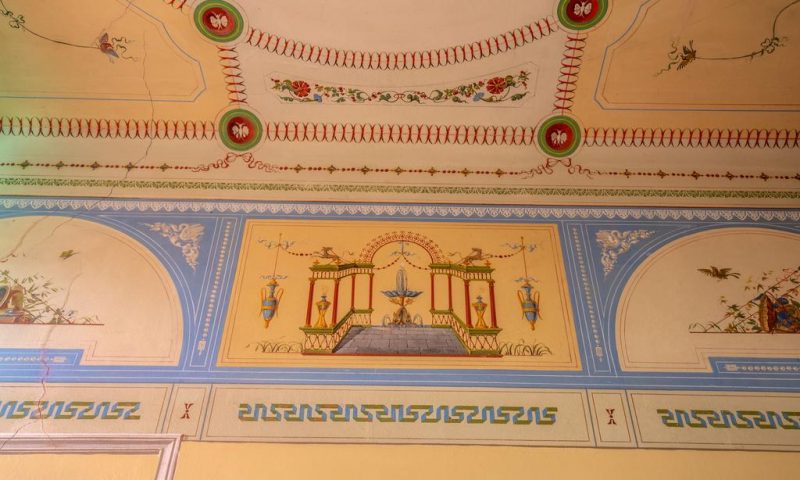
The descendants, Marquis Giovanbattista Mansi and his wife, who lived in the villa during the 19th century, are still buried in the chapel. The tympanum of the villa and several frescoes in the main hall of the villa bear the coat of arms of the Mansi family with the epitaph of the “Ego solus Mansi” family.
The Marquis Giovanni Battista Mansi died on 1/12/1892 and, having no direct descendants or good relations with the other members of the family, he left the villa as a legacy to a nunnery with the first header of the nun Santini Emilia who died on 30 / 4 / I897.
For years, presumably from 1893 to 1927, the villa was the seat of a nunnery, a peaceful place of prayer. From the cadastral formalities it appears that the property was transferred from woman to woman, it is therefore presumed to be the mother superior of the congregation to her subsequent universal testamentary heirs.
Meanwhile, the Mansi heirs sued the congregation of nuns by challenging Giovanni Battista Mansi’s will and, after several years of litigation, they found an agreement.
The villa was then sold to the Burlamacchi brothers Ascario, Attilio and Luigi fu Carlo, with the usufruct of the deaf-mutes Martinelli. By division the villa remained to Luigi and subsequently ceded it to this Bertolli Francesco.
In May – June 1928, the workers of the Bertolli family (owner of the villa before the Cavallini) in carrying out a burglary for the expansion of the land cultivated with vineyards, found a terracotta pot dating back to the Etruscan period 5th century. – VII century B.C. .
Believing that there were treasures inside the vase, the workers broke the vase, but instead of finding a treasure, they found some burnt bones. As a result of the investigations of the Lucca Prosecutor’s Office, archaeological finds similar to those found in the neighboring Etruscan tombs were found.
The murder case was closed. Continuing the excavations, shards, remains of vases, and other ornamental objects, partly preserved in the villa’s garden, came to light. The vase found, a “corded ziro”, is exhibited in the Guinigi museum in Lucca.
At the site of the vineyard, digging into the earth, it is still possible to find small fragments of ancient vases. In July 1932 Bertolli sold the villa and land to Eng. Cavallini Virginio, husband of Maria Piqué in Cavallini, who had three children Giuliana, Oretta and Giorgio. Eng. Virginio Cavallini, grandfather of the current owners Alessandro and Isabella Cavallini, Lieutenant Colonel of the Italian Navy, famous naval engineer, gold medal of the Civil Engineer, owner of several international patents in the nautical sector and in the design of submarines, was a brilliant man who It also achieved great success in the management of the agricultural company active on the property’s land.
The modern oil mill remained active until 1980. Eng. Virginio died in 1942 leaving his wife Maria Piqué in Cavallini, the first son Mario Cavallini from a previous marriage, and the three children Giuliana, Oretta and Giorgio. and The Story grandmother of the current owners, Mrs. Maria Piqué in Cavallini, continued the direct management of the farm until her death in 1988.
It is interesting to remember that the villa during the Second World War, given its dominant and strategic position, was occupied by the German army, precisely by the 16th S.S. Division. Panzergrenadier-Division “Reichsführer SS”. The abbreviation “B 308” is still visible next to the main entrance of the villa, identifying the headquarters of the 16th Division S.S. Panzegranadier. German soldiers occupied the ground and second floors of the villa, while the first was inhabited by the Cavallini family.
The grandmother of the current owners, Maria Piqué in Cavallini (mother of the brothers Giuliana, Oretta and Giorgio and Mario’s stepmother), said that even if the Germans did not occupy the first floor, they were always very suspicious and with a cautious attitude they controlled if our family members they plotted against them in favor of the partisans.
Several times the allies’ planes tried to drop bombs on the villa, but the bombs went to fall in the adjacent fields and never hit the target due to the particular position of the villa, embedded in the mountain.
Our grandmother said that her stepson Mario (son of the first wife of grandfather Virginio but raised by grandmother Maria as the son and natural brother of his three children), with much courage, took hand grenades, cartridges and other armaments from the deposits of the German Division (current pantry of the kitchen) and using a basket, under the eggs, he brought them with him to help the local partisans.
It is said that the soldiers of the S.S. who occupied the villa participated in the massacre of Sant’Anna di Stazzema, declared a crime against humanity.
Upon the death of grandmother Maria Piquet, in 1988, the ownership passed in equal parts to the three brothers Giuliana, Oretta and Giorgio, who died in 2009 a few months apart from each other.
Alessandro and Isabella Cavallini, Giorgio’s sons, with the support of his mother Annalisa, solved arduous difficulties following the various hereditary successions, in July 2017, after taking over the ownership of the villa and the surrounding farmland, they started the agricultural activity by arranging the olive grove and starting new crops including fruit and vegetable production.
The dream of the current owners is to ensure the estate still many years of prosperity and history, in the hope of offering all guests moments of serenity, joy and light-heartedness.
Rooms: 6
Price: from 138 EUR per night
——————————————————————————
Write us to receive our best offer for the
VILLA CAVALLINI CAMAIORE
——————————————————————————
Source: www.villacavallini.it
Deals of the day
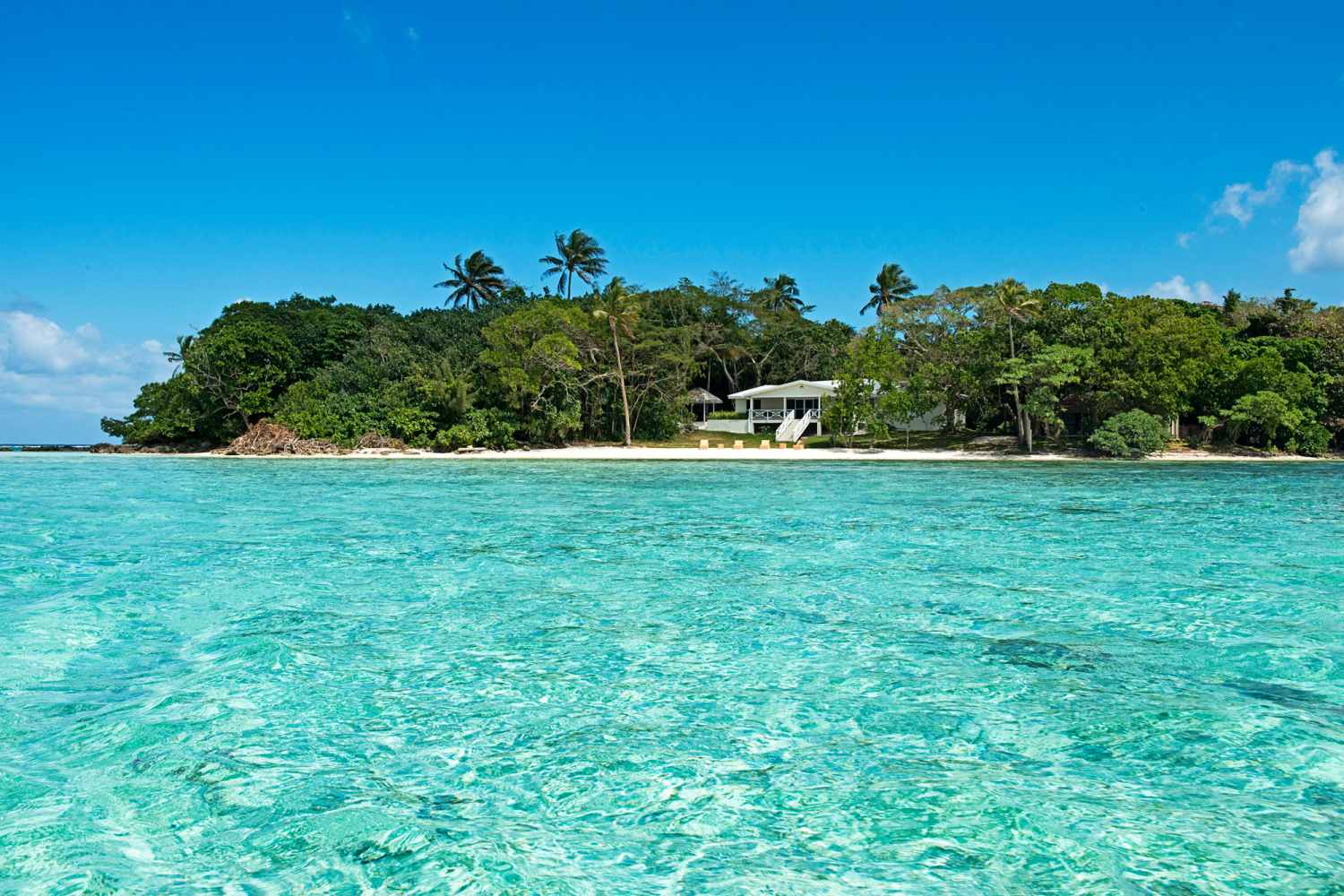
Erakor Island Resort & Spa Vanuatu
We look forward to sharing our culture, our customs and our beautiful smol aelan (small island) with you. Whether you are coming for a family holiday, reunion, tropical wedding, honeymoon, friends’ get-together or a relaxing break, we look forward to meeting you and sharing our culture and customs, along with plenty of Vanuatu smiles! There is so much to do and enjoy on this fabulous little island and when you…
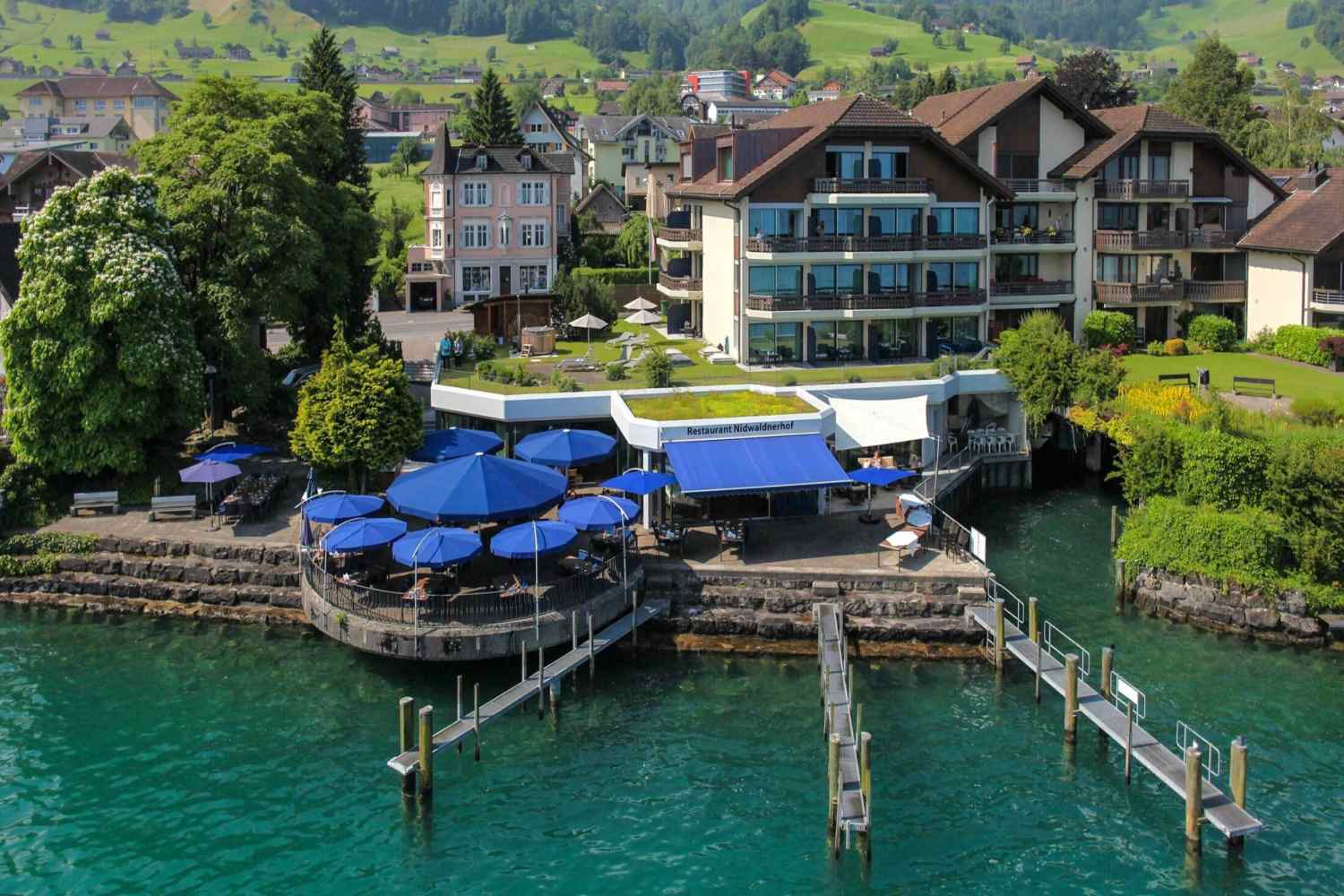
Hotel Nidwaldnerhof Beckenried
About 100 years ago the Nidwaldnerhof was known as Park-Hotel Nidwaldnerhof. “In a favoured, open location, with a large covered terrace, directly beside the lake. Many rooms with balconies. Music salon. Electric lighting. Shady park with 400 m of shoreline and magnificent all-round views. Choice cuisine…” according to the brochure available at the time. In 1979 the Park-Hotel Nidwaldnerhof was torn down and today’s…
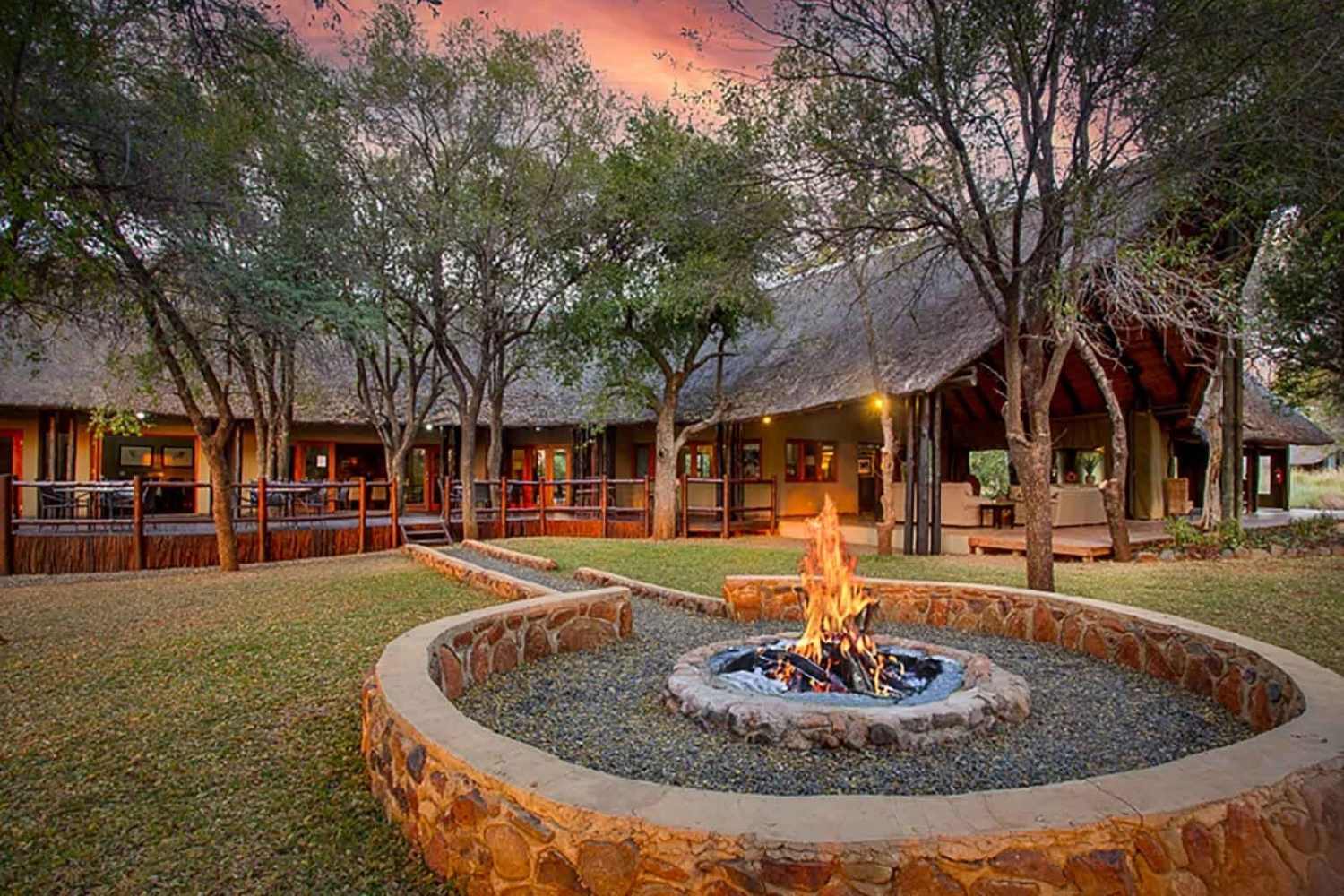
Black Rhino Game Lodge
Black Rhino Game Lodge is a luxury safari lodge located in the North West Province of South Africa, in the malaria-free Pilanesberg National Park. The lodge is situated in a prime location for game viewing, with access to over 55,000 hectares of wilderness. Black Rhino Game Lodge offers a variety of safari activities that allow guests to experience the beauty and wildlife of the African bushveld. The Pilanesberg National Park…
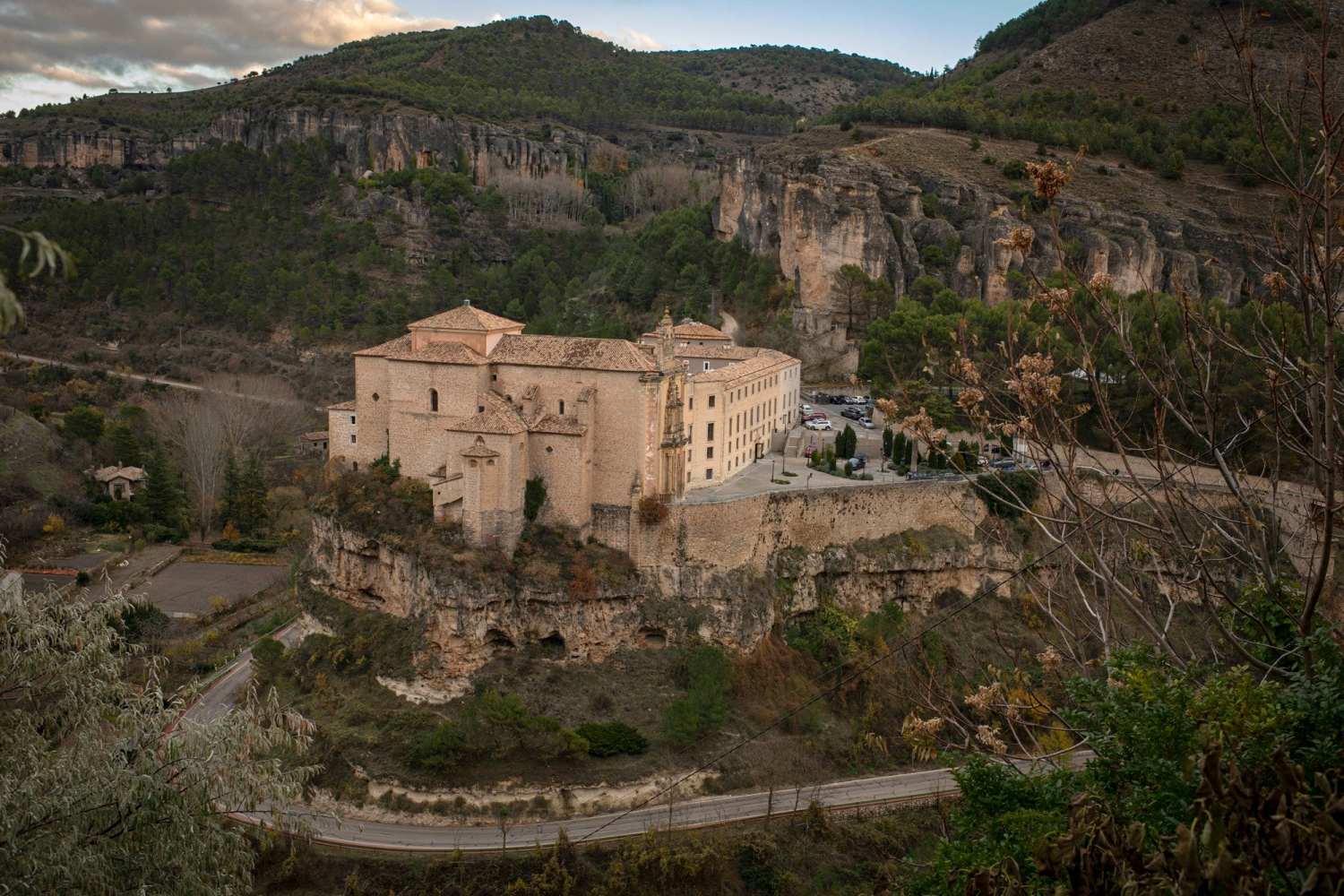
Parador de Cuenca
The Parador de Cuenca is a destination in itself. It’s located in a 16th century convent originally built for the Dominican order and it’s one of the most representative monuments of the city today. It’s located in one of the most special places in the city, next to the San Pablo bridge and opposite the Casas Colgadas or Hanging Houses. The convent of San Pablo has a beautiful glazed cloister with semi-circular arches and a…
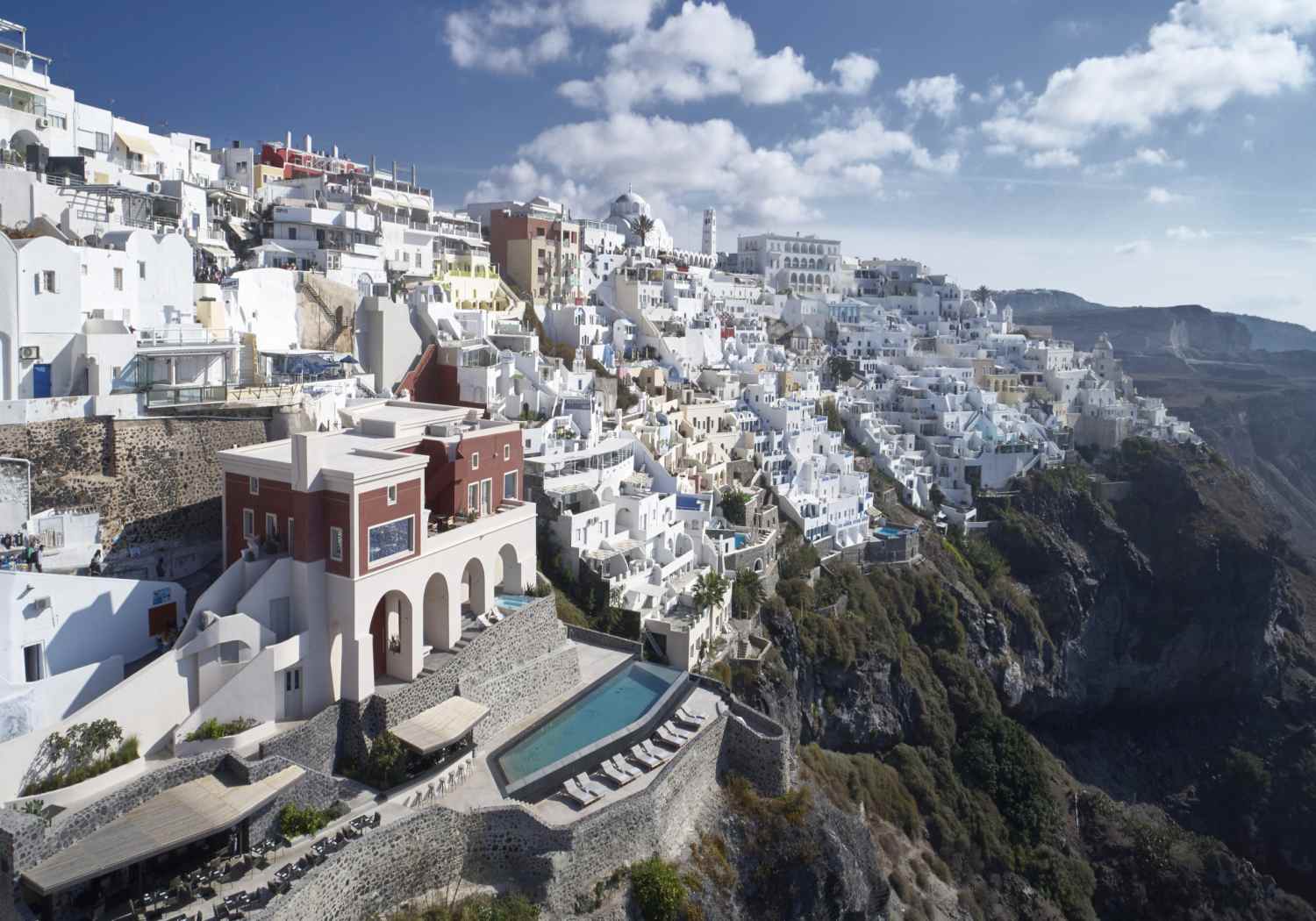
Villa Bordeaux Santorini
Inspired by the traditional architecture of the Cyclades, the exceptional Santorini Luxury Suites of Villa Bordeaux are part of an authentic neoclassical house. They have been restored so as to preserve the charm and character of a bygone era while at the same time offer all indulgences and comforts of modern life. Spacious, elegant and chic, all 4 luxury suites in Fira Santorini are fitted with fine furnishings and…
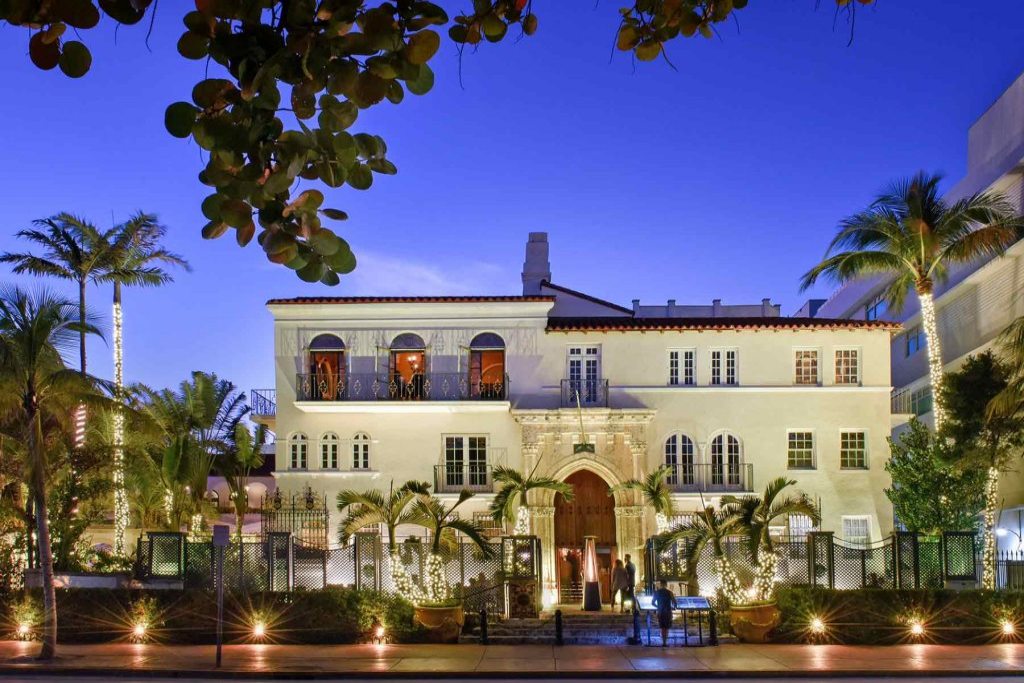
Casa Casuarina Miami
Casa Casuarina was built in 1930 by Alden Freeman. Alden Freeman’s father, Joel Freeman was Treasurer of The Standard Oil Trust (also known as Rockefeller’s Company) and left Alden a fabulous wealth when he passed away. That gave the young and wealthy Alden the opportunity to retire at the age of 27 from being an architect and travel all over the world. Alden was also a descendent of the Mayflower on his mother’s side…
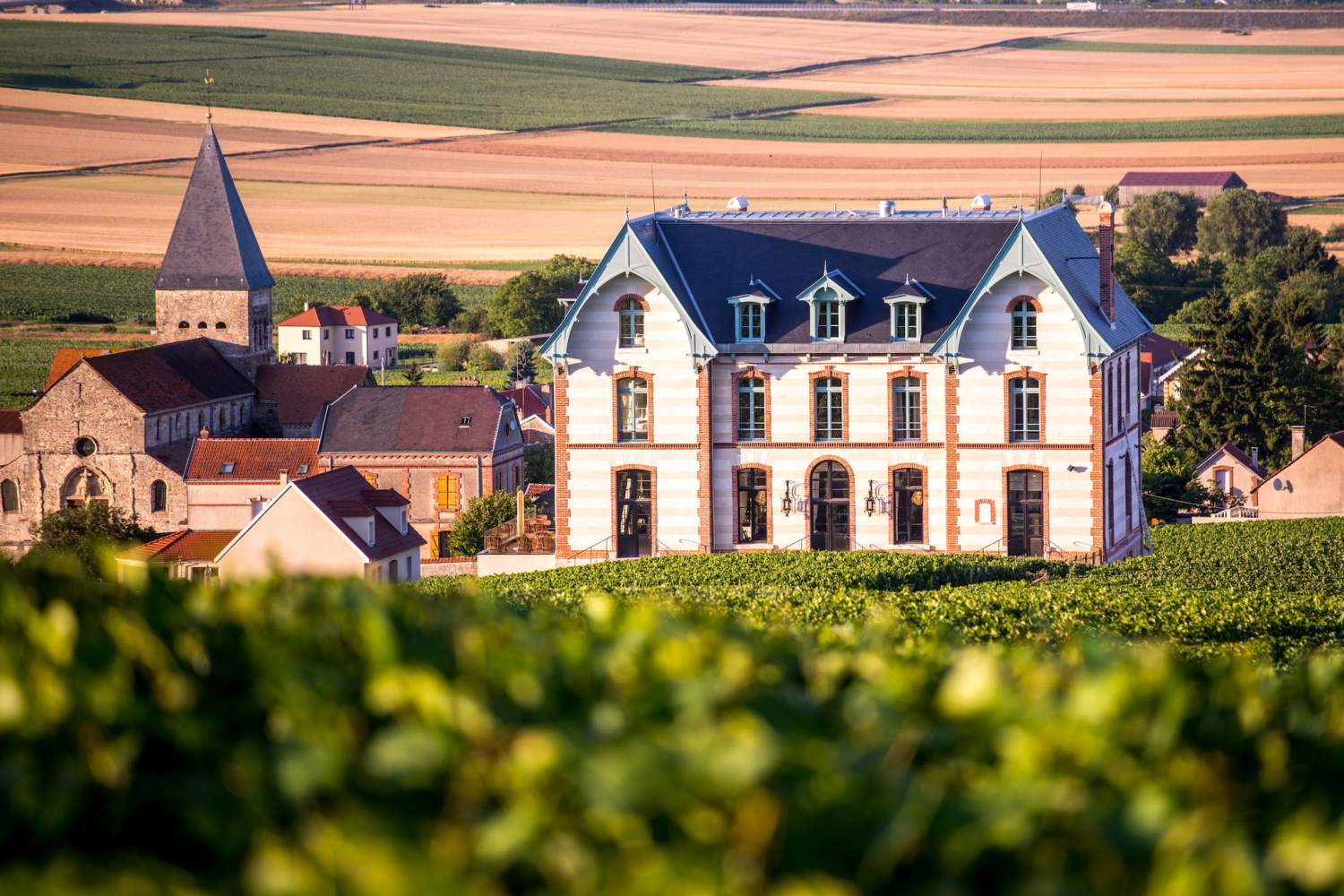
Chateau De Sacy Reims
The Chateau de Sacy, surrrounded by vineyards on the outskirts of Reims, dates back in its original state to the middle of the 19th century, but in its present form it’s been thoroughly transformed — the Château de Sacy is a fantasy more romantic than the real thing, a luxe and lavish 12-room hotel that incorporates a multitude of historical styles, and a bit of modernity as well. The spa includes barrel-style hot tubs with…
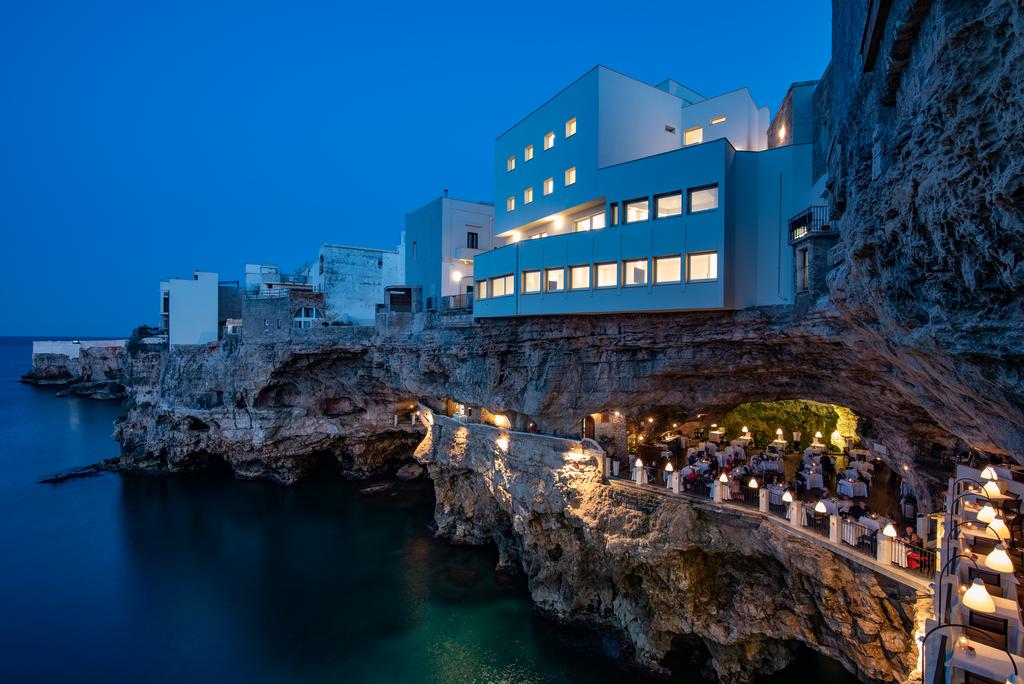
Hotel Grotta Palazzese Polignano a Mare
Naturalis Bio Resort is an exclusive Charming Residence, situated on a promontory with a view of the Salento countryside. Naturalis Bio Resort & Spa is the result of a fine and careful renovation of an ancient rural village surrounded by typical dry stone walls and protected by majestic old olive trees. A unique hotel facility, the most authentic rural tradition of Salento and our careful hospitality, perfectly come…
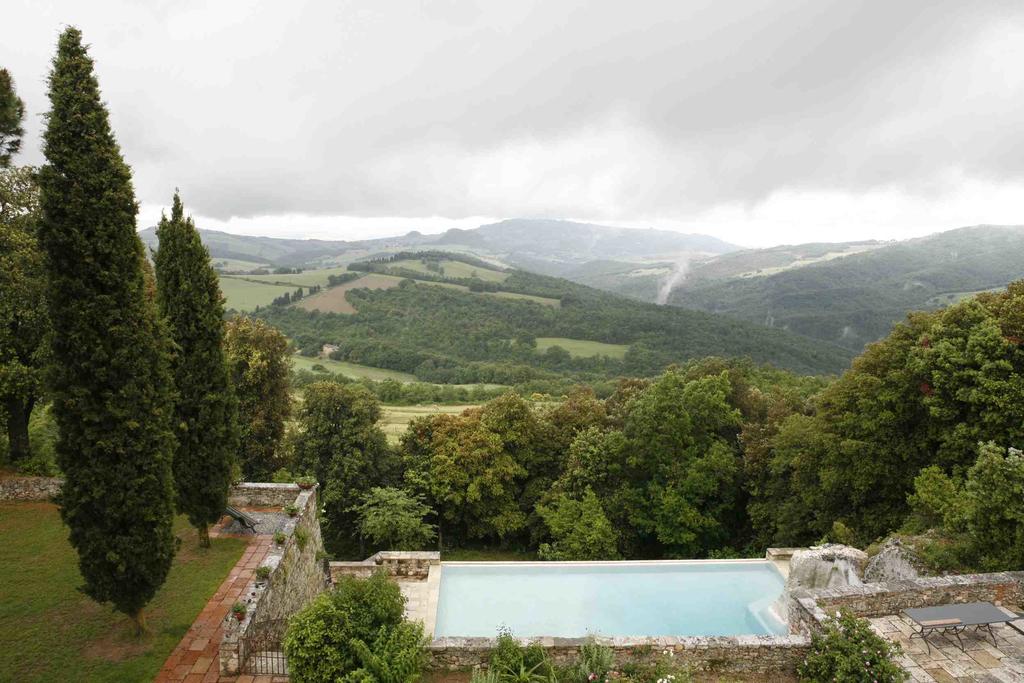
Borgo Pignano Volterra
Deep in the heart of historic Tuscany lies an enchanting haven of peace and tranquillity. At Borgo Pignano you will discover a beautifully restored country estate offering an exclusive combination of elegant accommodation, exceptional comfort and gracious hospitality. Borgo Pignano is an elegant country estate in the heart of the Tuscan countryside, just a short drive from the historic, hill towns of Volterra and…
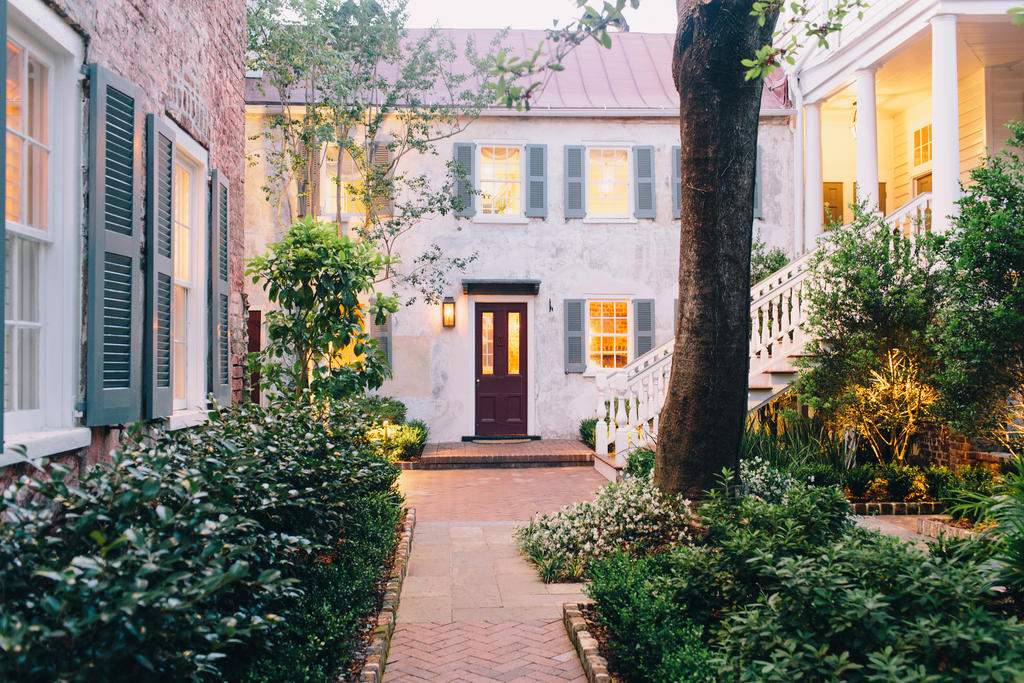
George Zero Street Charleston
Named after our actual street address, Zero George is comprised of sixteen lush guest rooms and studios in three painstakingly restored historic residences and two brick carriage houses that surround our private garden courtyard. We’ve infused it all with a sense of intimacy and warm personality, honoring the buildings’ solid 1804 bones and graceful architecture with measured, timeless design. At Zero George, you’ll…