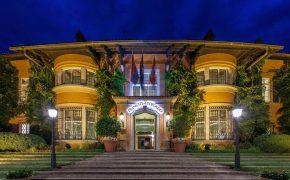

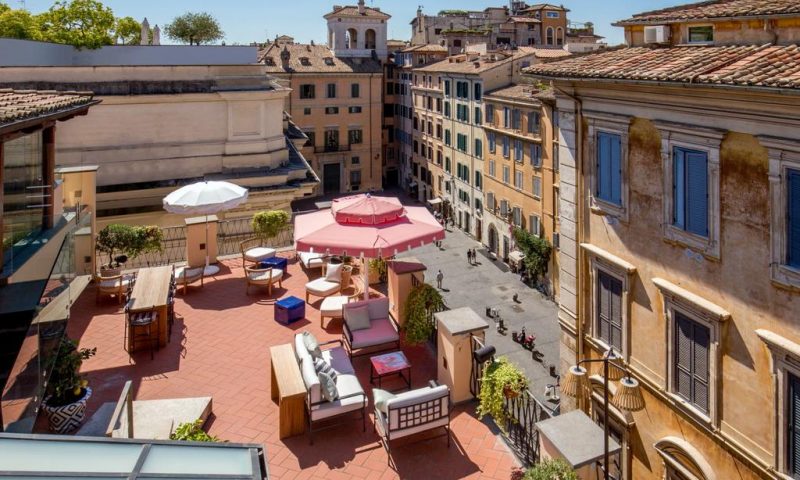


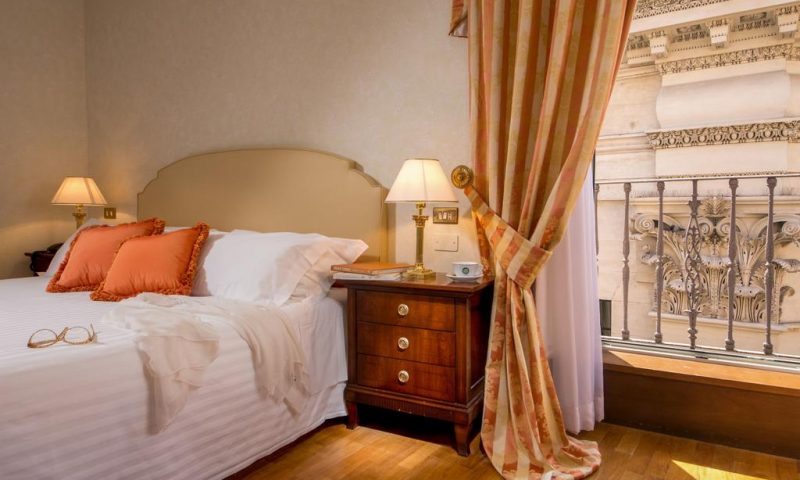
Hotel Albergo Cesàri first opened in 1787, making it the oldest hotel in Rome. Over the years, the 47 rooms have retained their elegant and welcoming character. Whether you are travelling alone for business, with that special person, with friends or family, a delightful experience awaits in our 3-stars hotel in Rome.
THE HISTORY
I, Bernardino Ridolfi Patrizio Spoletino, Papal Chamberlain of His Holiness Pope Pius VI and Canon of the sacrosanct Basilica of Saint Peter and of the University of Hoteliers, do hereby, as a visitor, grant license to Stefano Cesàri and admit him among the Hoteliers of Rome…
On this day, the 27th of February 1787. Thus begins the license – unique among Roman hotels – and the history of the Hotel Cesàri, now spanning over two centuries, a tradition passed down over all this time following the customs of the most authentic Roman hospitality.
A simple glance at the most important guide to Rome in 1869 shows that, back then, all the hotels had foreign names: Hotel de Russie, Hotel d’Angleterre, Anglo American Hotel and so on. The only exceptions were the Grand Hotel della Minerva and, indeed, the Hotel Cesàri.
Over the years, the hotel has welcomed distinguished guests. It was a favourite of Stendhal’s, who made fond mention of Madama Giacinta Cesàri’s inn in his Italian Chronicles; and it also hosted the great Roman historians Gregorovius and Momsen.
Then came the fathers of the Italian Unification, such as the Eroe dei Due Mondi Giuseppe Garibaldi as well as Giuseppe Mazzini, who stayed there after the declaration of the Roman Republic, and from where he delivered an impassioned plea to the Roman people on 6 March 1849.
The Albergo Cesàri is closely tied to the history of the Italian capital. It experienced the splendour of the Belle Epoque, but was threatened by the ravages of Fascism and the German Occupation; with the arrival of the Allies, it was used as an officers’ club.
To this day we still welcome the kin of some of those officers, who are deeply moved by the memory of their fathers’ time here. The Palumbo-Curti family had been operating this historic hotel since 1899, a dynasty that began with Raffaele, to subsequently become one of the oldest businesses in Italy run entirely by women.
What Paola and Anna began in 1947 was then carried on by their grandchildren, who ushered the Cesàri into its third century, always rejuvenating it in the spirit of the history in which it is cloaked.
Out of this glorious history, intertwined with that of the family, comes the experience that everyone can enjoy during their stay at the Cesàri. Amidst a magnificent location in the beating heart of Rome, guests are treated not as customers, but as guests at the home of a venerable old Roman family.
ROOMS & SUITE
The 47 rooms of our hotel located near the Pantheon in the centre of Rome are equipped to meet your expectations. Our hotel just steps from the Trevi Fountain has rooms for all types of travel, no matter the reason for your trip. Wait no longer and book your getaway to the heart of Rome in the city’s most historic hotel.
THE BREAKFAST
This generous continental breakfast, with organic and gluten-free products on request, is served every morning on our terrace. It can also be served in your room (additional fee)
THE ROOFTOP
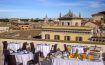
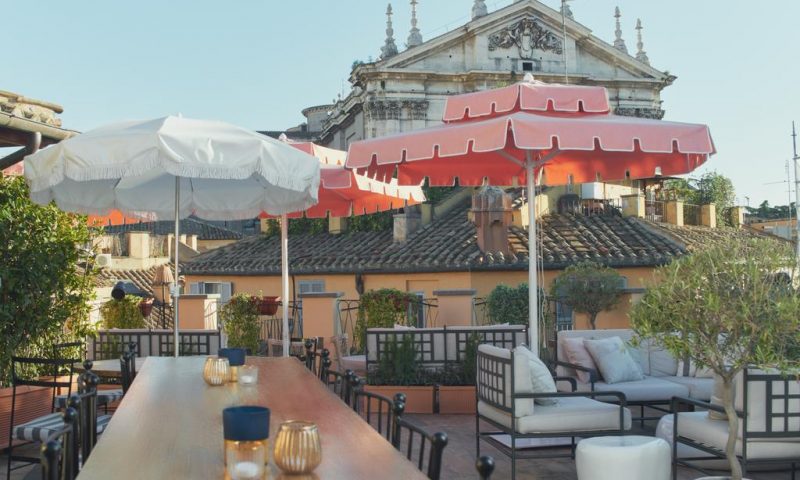
Wake up and greet the sun on our rooftop in Rome’s city centre and sip your coffee as you admire the magnificent Saint Ignatius of Loyola Church. Start your day in a delightful manner with our generous buffet breakfast.
THE COLISEUM
This legendary monument in Rome stands at the very end of the ancient Roman Forum, where you can walk in just 20 minutes from our hotel. The amphitheatre built by the Romans is one of the largest structures from the Roman era.
The historic site is as beautiful by day as it is by night when it is lit up. The edifice has been well preserved in spite its dilapidated appearance, which is the result of successive earthquakes. This monument will bring to life the history of Rome and its gladiators.
THE ROMAN FORUM
Back in the day, this place was the centrepiece of daily life, where Roman citizens met to discuss political, economic, trade and other affairs. Its location, between the Coliseum and the Capitol, makes it an essential place full of ruins from the era.
This archaeological site forms a large rectangle between historic monuments: the Capitol, the Palatine, the Coliseum and the imperial forums.
THE VATICAN MUSEUM
The Vatican is a recognised independent state under the sovereignty of the Holy See, where the pope of the Catholic Church reins as absolute monarch. With a surface area of just 0.44 km2, it is the smallest state in the world with a population of 824 in 2008.
However, despite its small size, this country has its own printing press, which publishes works in several languages, and even has its own daily and weekly newspapers. It also has its own stamps and prints its own currency, which can be used throughout Italy.
The Vatican is a special place in the city, but in the world as well. Its location on the Tiber, the river that runs through Rome, makes it one of the most magical places to visit. St. Peter’s Basilica and its wonderful palaces and gardens make it a truly exceptional place.
THE TREVI FOUNTAIN
It is the most famous fountain in Rome, which makes it a must-do! Built at the request of Pope Clement XII, it was completed in 1762. The origins of the Trevi Fountain date to 1453; it was the mouth of a Roman aqueduct that brought water from a spring built in 1453.
According to tradition, you have to toss two coins over left shoulder into the fountain: one to make a wish and one to be sure you return to Rome. This fountain ‒ the biggest in the city ‒ is located near the Pantheon. It backs up to a palace that was once the residence of the Poli dukes and is now the Italian Polygraphic Institute.
The arch behind it calls to mind the entrance to a temple. The Trevi Fountain was designed and built in honour of Neptune, the god of the seas. It is 20 metres wide and 26 metres tall; the fountain depicts Neptune on a chariot drawn by two horses and guided by tritons.
From 9Hotel Cesàri, located on Via di Pietra, you can easily walk to the Trevi Fountain in a few minutes. Take advantage of a stay at our hotel to meander through the city and learn its secrets. You are sure to find the best offer on our website, regardless of the reason for your stay.
THE SAINT PETER’S BASILICA
It is one of the greatest monuments in the Christian faith, with approximately 450 statues, 500 columns and 50 altars. It is also one of the most visited monuments in the world. Every Sunday, more than 150,000 believers attend mass in the square at St. Peter’s Basilica.
The tomb of one of Jesus’s 12 apostles lies at the centre of the Basilica. He is regarded as the first Bishop of Rome. The Renaissance style of the basilica was transformed over the years by different popes. Beginning in the 17th century, the Baroque style emerged in Italy.
Colours and decorative features changed, becoming more extravagant. The façade of the basilica is 45 metres high by 115 metres wide. Its cupola ‒ the tallest in the world ‒ is 136 metres high.
THE PANTHEON
It was a temple devoted to various divinities, especially Mars, the founder of Rome. It was restored and rebuilt after a fire in the early 2nd century. In 608, the pope received it as a gift and turned it into a Christian church, as it is today.
One enters through a rectangular portico featuring 16 columns, then continues into a vast circular space under one of the most beautiful cupolas in the world.
Continue gazing skyward to admire the details of the cupola and you just might get dizzy. The tomb of the celebrated painter Raphael is also inside the building.
PIAZZA DI SPAGNA
The square is very well known because Romans used to meet on its myriad steps. It is also quite close to another iconic destination in the city: the People’s Square or ‘Piazza del Popolo’, created by Giuseppe Valadier in the late 18th century. This square is one of the largest city and was created precisely to give Rome more open space.
VILLA BORGHESE
The gardens at Villa Borghese are a must-see stop during your time in Rome. Who has not gotten lost in the immensity of these lush gardens at least once? It is required sightseeing that you won’t regret.
The gardens are the ideal place for a stroll in the centre of Rome on sun-kissed days. After all, this is one of the biggest public parks in the city. You can take advantage of its lakes, lawns and wooded areas. There are also art museums and academies.
For breathtaking views, we recommend you visit the gardens at the end of the day as the sun is setting. From Piazza del Popolo, as you look down toward the terrace of the piazzale, the view opens up on the gardens, as well as major monuments like the Vatican and its palaces, the dome of St. Peter’s Basilica and even the Pantheon.
Another special feature of this venue is the Commedia Dell’arte. A water-clock was built in the park in 1867. Just next door, the ‘San Carlino’ Teatro dei Burrattini puts on an array of puppet shows staged by the Commedia dell’arte.
PIAZZA NAVONA
This square near the Pantheon was built over the ruins of the Stadium of Domitian, which dates to the 1st century. In fact, the square still has the exact shape of the stadium. At the time, it hosted athletics competitions, games and horse races.
The square is accented with three beautiful fountains, the most famous of which is the ‘Fountain of the Four Rivers’ built by Bernini in 1650. It stands before Sant’Agnes Church.
The statues in the fountain represent four rivers from four continents: The Nile for Africa, the Rio de la Plata for the Americas, the Ganges for Asia and the Danube for Europe. A majestic obelisk rises high from the centre.
Piazza Navona is a must for every tourist in Rome. You will find many restaurants around it, along with shops and street vendors. Whether you go day or night, allow some time to sit on a terrace and soak up the dolce vita.
PIAZZA VENEZIA
The monument that looms over this vast square is ‘Il Vittoriano’; it was built for King Emmanuel II, the very first king of unified Italy. The gigantic white marble monument on Capitol Hill is a true symbol of the city, representing the unity of Italy.
King Emmanuel II unified Italy after wars fought with Austria. There are many symbols of this unification. The 16 sculptures placed in the foreground represent all the regions of united Italy. Its dimensions are impressive: 135 metres wide by 70 metres high, with numerous Corinthian columns and white marble staircases.
This monument has also harboured the tomb of an unknown soldier and an eternal flame since 1921. You can climb up to the top for a sublime panoramic view from the terrace. It Vittoriano is an important symbol to which Italians are very attached. A modest palace was even relocated because it obstructed the view from Via del Corso.
Rooms: 47
Price: from 97 EUR per night
——————————————————————————
Write us to receive our best offer for the
ALBERGO CESARI ROME
——————————————————————————
Source: www.9-hotel-cesari-rome.it
Deals of the day
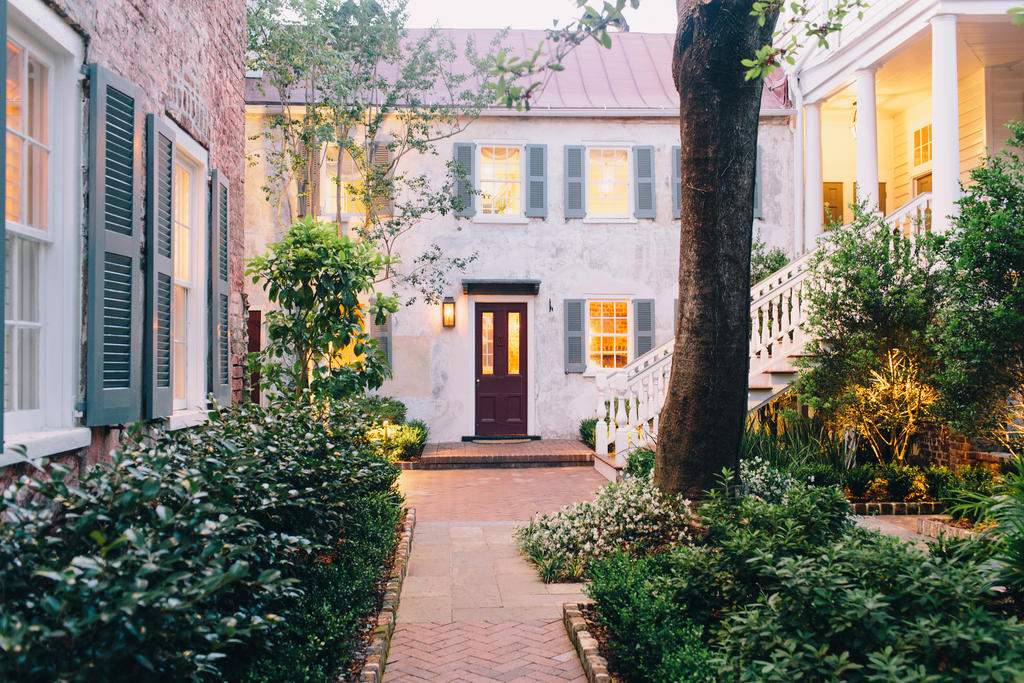
George Zero Street Charleston
Named after our actual street address, Zero George is comprised of sixteen lush guest rooms and studios in three painstakingly restored historic residences and two brick carriage houses that surround our private garden courtyard. We’ve infused it all with a sense of intimacy and warm personality, honoring the buildings’ solid 1804 bones and graceful architecture with measured, timeless design. At Zero George, you’ll…
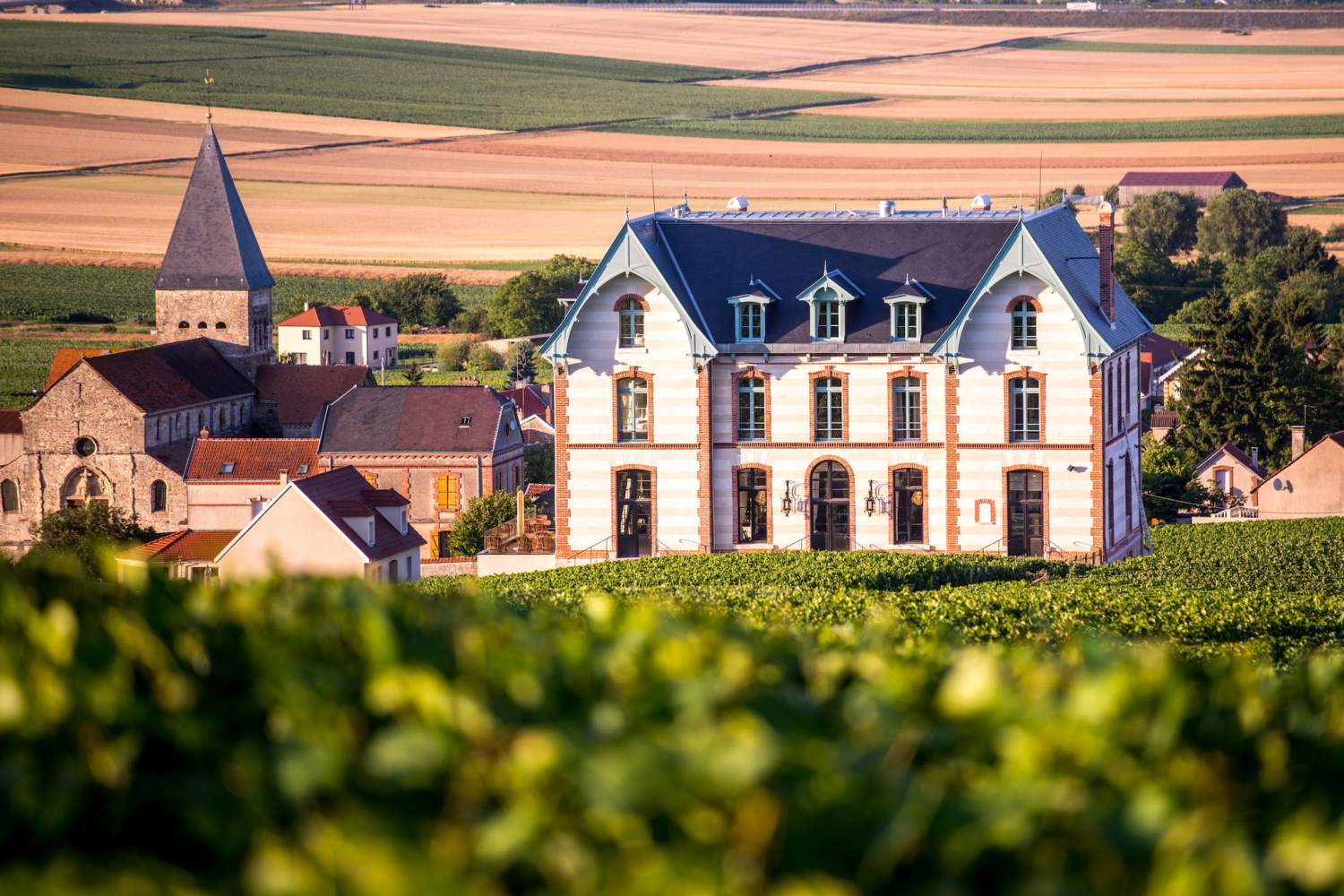
Chateau De Sacy Reims
The Chateau de Sacy, surrrounded by vineyards on the outskirts of Reims, dates back in its original state to the middle of the 19th century, but in its present form it’s been thoroughly transformed — the Château de Sacy is a fantasy more romantic than the real thing, a luxe and lavish 12-room hotel that incorporates a multitude of historical styles, and a bit of modernity as well. The spa includes barrel-style hot tubs with…
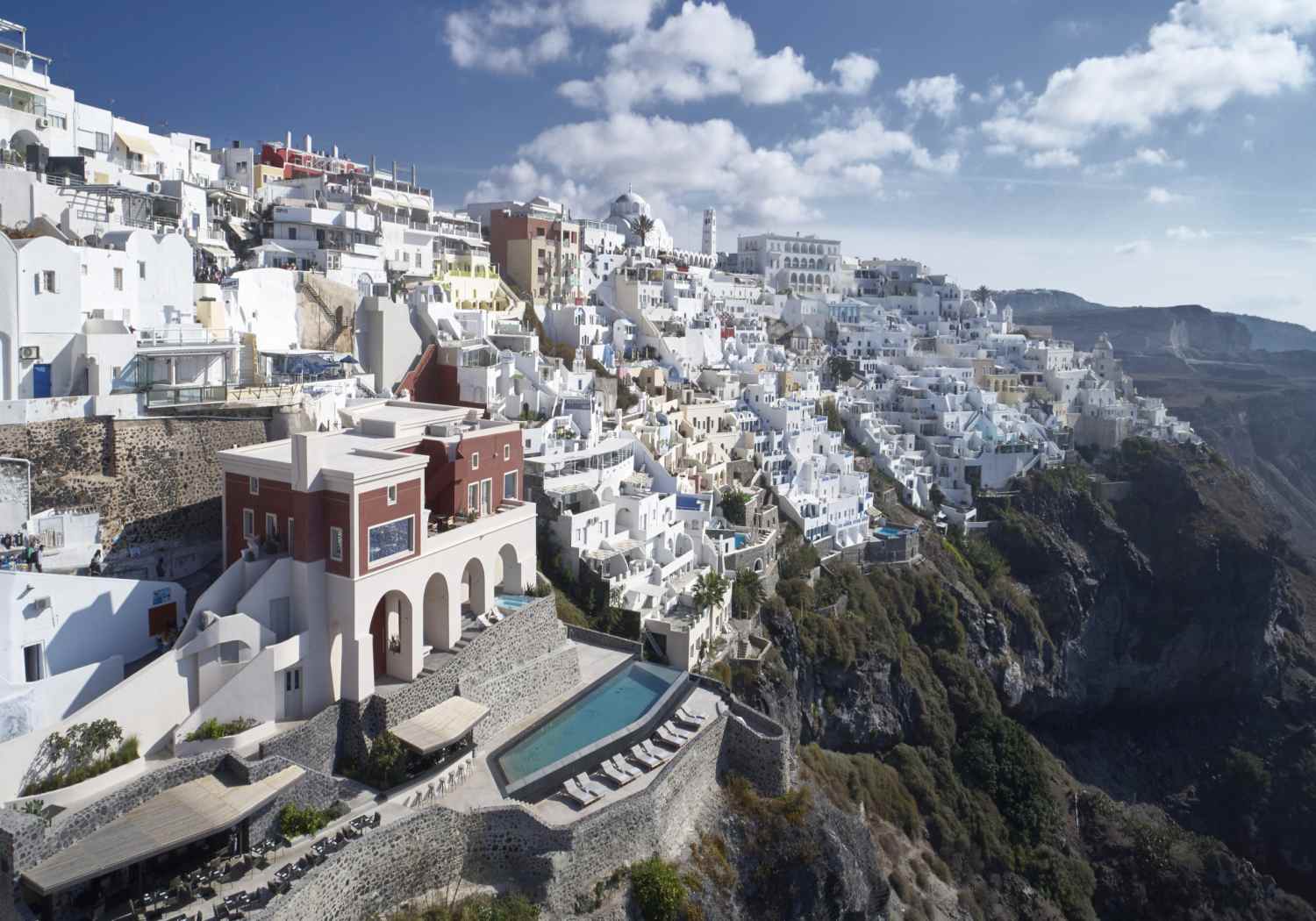
Villa Bordeaux Santorini
Inspired by the traditional architecture of the Cyclades, the exceptional Santorini Luxury Suites of Villa Bordeaux are part of an authentic neoclassical house. They have been restored so as to preserve the charm and character of a bygone era while at the same time offer all indulgences and comforts of modern life. Spacious, elegant and chic, all 4 luxury suites in Fira Santorini are fitted with fine furnishings and…
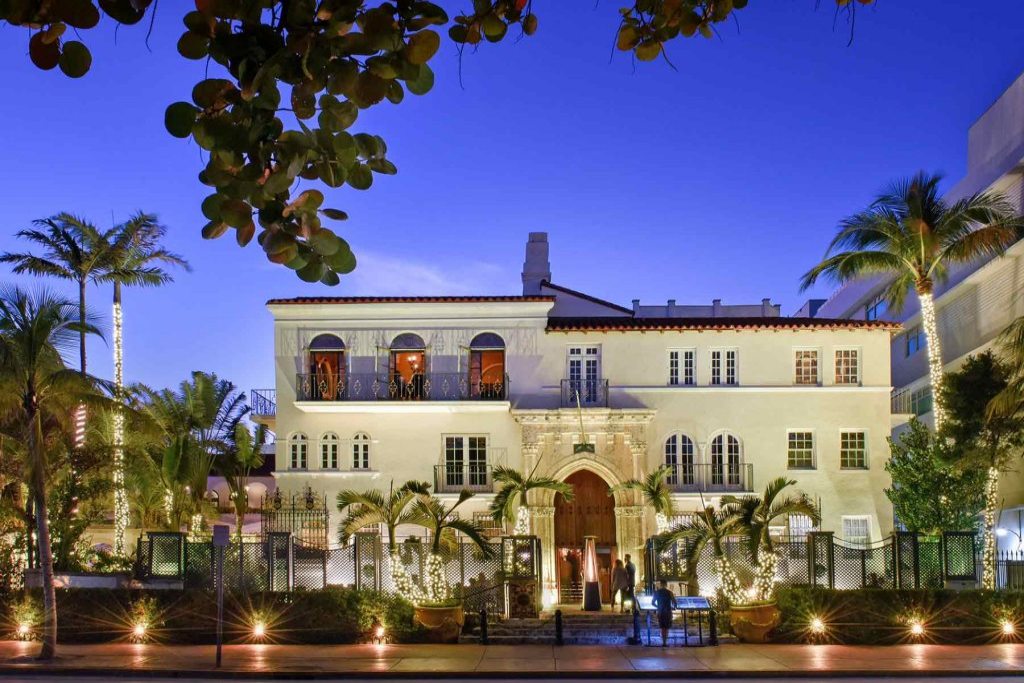
Casa Casuarina Miami
Casa Casuarina was built in 1930 by Alden Freeman. Alden Freeman’s father, Joel Freeman was Treasurer of The Standard Oil Trust (also known as Rockefeller’s Company) and left Alden a fabulous wealth when he passed away. That gave the young and wealthy Alden the opportunity to retire at the age of 27 from being an architect and travel all over the world. Alden was also a descendent of the Mayflower on his mother’s side…
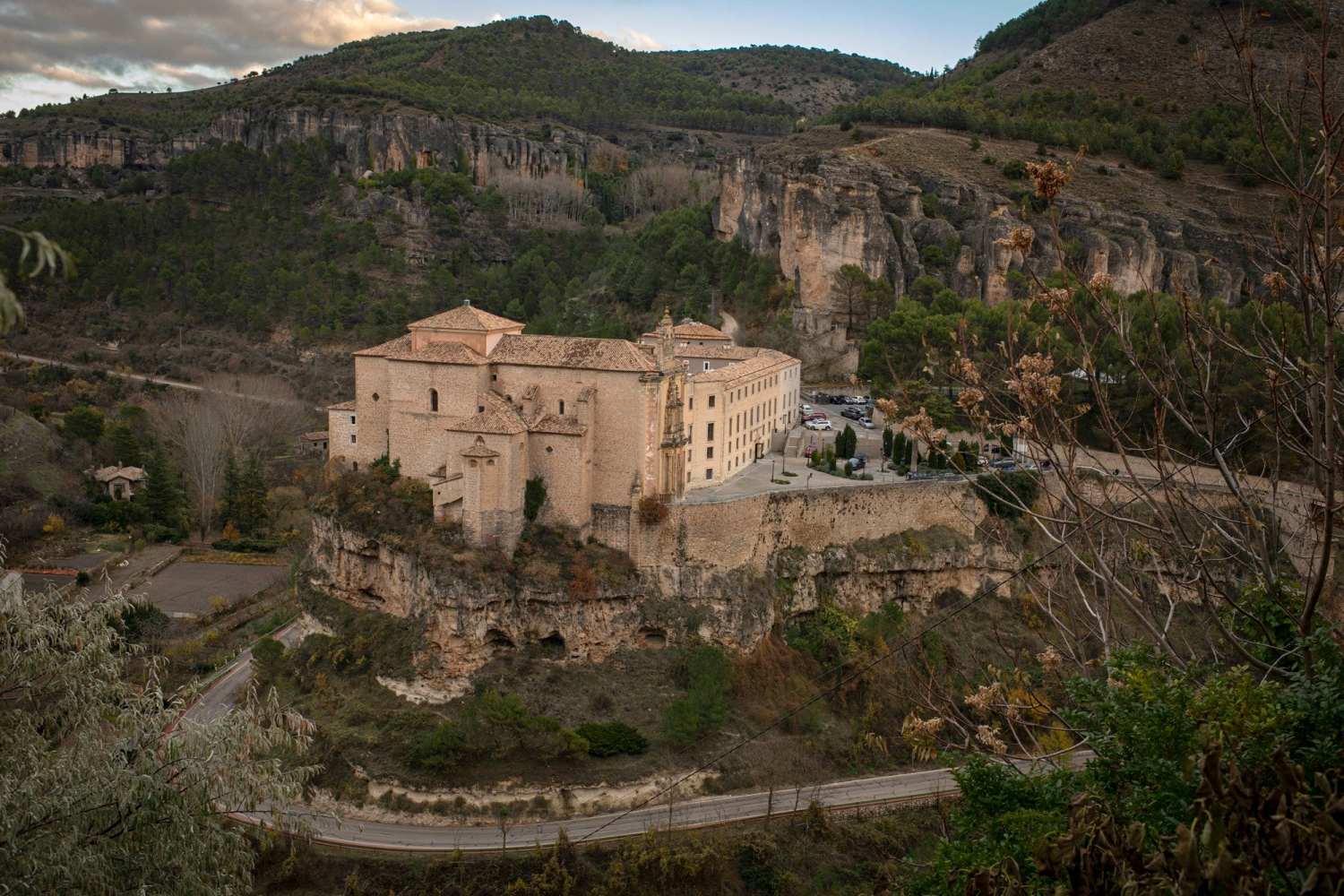
Parador de Cuenca
The Parador de Cuenca is a destination in itself. It’s located in a 16th century convent originally built for the Dominican order and it’s one of the most representative monuments of the city today. It’s located in one of the most special places in the city, next to the San Pablo bridge and opposite the Casas Colgadas or Hanging Houses. The convent of San Pablo has a beautiful glazed cloister with semi-circular arches and a…
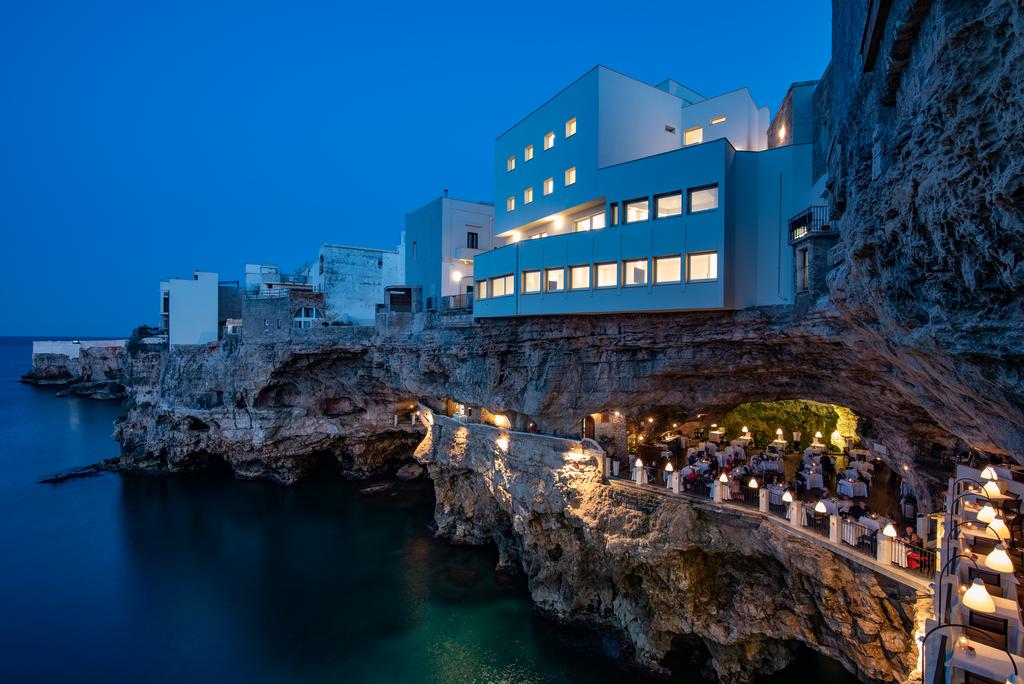
Hotel Grotta Palazzese Polignano a Mare
Naturalis Bio Resort is an exclusive Charming Residence, situated on a promontory with a view of the Salento countryside. Naturalis Bio Resort & Spa is the result of a fine and careful renovation of an ancient rural village surrounded by typical dry stone walls and protected by majestic old olive trees. A unique hotel facility, the most authentic rural tradition of Salento and our careful hospitality, perfectly come…
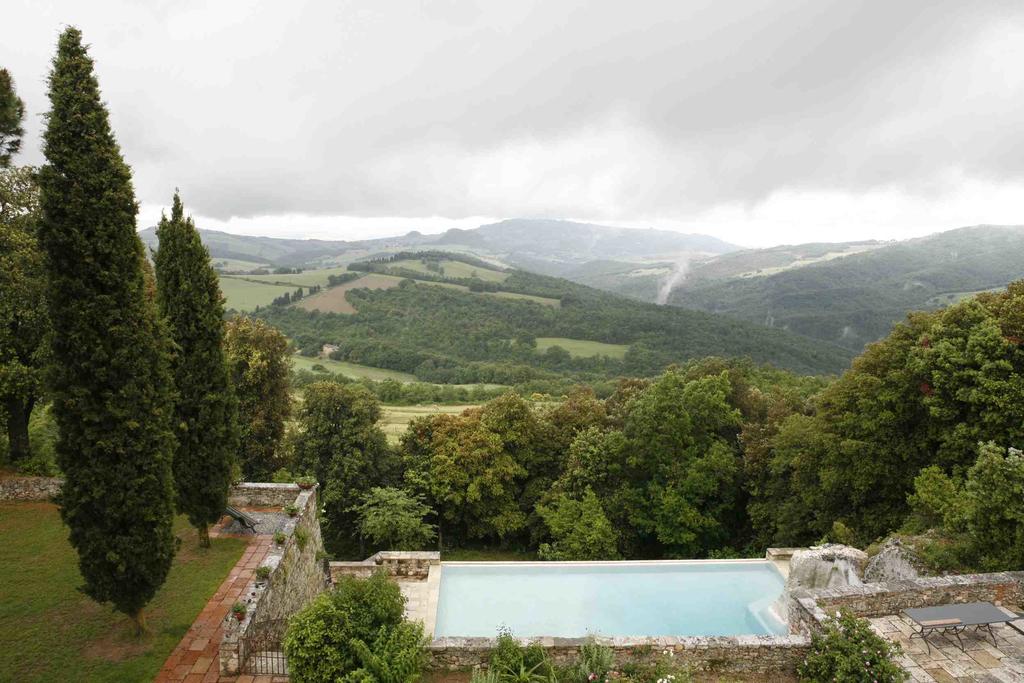
Borgo Pignano Volterra
Deep in the heart of historic Tuscany lies an enchanting haven of peace and tranquillity. At Borgo Pignano you will discover a beautifully restored country estate offering an exclusive combination of elegant accommodation, exceptional comfort and gracious hospitality. Borgo Pignano is an elegant country estate in the heart of the Tuscan countryside, just a short drive from the historic, hill towns of Volterra and…
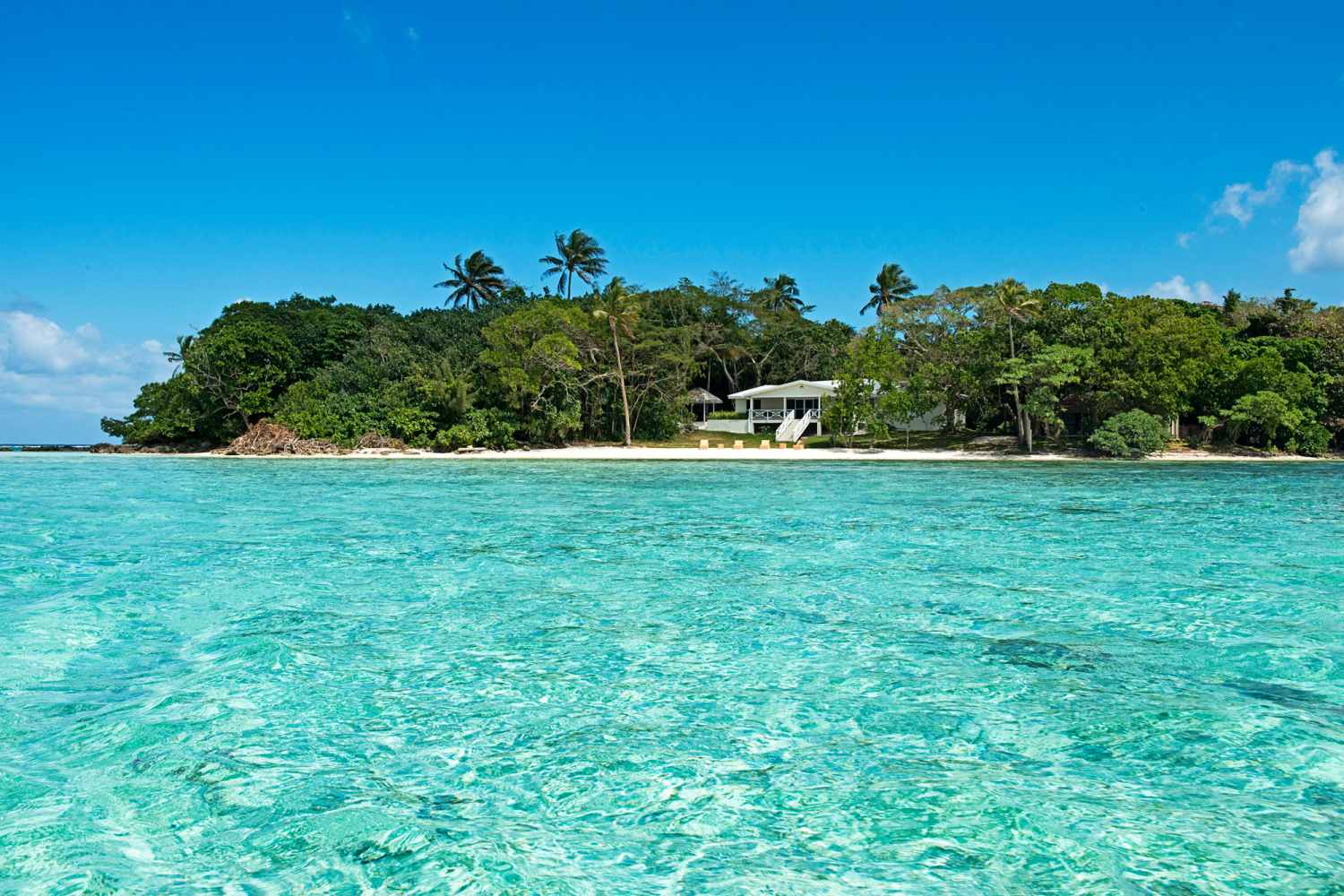
Erakor Island Resort & Spa Vanuatu
We look forward to sharing our culture, our customs and our beautiful smol aelan (small island) with you. Whether you are coming for a family holiday, reunion, tropical wedding, honeymoon, friends’ get-together or a relaxing break, we look forward to meeting you and sharing our culture and customs, along with plenty of Vanuatu smiles! There is so much to do and enjoy on this fabulous little island and when you…
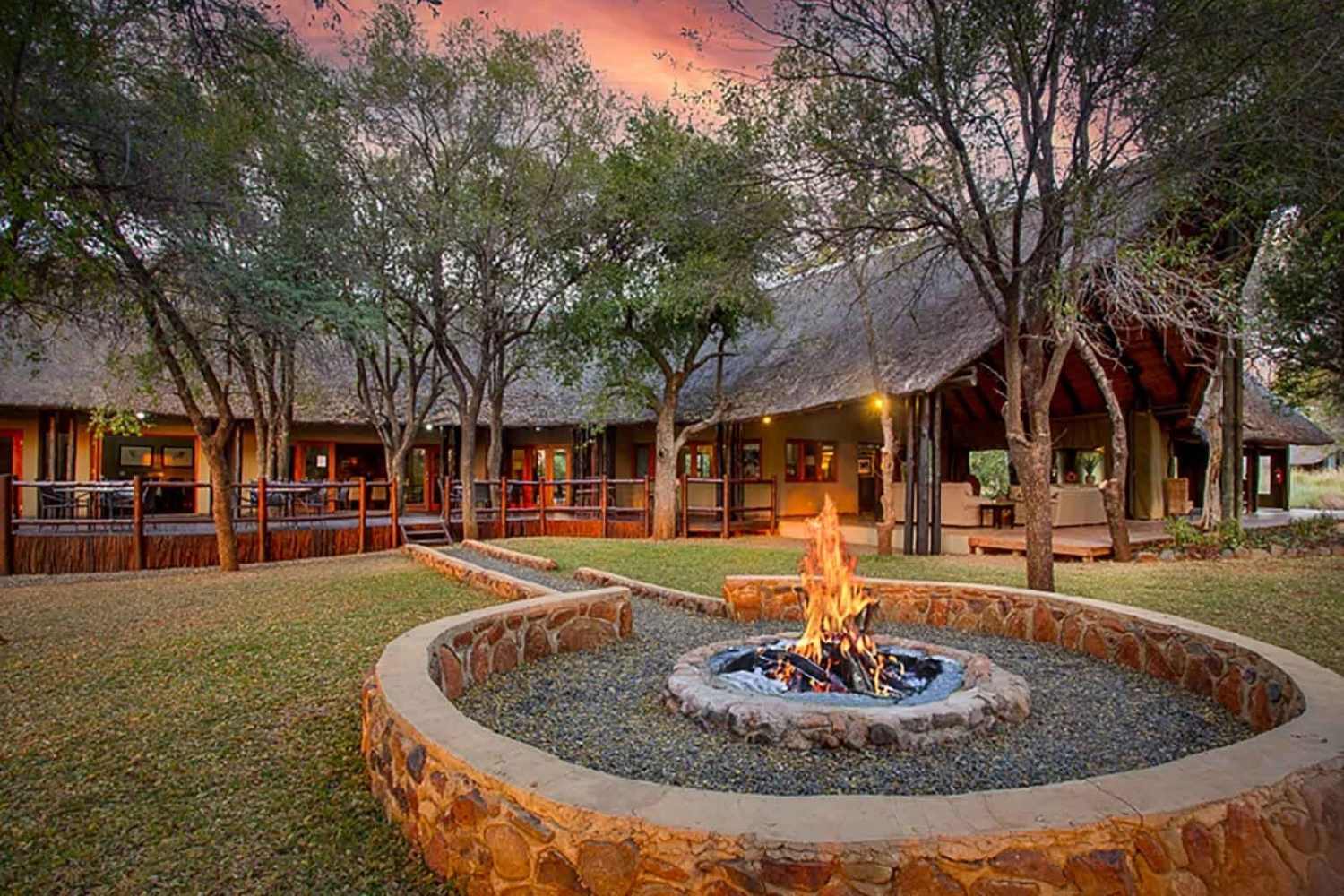
Black Rhino Game Lodge
Black Rhino Game Lodge is a luxury safari lodge located in the North West Province of South Africa, in the malaria-free Pilanesberg National Park. The lodge is situated in a prime location for game viewing, with access to over 55,000 hectares of wilderness. Black Rhino Game Lodge offers a variety of safari activities that allow guests to experience the beauty and wildlife of the African bushveld. The Pilanesberg National Park…
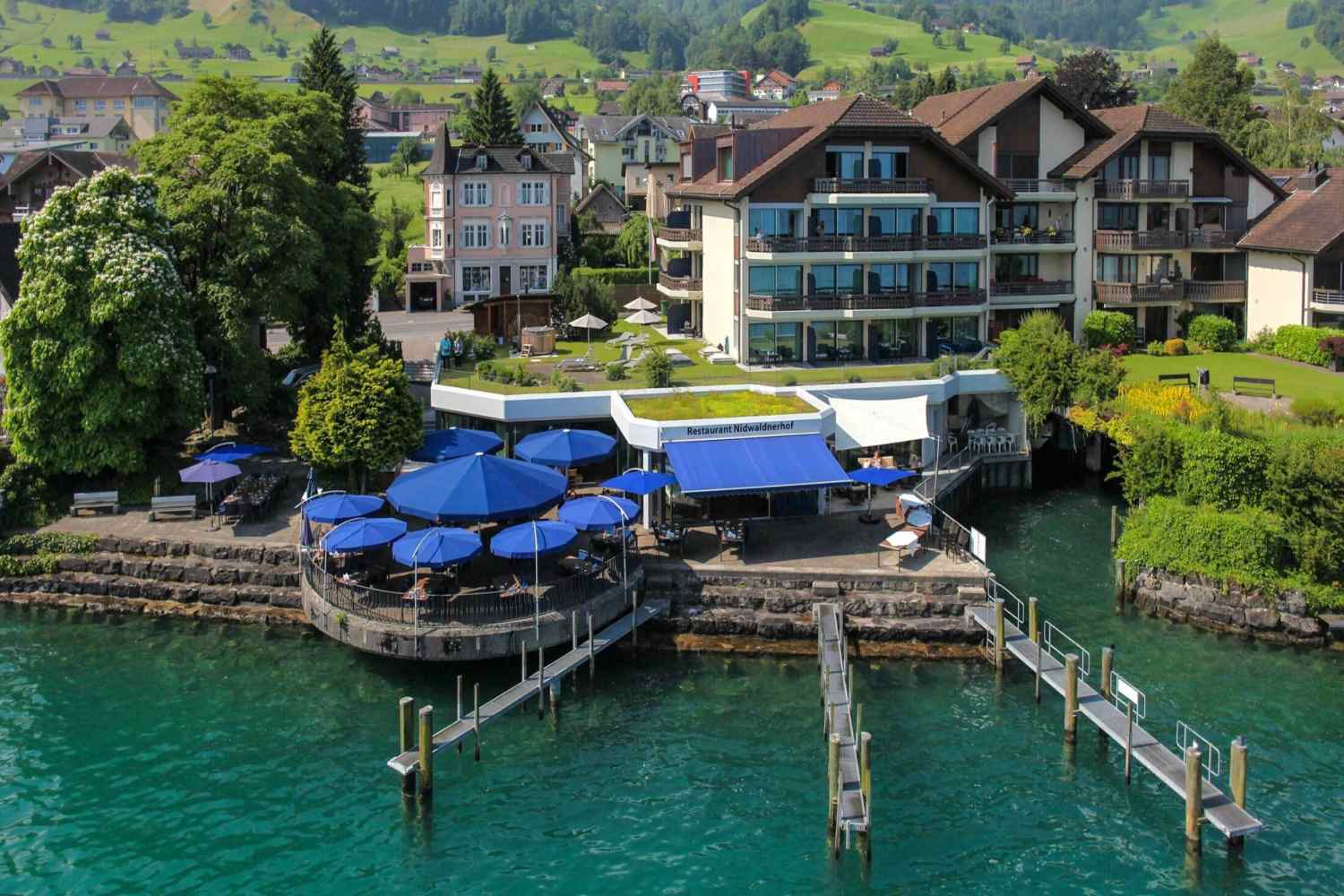
Hotel Nidwaldnerhof Beckenried
About 100 years ago the Nidwaldnerhof was known as Park-Hotel Nidwaldnerhof. “In a favoured, open location, with a large covered terrace, directly beside the lake. Many rooms with balconies. Music salon. Electric lighting. Shady park with 400 m of shoreline and magnificent all-round views. Choice cuisine…” according to the brochure available at the time. In 1979 the Park-Hotel Nidwaldnerhof was torn down and today’s…